
 Image 1 of 1
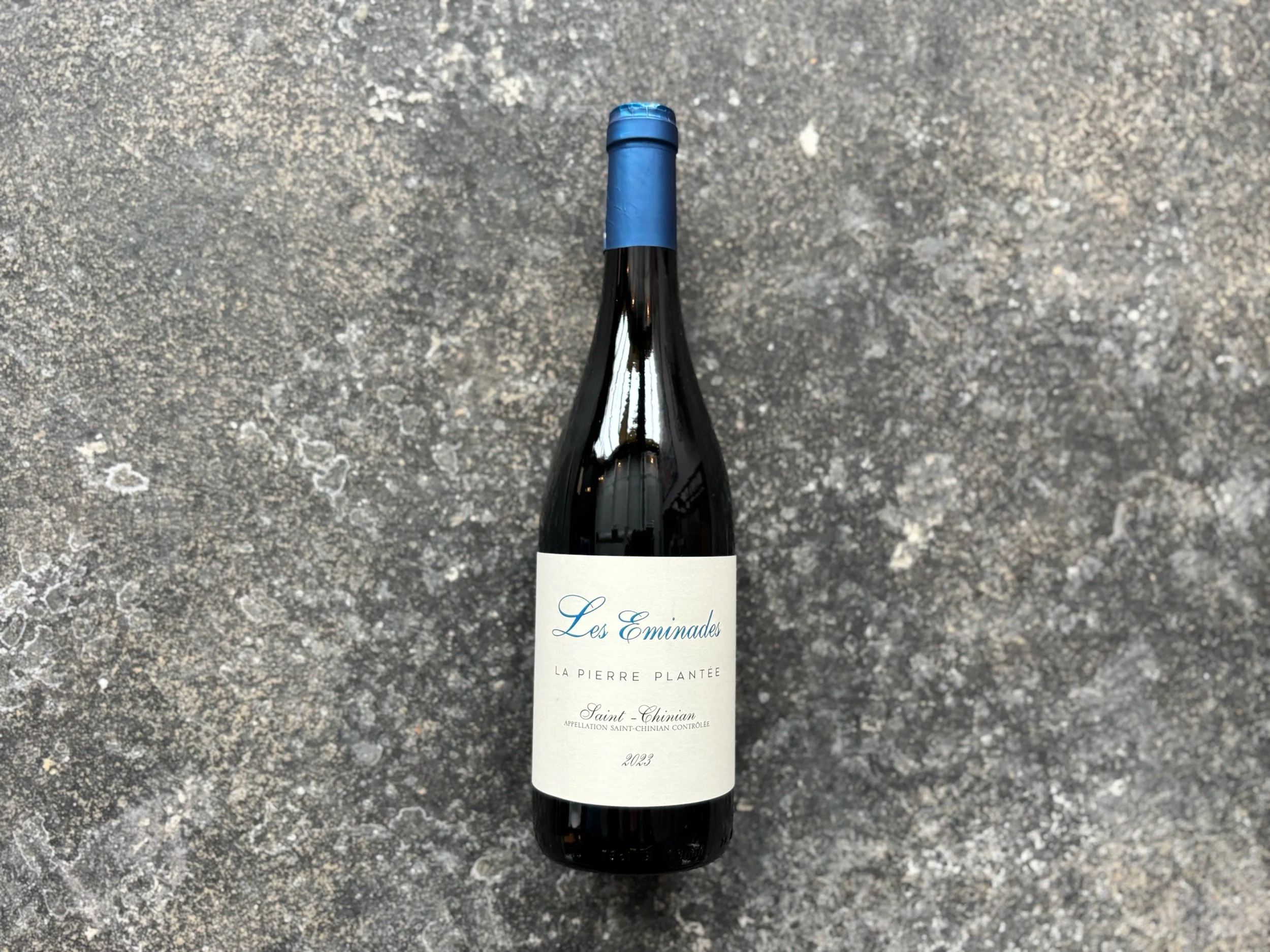
Domaine Les Eminades ‘La Pierre Plantée’ Saint-Chinian Rouge 2023
Location: France, Languedoc-Roussillon, Saint-Chinian
Winemaker: Luc and Patricia Bettoni
Grapes: 40% Cinsault, 30% Syrah, 30% Grenache
Soil: Decomposed granite or clay bedrock, gravel, sand. Various aged vines, always grown organically.
Winemaking: Organic farming. Hand harvest. Grapes are 80% destemmed with 20% whole clusters. Maceration lasts 15 days. Fermentation takes place in stainless steel and concrete tanks with indigenous yeasts. No punchdowns, only light pumpovers during vinification. Aged for 10 months in concrete tank. Named for a lieu-dit where a large vertical rock formation (pierre plantée) once served to demarcate the borders of three neighboring villages. Wines are not fined
From the Importer Kermit Lynch: “We started with nothing—just a lot of courage,” says Luc Bettoni, who counts no vignerons in his immediate family despite growing up around the vineyards of Madiran, deep in France’s southwest. For his wife, Patricia, the path to becoming a vigneronne was just as unlikely. It began serendipitously, when she met Luc at a wine-tasting-themed party put on by enology students while she studied pharmacology in Toulouse. Luc had taken a keen interest in enology after earning degrees in biochemistry and microbiology and interning in an enological laboratory in Madiran. The couple’s chance encounter led Patricia to develop a whole new passion.
Later on, while employed as the enologist for a Languedoc domaine, Luc expressed to Patricia his desire to make his own wine. “It didn’t take much to convince me to embark on this adventure with him,” she recalls warmly. The search for a great terroir where they could put down roots—despite having no savings—ultimately led them to Saint-Chinian, where they were struck by the wild beauty of the landscape and its rich diversity of soils.
In 2002, they purchased twelve hectares of vines, primarily in limestone-rich sites where the grapes would retain good acidity levels despite the baking Mediterranean climate. The land was mostly overgrown, and they worked hard to clear it and bring the vineyards up to shape. The young vignerons replanted five hectares at higher density to better shade the fruit and prevent soil evaporation. They gradually added plots over the years, including some very old plantings, seeking out vineyards at higher elevation where grapes ripen later, to preserve freshness and balance. Patricia and Luc now farm thirty small parcels across three communes. Their soils include quartz- and iron-rich sandstones, rocky alluvial deposits, and various limestones, while exposures range from south-facing—with the sea visible in the distance—to cooler north-facing sites.
The Bettonis’ vineyards have never come into contact with herbicides, and Luc abandoned chemical treatments early on because the products made him ill. They obtained organic certification in 2008 and then, realizing their farming nearly qualified as biodynamic, completed that conversion ten years later.
Winemaking at Les Eminades is gentle and straightforward, with the goal of expressing the nuances found within Saint-Chinian’s fascinating diversity of terroirs through the lens of traditional Languedocien cépages such as Cinsault, Grenache, and Carignan. Fermentations in their small cellar occur spontaneously, and sulfur doses are kept very low to achieve a seductive aromatic and textural quality in the wines. Their distinct cuvées yield a range of expressions of this tremendously undervalued appellation, yet they share a striking purity of fruit, intoxicating aromatics, and suave tannins rarely seen this far south.
Location: France, Languedoc-Roussillon, Saint-Chinian
Winemaker: Luc and Patricia Bettoni
Grapes: 40% Cinsault, 30% Syrah, 30% Grenache
Soil: Decomposed granite or clay bedrock, gravel, sand. Various aged vines, always grown organically.
Winemaking: Organic farming. Hand harvest. Grapes are 80% destemmed with 20% whole clusters. Maceration lasts 15 days. Fermentation takes place in stainless steel and concrete tanks with indigenous yeasts. No punchdowns, only light pumpovers during vinification. Aged for 10 months in concrete tank. Named for a lieu-dit where a large vertical rock formation (pierre plantée) once served to demarcate the borders of three neighboring villages. Wines are not fined
From the Importer Kermit Lynch: “We started with nothing—just a lot of courage,” says Luc Bettoni, who counts no vignerons in his immediate family despite growing up around the vineyards of Madiran, deep in France’s southwest. For his wife, Patricia, the path to becoming a vigneronne was just as unlikely. It began serendipitously, when she met Luc at a wine-tasting-themed party put on by enology students while she studied pharmacology in Toulouse. Luc had taken a keen interest in enology after earning degrees in biochemistry and microbiology and interning in an enological laboratory in Madiran. The couple’s chance encounter led Patricia to develop a whole new passion.
Later on, while employed as the enologist for a Languedoc domaine, Luc expressed to Patricia his desire to make his own wine. “It didn’t take much to convince me to embark on this adventure with him,” she recalls warmly. The search for a great terroir where they could put down roots—despite having no savings—ultimately led them to Saint-Chinian, where they were struck by the wild beauty of the landscape and its rich diversity of soils.
In 2002, they purchased twelve hectares of vines, primarily in limestone-rich sites where the grapes would retain good acidity levels despite the baking Mediterranean climate. The land was mostly overgrown, and they worked hard to clear it and bring the vineyards up to shape. The young vignerons replanted five hectares at higher density to better shade the fruit and prevent soil evaporation. They gradually added plots over the years, including some very old plantings, seeking out vineyards at higher elevation where grapes ripen later, to preserve freshness and balance. Patricia and Luc now farm thirty small parcels across three communes. Their soils include quartz- and iron-rich sandstones, rocky alluvial deposits, and various limestones, while exposures range from south-facing—with the sea visible in the distance—to cooler north-facing sites.
The Bettonis’ vineyards have never come into contact with herbicides, and Luc abandoned chemical treatments early on because the products made him ill. They obtained organic certification in 2008 and then, realizing their farming nearly qualified as biodynamic, completed that conversion ten years later.
Winemaking at Les Eminades is gentle and straightforward, with the goal of expressing the nuances found within Saint-Chinian’s fascinating diversity of terroirs through the lens of traditional Languedocien cépages such as Cinsault, Grenache, and Carignan. Fermentations in their small cellar occur spontaneously, and sulfur doses are kept very low to achieve a seductive aromatic and textural quality in the wines. Their distinct cuvées yield a range of expressions of this tremendously undervalued appellation, yet they share a striking purity of fruit, intoxicating aromatics, and suave tannins rarely seen this far south.