
 Image 1 of 1
Location: France, Normandy
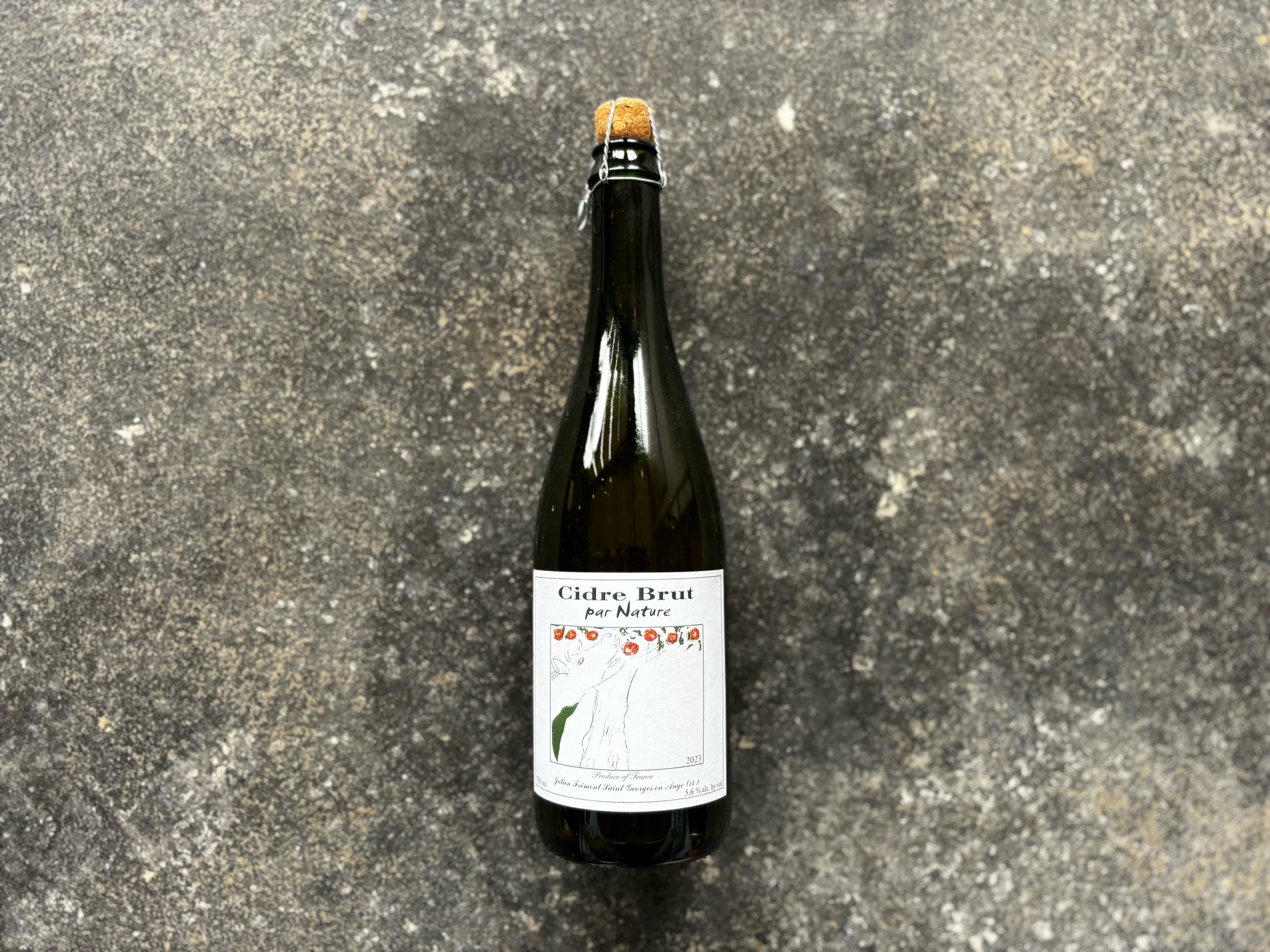
Winemaker: Julien Frémont
Fruit: Variety of 10 heirloom apples
Soil: Red clay, flint
Winemaking: Apples are hand harvested, then, for the fruit that needs it, stored in an attic in order to slightly dehyrate the fruit and increase the concentration. The apples are then mashed to obtain a pulp that macerates for a few hours before being pressed through a web cloth to gather the juices. The juice is then racked into large barrels where it ferments for about six months. After racking the juices between barrels in order to calm down the yeasts, the juices are bottled partially fermentedand will continue to ferment in the bottle, trapping the created carbon dioxide and resulting in a natural carbonation. A deposit at the bottom of the bottle is normal. No oenological products are used at any point.
From the Importer Louis/Dressner: Julien Frémont works in a breathtakingly beautiful farm in the Pays d’Auge. This is Camembert and Livarot country, and of course cider and Calvados, a place where cows and apple trees have defined the landscape for more time than can be remembered. It is green, lush, softly hilly, the soil rich clay with silex, and the climate humid and mild.
Frémont says that he would gladly do without his cows, about 80 when you count the youngsters born each year, and just deal with apple trees and the ciderhe makes from them. But he knows that cows and trees take care of each another, that his trees would not grow and age the way they do, or his apples taste the same, without the cows.
The farm has 45 hectares of grazing fields, 15 of which are planted with apple trees. The cows mow the grass, prunethe trees in summer and eat the fallen apples until it’s time for harvest from late September until November. The apples are picked by hand in large baskets, then put into 50kg bags. The trees are a mix of old local varieties of acidic, late ripening apples.
Location: France, Normandy
Winemaker: Julien Frémont
Fruit: Variety of 10 heirloom apples
Soil: Red clay, flint
Winemaking: Apples are hand harvested, then, for the fruit that needs it, stored in an attic in order to slightly dehyrate the fruit and increase the concentration. The apples are then mashed to obtain a pulp that macerates for a few hours before being pressed through a web cloth to gather the juices. The juice is then racked into large barrels where it ferments for about six months. After racking the juices between barrels in order to calm down the yeasts, the juices are bottled partially fermentedand will continue to ferment in the bottle, trapping the created carbon dioxide and resulting in a natural carbonation. A deposit at the bottom of the bottle is normal. No oenological products are used at any point.
From the Importer Louis/Dressner: Julien Frémont works in a breathtakingly beautiful farm in the Pays d’Auge. This is Camembert and Livarot country, and of course cider and Calvados, a place where cows and apple trees have defined the landscape for more time than can be remembered. It is green, lush, softly hilly, the soil rich clay with silex, and the climate humid and mild.
Frémont says that he would gladly do without his cows, about 80 when you count the youngsters born each year, and just deal with apple trees and the ciderhe makes from them. But he knows that cows and trees take care of each another, that his trees would not grow and age the way they do, or his apples taste the same, without the cows.
The farm has 45 hectares of grazing fields, 15 of which are planted with apple trees. The cows mow the grass, prunethe trees in summer and eat the fallen apples until it’s time for harvest from late September until November. The apples are picked by hand in large baskets, then put into 50kg bags. The trees are a mix of old local varieties of acidic, late ripening apples.