
 Image 1 of 1
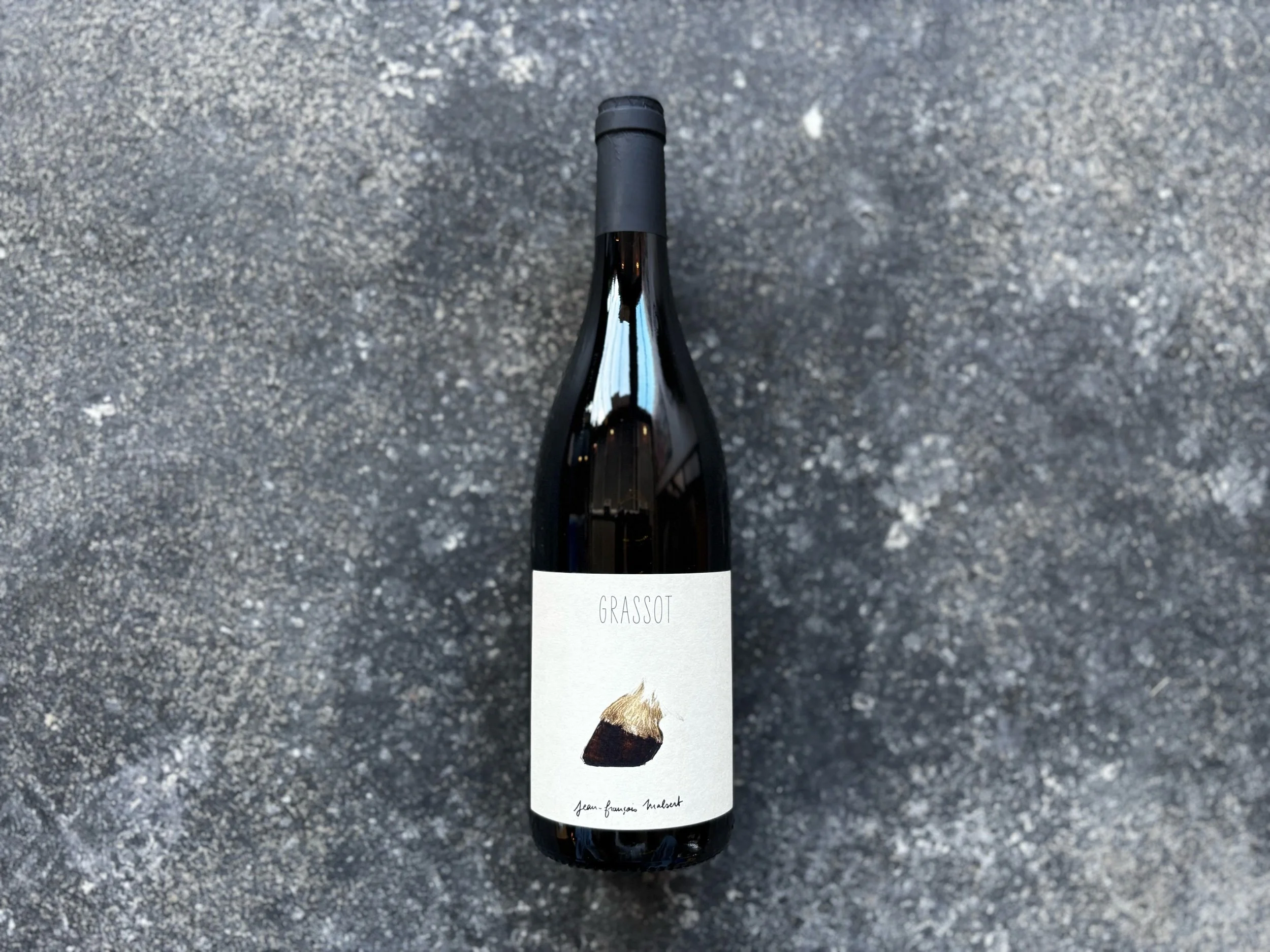
Jean-Francois Malsert, Domaine de L’Iserand ‘Grassot’ Rouge 2024
Location: France, Rhône
Winemaker: Jean-Francois Malsert
Grapes: 50% Syrah, 50% Gamay
Soil: From 2 parcels in the village of Sécheras totaling 1ha. The Gamay is exposed north on granite soils. The Syrah is exposed south on soils of granite and sand.
Winemaking: Organic farming. The Gamay was harvested in 2 passes due to mildew. The grapes from the first pass (50%) were direct pressed and fermented in concrete tanks. The remaining grapes were harvested 4 days later and macerated whole bunch for 14 days in concrete tanks. On the 15thday the grapes were pressed and combined with the direct press juice in concrete tanks. The Syrah was macerated whole bunch for 6 days in stainless steel tanks. On the 7th day the grapes were pressed, and the juice transferred back to stainless steel tanks to complete fermentation. After the completion of malolactic fermentation, the Gamay and Syrah were transferred to lined Amphoras for ageing. Maturation: Aged separately for 7 months in lined Amphoras. 1 month before bottling the components were blended in concrete tanks, and a low dose of sulfur (1g/HL) added. Bottled without fining or filtration.
From the Importer Terres Blanches: The grandson of a local grape grower, Jean-François aka “Jeff”, officially launched Domaine de L’Iserand in 2017. However, the journey to become a vigneron goes back many years to his time as the owner of the once popular wine bar Carafes en Folie in Tournon-sur-Rhône. It was here that Jeff championed producers like Dard & Ribo and Hervé Souhaut.
In 2011, Jeff began clearing and replanting several fallow plots on the plateau of Séchéras in the heart of the Saint-Joseph appellation. He continued running the wine bar for a few years while waiting for the new plantations to start producing. Carafes en Folie was eventually sold, allowing Jeff the opportunity to gain valuable experience making wine in Australia, New Zealand, and then back in France.
The first official vintage of Domaine de L’Iserand was 2017 with just 1.5 hectares in production. Since then, Jeff has grown the Domaine to almost 7 hectares of Syrah, Roussanne, Marsanne, Viognier, Gamay, Chasselas and Dureza. The vines are spread over multiple parcels on the steep granitic slopes of Sécheras and Ozon, and vineyards are cared for manually with the help of two mules, Cassius and Lana. Jeff’s organic regimen calls for treatments with tinctures of horsetail and nettle, and he aims for the minimum use of copper and sulfur.
In the cellar, only the indigenous yeasts are used for fermentation, and the wines are aged in a combination of demi-muids, concrete vats, and sandstone amphoras of various sizes. The reds are vinified whole cluster for up to 2 weeks with a light daily punch down of the cap. For the whites, the Saint-Joseph Blanc and Chasselas are directly pressed, while the IGP and Vin de France whites undergo a light maceration. There is no fining or filtration, and if possible, sulfur is only used at bottling.
Though he avoids the spotlight, Jeff has earned quiet acclaim among Northern Rhône aficionados. Authentic, restrained, and rooted in real farming, the wines of Domaine de L’Iserand are for those seeking elegance over extraction, freshness over flash, and terroir over technique. Still a relatively young Domaine, we have very high expectations for Domaine de L’Iserand, and these wines are not long for the “under the radar” category.
Location: France, Rhône
Winemaker: Jean-Francois Malsert
Grapes: 50% Syrah, 50% Gamay
Soil: From 2 parcels in the village of Sécheras totaling 1ha. The Gamay is exposed north on granite soils. The Syrah is exposed south on soils of granite and sand.
Winemaking: Organic farming. The Gamay was harvested in 2 passes due to mildew. The grapes from the first pass (50%) were direct pressed and fermented in concrete tanks. The remaining grapes were harvested 4 days later and macerated whole bunch for 14 days in concrete tanks. On the 15thday the grapes were pressed and combined with the direct press juice in concrete tanks. The Syrah was macerated whole bunch for 6 days in stainless steel tanks. On the 7th day the grapes were pressed, and the juice transferred back to stainless steel tanks to complete fermentation. After the completion of malolactic fermentation, the Gamay and Syrah were transferred to lined Amphoras for ageing. Maturation: Aged separately for 7 months in lined Amphoras. 1 month before bottling the components were blended in concrete tanks, and a low dose of sulfur (1g/HL) added. Bottled without fining or filtration.
From the Importer Terres Blanches: The grandson of a local grape grower, Jean-François aka “Jeff”, officially launched Domaine de L’Iserand in 2017. However, the journey to become a vigneron goes back many years to his time as the owner of the once popular wine bar Carafes en Folie in Tournon-sur-Rhône. It was here that Jeff championed producers like Dard & Ribo and Hervé Souhaut.
In 2011, Jeff began clearing and replanting several fallow plots on the plateau of Séchéras in the heart of the Saint-Joseph appellation. He continued running the wine bar for a few years while waiting for the new plantations to start producing. Carafes en Folie was eventually sold, allowing Jeff the opportunity to gain valuable experience making wine in Australia, New Zealand, and then back in France.
The first official vintage of Domaine de L’Iserand was 2017 with just 1.5 hectares in production. Since then, Jeff has grown the Domaine to almost 7 hectares of Syrah, Roussanne, Marsanne, Viognier, Gamay, Chasselas and Dureza. The vines are spread over multiple parcels on the steep granitic slopes of Sécheras and Ozon, and vineyards are cared for manually with the help of two mules, Cassius and Lana. Jeff’s organic regimen calls for treatments with tinctures of horsetail and nettle, and he aims for the minimum use of copper and sulfur.
In the cellar, only the indigenous yeasts are used for fermentation, and the wines are aged in a combination of demi-muids, concrete vats, and sandstone amphoras of various sizes. The reds are vinified whole cluster for up to 2 weeks with a light daily punch down of the cap. For the whites, the Saint-Joseph Blanc and Chasselas are directly pressed, while the IGP and Vin de France whites undergo a light maceration. There is no fining or filtration, and if possible, sulfur is only used at bottling.
Though he avoids the spotlight, Jeff has earned quiet acclaim among Northern Rhône aficionados. Authentic, restrained, and rooted in real farming, the wines of Domaine de L’Iserand are for those seeking elegance over extraction, freshness over flash, and terroir over technique. Still a relatively young Domaine, we have very high expectations for Domaine de L’Iserand, and these wines are not long for the “under the radar” category.