
 Image 1 of 1
Location: France, Rhône
Winemaker: Sylvain Bock
Grapes: 55% Grenache Noir, 35% Merlot, 10% Syrah
Soil: limestone area with big basalt rocks on the northern part of the village
Winemaking: Each grape variety was harvested, vinified and aged apart. Grapes for each variety undergo whole cluster carbonic maceration for 2-3 weeks in mix of glass and steel vessels. The 3 varieties were blended in a tank in the end of June and bottled late July.
For aging, the Merlot and Syrah spent 10 months in old wooden barrels, Grenache spends 10 months in steel tanks.
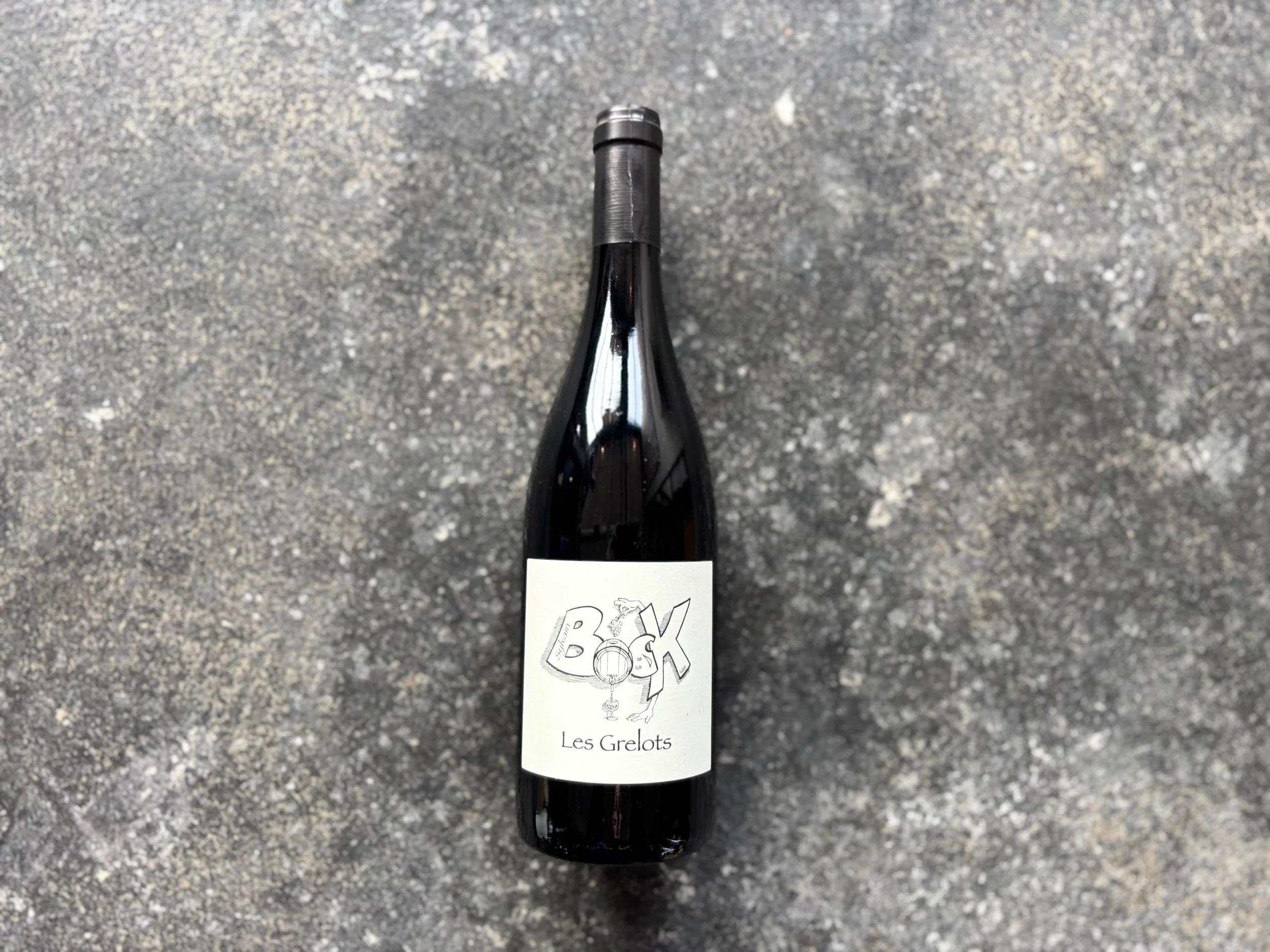
‘Les Grelots’: GREnache-merLOT-Syrah. The result is a light & fresh, slightly funky and ever-so-lightly effervescent red wine that ends with a touch of smoke on the palate.
From the importer Super Glou: Pensive, introspective, yet prone to sudden bursts of enthusiasm, Sylvain Bock the person is much like the wines he makes. His wines project a careful complexity that is belied by their playful labels and Sylvain’s propensity to experiment through co-ferments and delayed releases if certain barrels take detours he does not expect.
Nestled in a rugged corner of the Ardèche in Alba-la-Romaine, Sylvain was one of the last winemakers we visited in the Before Time, and certainly the last we joined for some spontaneous outdoor recreation.
He clearly loves this part of the world he has chosen to call home — which he describes as the North of the South of France — not only for its terroir of limestone and basalt, but also for the community he has found there among other winemakers such as Gerald Oustric of Le Mazel (who served as his ‘lightning rod’ for natural winemaking), Jérôme Jouret, Les Deux Terres and Anders Frederik Steen.
His position at the ‘northern limit of the South’ influences virtually every decision he makes: from extracting the delicate flower aromas at the ‘northern limit’ of Carignan (in his Bascule) to choosing Chardonnay (à la fraîche...) as a variety that has proven resilient in the face of climate change, which is turning much of the winemaking world into ‘the South.’
Location: France, Rhône
Winemaker: Sylvain Bock
Grapes: 55% Grenache Noir, 35% Merlot, 10% Syrah
Soil: limestone area with big basalt rocks on the northern part of the village
Winemaking: Each grape variety was harvested, vinified and aged apart. Grapes for each variety undergo whole cluster carbonic maceration for 2-3 weeks in mix of glass and steel vessels. The 3 varieties were blended in a tank in the end of June and bottled late July.
For aging, the Merlot and Syrah spent 10 months in old wooden barrels, Grenache spends 10 months in steel tanks.
‘Les Grelots’: GREnache-merLOT-Syrah. The result is a light & fresh, slightly funky and ever-so-lightly effervescent red wine that ends with a touch of smoke on the palate.
From the importer Super Glou: Pensive, introspective, yet prone to sudden bursts of enthusiasm, Sylvain Bock the person is much like the wines he makes. His wines project a careful complexity that is belied by their playful labels and Sylvain’s propensity to experiment through co-ferments and delayed releases if certain barrels take detours he does not expect.
Nestled in a rugged corner of the Ardèche in Alba-la-Romaine, Sylvain was one of the last winemakers we visited in the Before Time, and certainly the last we joined for some spontaneous outdoor recreation.
He clearly loves this part of the world he has chosen to call home — which he describes as the North of the South of France — not only for its terroir of limestone and basalt, but also for the community he has found there among other winemakers such as Gerald Oustric of Le Mazel (who served as his ‘lightning rod’ for natural winemaking), Jérôme Jouret, Les Deux Terres and Anders Frederik Steen.
His position at the ‘northern limit of the South’ influences virtually every decision he makes: from extracting the delicate flower aromas at the ‘northern limit’ of Carignan (in his Bascule) to choosing Chardonnay (à la fraîche...) as a variety that has proven resilient in the face of climate change, which is turning much of the winemaking world into ‘the South.’