
 Image 1 of 1
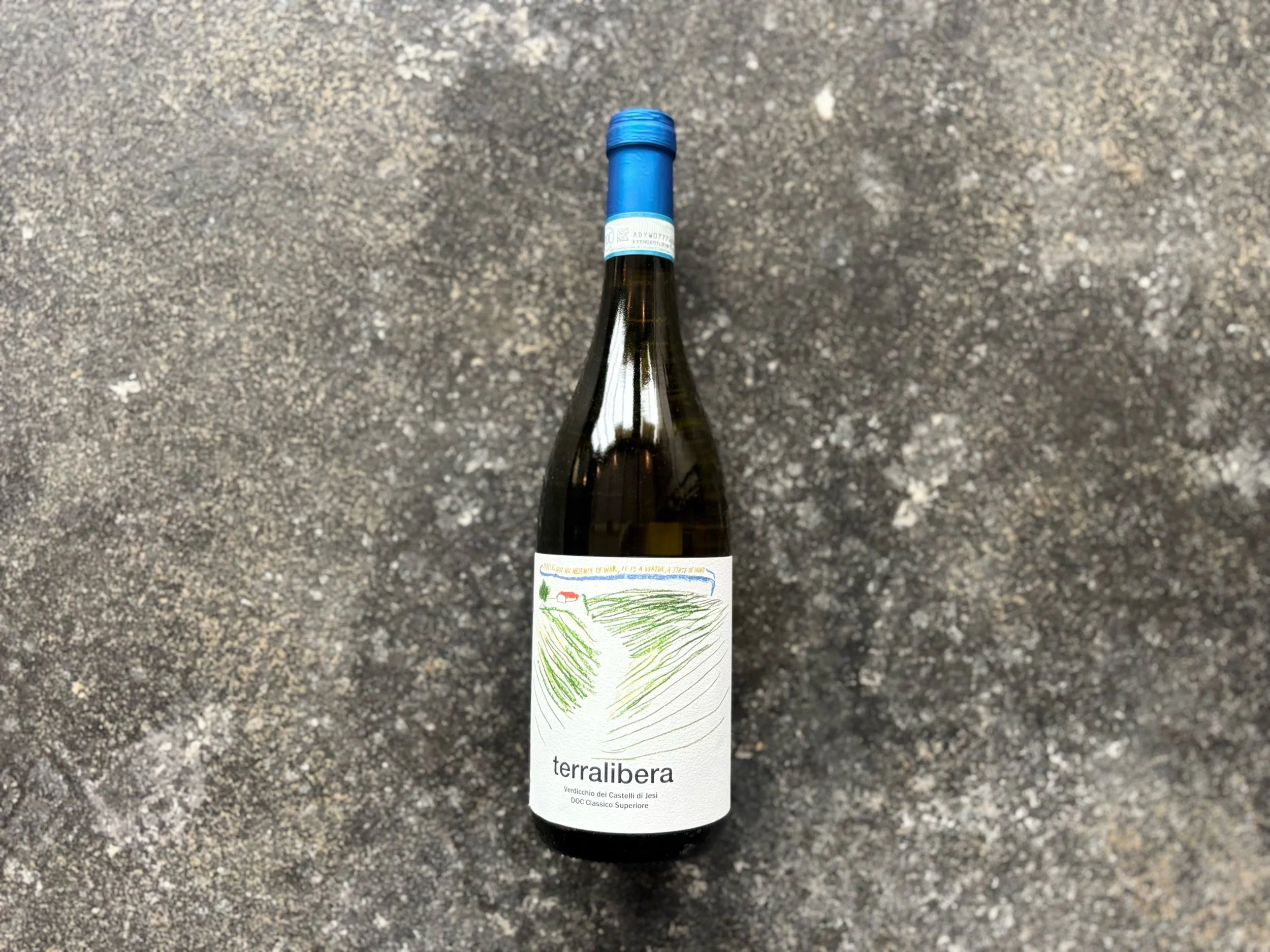
Terralibera Verdicchio del Castelli di Jesi 2025
Location: Italy, Marché
Winemaker: Gian Mario Bongini
Grapes: Verdicchio
Soil: calcareous clay
Winemaking: Gian Mario and his enologist/agronomist, Claudio Caldaroni, intervene as little as possible with the environment, the grapes, the must and the wine. Since purchasing the vineyards (planted to a traditional system of double arched guyot), Gian Mario shifted to organic farming and uses copper and sulfur as little as possible. He employs certain techniques of biodynamics, like spraying infusions and concoctions of seaweed, nettle and horsetail to regulate the vineyards’ microbiology. Similarly, the soils are enriched through green manure made with legumes and grains and are lefty grassy, to be mowed only once or twice per year. There is absolutely no plastic used in the vineyards, so even the vines are tied with biodegradable materials.
The two vineyard sites are vinified separately given the great differences in soils and exposures that constitute their own “cru.” The grapes are harvested by hand and carried to the winery where they are immediately de-stemmed and gently pressed to obtain the free-run must. A few hours later, the cold-pressed must is clarified through decanting, adding time and complexity to the fermentation process but eliminating room for error and the use of sulfites until bottling. Fermentation takes place spontaneously with indigenous yeasts at 18’C in stainless steel tanks, followed by a few months of refining on the lees with periodical batonnage until February when tartaric stabilization takes place by bringing the temperature of the cooling tank to -4’. After decantation, the tanks are cleaned and the wine is transferred with the additional of a minimal amount of sulfites to guarantee stability. In March or April, the wine is bottled and left to refine for another 2-3 months.
From the Importer Grand Cru Selections: Gian Mario Bongini is from a family of farmers in the countryside outside of Milan. As a child, he worked the land alongside his relatives until dreams of the city and studies pulled him towards Milan where he wound up pursuing a degree in Economics and embarked on a long-term career in corporate finance. To catch a break from the city, Gian Mario would head to Le Marche, a place he quickly came to love immensely for its humble nature and sincere ways. Year after year, he found himself drawn to this place and its captivating wines. In 2013, he established a collaborative winery with other friends and partners called “Filodivino” in Castelli di Jesi where he carried out almost 10 harvests.
However, in 2021, Gian Mario found a quintessential piece of land in Serra de’ Conti that had several unique and adjacent parcels of Verdicchio. Here he began to build a sustainable farming project and personal venture that would become “Terralibera,” derived from the simple philosophy of intervening as little as possibile with the environment and allowing the terroir to express itself.
Location: Italy, Marché
Winemaker: Gian Mario Bongini
Grapes: Verdicchio
Soil: calcareous clay
Winemaking: Gian Mario and his enologist/agronomist, Claudio Caldaroni, intervene as little as possible with the environment, the grapes, the must and the wine. Since purchasing the vineyards (planted to a traditional system of double arched guyot), Gian Mario shifted to organic farming and uses copper and sulfur as little as possible. He employs certain techniques of biodynamics, like spraying infusions and concoctions of seaweed, nettle and horsetail to regulate the vineyards’ microbiology. Similarly, the soils are enriched through green manure made with legumes and grains and are lefty grassy, to be mowed only once or twice per year. There is absolutely no plastic used in the vineyards, so even the vines are tied with biodegradable materials.
The two vineyard sites are vinified separately given the great differences in soils and exposures that constitute their own “cru.” The grapes are harvested by hand and carried to the winery where they are immediately de-stemmed and gently pressed to obtain the free-run must. A few hours later, the cold-pressed must is clarified through decanting, adding time and complexity to the fermentation process but eliminating room for error and the use of sulfites until bottling. Fermentation takes place spontaneously with indigenous yeasts at 18’C in stainless steel tanks, followed by a few months of refining on the lees with periodical batonnage until February when tartaric stabilization takes place by bringing the temperature of the cooling tank to -4’. After decantation, the tanks are cleaned and the wine is transferred with the additional of a minimal amount of sulfites to guarantee stability. In March or April, the wine is bottled and left to refine for another 2-3 months.
From the Importer Grand Cru Selections: Gian Mario Bongini is from a family of farmers in the countryside outside of Milan. As a child, he worked the land alongside his relatives until dreams of the city and studies pulled him towards Milan where he wound up pursuing a degree in Economics and embarked on a long-term career in corporate finance. To catch a break from the city, Gian Mario would head to Le Marche, a place he quickly came to love immensely for its humble nature and sincere ways. Year after year, he found himself drawn to this place and its captivating wines. In 2013, he established a collaborative winery with other friends and partners called “Filodivino” in Castelli di Jesi where he carried out almost 10 harvests.
However, in 2021, Gian Mario found a quintessential piece of land in Serra de’ Conti that had several unique and adjacent parcels of Verdicchio. Here he began to build a sustainable farming project and personal venture that would become “Terralibera,” derived from the simple philosophy of intervening as little as possibile with the environment and allowing the terroir to express itself.