
 Image 1 of 1
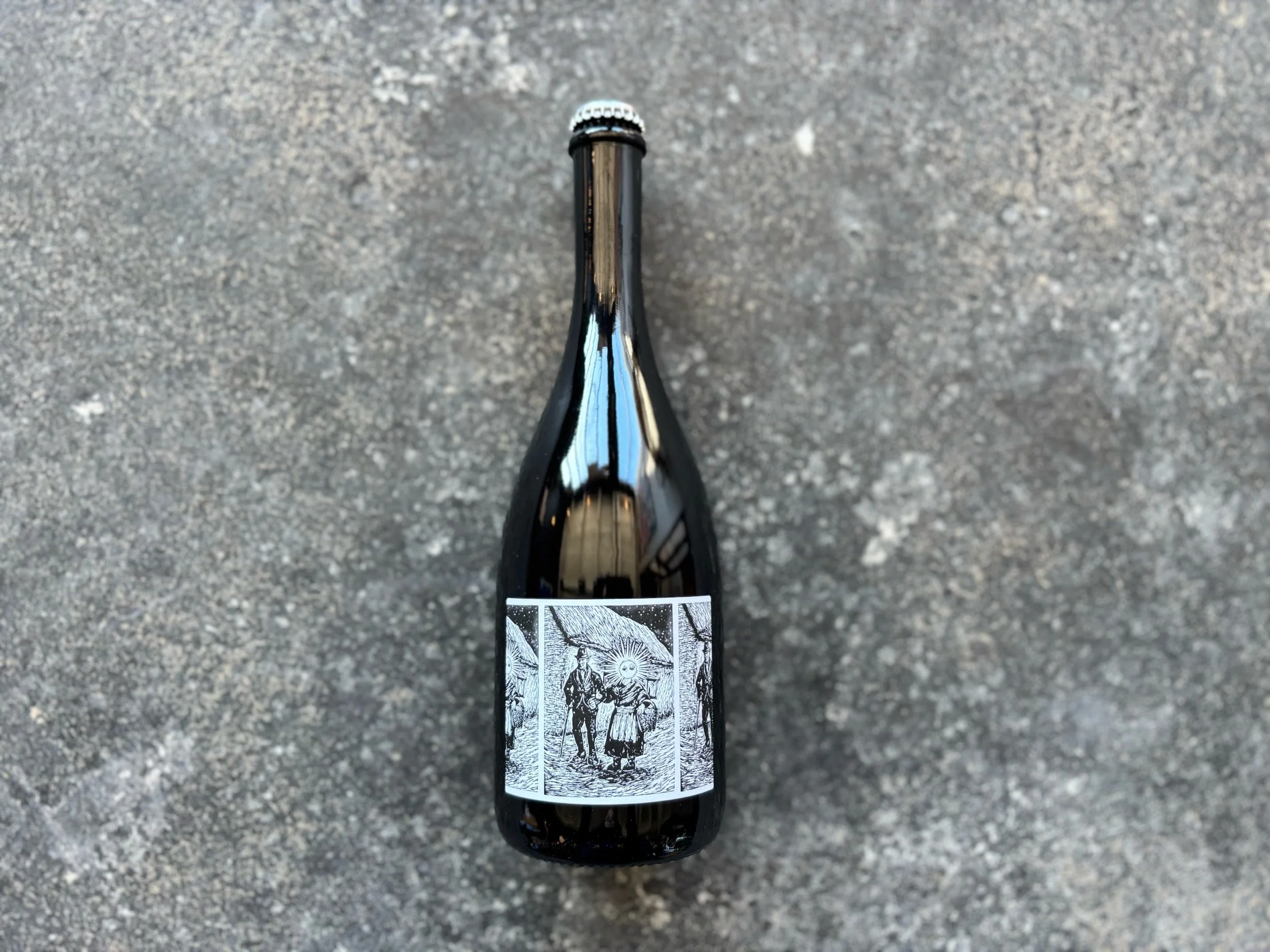
Terrevive ‘PerFranco’ Lambrusco Rosato 2022
Location: Italy, Emilia-Romagna
Winemaker: Gianluca Bergianti
Grapes: Lambrusco di Salamino di Santa Croce
Soil: sandy loam
Winemaking: Champagne method sparkling
From the Importer Rosenthal Wine Merchant: ‘PerFranco’ is produced purely from an ancient hyper-local clone of Salamino di Santa Croce, and named for Gianluca’s grandfather. Paler in hue, it pours a lightly hazy salmon in the glass, yet its overall spirit is more vinous and serious. With a blast of mouthwatering acidity that could awaken one from a coma, it buries its bubbles beneath a bracingly tense texture which delivers notes of wild strawberries and freshly plucked herbs with dirt still clinging to the roots.
In a year of many exciting additions to our Italian portfolio, we at Rosenthal Wine Merchant are thrilled to announce our first foray into the region of Emilia-Romagna. In 2008, Gianluca Bergianti founded Terrevive with 16 hectares in the village of Gargallo di Carpi just outside Modena, operating according to strict biodynamic principles since day one. He has since expanded to 35 hectares, growing cereals, vegetables, fruits, herbs, and, of course, grapes—although vineyards, planted entirely to autochthonous varieties, comprise just 10 total hectares in this calculatedly polycultural setting. Gianluca’s commitment to low cellar intervention and to the pre-Charmat-method traditional method for producing Lambrusco—he even has a wine called “No Autoclave”—results in wines of shocking immediacy, intense personality, riveting acidity, and organoleptic qualities which do not fit neatly into boxes. Tasting through the set of samples he sent toward the end of 2020, we were bowled over by the wines’ lively spirit and sheer mouthwatering deliciousness, and seeing Terrevive in person only expanded our sense of amazement.
The winery’s bottle storage area, modeled after a 17th-century-style icehouse, burrows like a Hobbit-hole directly into the side of a hill—a hill Gianluca constructed himself. Lambrusco country is quite flat, but Gianluca, having studied in Tuscany, loves the visual presence of hills, so he simply mounded up some dirt and made his own. This is no mere affectation, however: the hill, topped with maple and hazelnut trees, keeps the storage room at a constant temperature naturally and ensures total darkness. The winery itself is no-frills, lined with gorgeous custom-made cement tanks in which all wines undergo their primary fermentations; these large and vaguely egg-shaped vessels allow the lees to circulate gently and continuously. A self-described “extremist,” Gianluca adds no yeasts, makes no adjustments for acidity, does not chaptalize, and never employs dosage, so his wines always end up scintillatingly bone-dry. Deeply disparaging of the consistency-ensuring Charmat method, in which bubbles are created in a large steel tank (known as an autoclave) via careful calculations and additions of sugars and yeasts, he employs a low-tech method, adding grape must and nothing else to his dry wines as they’re being bottled for their secondary fermentation. Leftover natural yeasts devour the sugars in the must, creating a gentle natural effervescence in each bottle within about three months.
Terrevive’s immaculately tended vineyards, all planted in the zone’s typical sandy loam soils, speak to his obsession with working in harmony with the land. Gianluca grows cover crop in alternating rows among his vines, using them as natural fertilizer when spring rolls around, and employs careful biodynamic preparations to keep his soil and plants vitalized. Irrigation is never employed, and all work in the vineyards, from pruning through harvest, is performed by hand. The vineyards, rather than being clustered together in one section of the property, intermingle with fields of cereals, vegetables, and fruits. The ancient indigenous varieties found here arose in a polycultural environment, and it is in such an environment as Terrevive that they truly flourish.
The idiosyncratic yet characterful nature of Terrevive’s Lambrusco extends to its striking labeling as well. Gianluca commissioned a different local artist to create each front label, offering no information about the wine at all and asking the artist to draw based on gut impressions of the drinking experience. The results, like the wines inside, are immediately arresting. We are eager to share the below quartet of wines with you, each of which offers a markedly distinct personality, and we trust that, as they did for us, Gianluca’s searching, riveting wines will greatly expand your notion of what this region is capable of.
Location: Italy, Emilia-Romagna
Winemaker: Gianluca Bergianti
Grapes: Lambrusco di Salamino di Santa Croce
Soil: sandy loam
Winemaking: Champagne method sparkling
From the Importer Rosenthal Wine Merchant: ‘PerFranco’ is produced purely from an ancient hyper-local clone of Salamino di Santa Croce, and named for Gianluca’s grandfather. Paler in hue, it pours a lightly hazy salmon in the glass, yet its overall spirit is more vinous and serious. With a blast of mouthwatering acidity that could awaken one from a coma, it buries its bubbles beneath a bracingly tense texture which delivers notes of wild strawberries and freshly plucked herbs with dirt still clinging to the roots.
In a year of many exciting additions to our Italian portfolio, we at Rosenthal Wine Merchant are thrilled to announce our first foray into the region of Emilia-Romagna. In 2008, Gianluca Bergianti founded Terrevive with 16 hectares in the village of Gargallo di Carpi just outside Modena, operating according to strict biodynamic principles since day one. He has since expanded to 35 hectares, growing cereals, vegetables, fruits, herbs, and, of course, grapes—although vineyards, planted entirely to autochthonous varieties, comprise just 10 total hectares in this calculatedly polycultural setting. Gianluca’s commitment to low cellar intervention and to the pre-Charmat-method traditional method for producing Lambrusco—he even has a wine called “No Autoclave”—results in wines of shocking immediacy, intense personality, riveting acidity, and organoleptic qualities which do not fit neatly into boxes. Tasting through the set of samples he sent toward the end of 2020, we were bowled over by the wines’ lively spirit and sheer mouthwatering deliciousness, and seeing Terrevive in person only expanded our sense of amazement.
The winery’s bottle storage area, modeled after a 17th-century-style icehouse, burrows like a Hobbit-hole directly into the side of a hill—a hill Gianluca constructed himself. Lambrusco country is quite flat, but Gianluca, having studied in Tuscany, loves the visual presence of hills, so he simply mounded up some dirt and made his own. This is no mere affectation, however: the hill, topped with maple and hazelnut trees, keeps the storage room at a constant temperature naturally and ensures total darkness. The winery itself is no-frills, lined with gorgeous custom-made cement tanks in which all wines undergo their primary fermentations; these large and vaguely egg-shaped vessels allow the lees to circulate gently and continuously. A self-described “extremist,” Gianluca adds no yeasts, makes no adjustments for acidity, does not chaptalize, and never employs dosage, so his wines always end up scintillatingly bone-dry. Deeply disparaging of the consistency-ensuring Charmat method, in which bubbles are created in a large steel tank (known as an autoclave) via careful calculations and additions of sugars and yeasts, he employs a low-tech method, adding grape must and nothing else to his dry wines as they’re being bottled for their secondary fermentation. Leftover natural yeasts devour the sugars in the must, creating a gentle natural effervescence in each bottle within about three months.
Terrevive’s immaculately tended vineyards, all planted in the zone’s typical sandy loam soils, speak to his obsession with working in harmony with the land. Gianluca grows cover crop in alternating rows among his vines, using them as natural fertilizer when spring rolls around, and employs careful biodynamic preparations to keep his soil and plants vitalized. Irrigation is never employed, and all work in the vineyards, from pruning through harvest, is performed by hand. The vineyards, rather than being clustered together in one section of the property, intermingle with fields of cereals, vegetables, and fruits. The ancient indigenous varieties found here arose in a polycultural environment, and it is in such an environment as Terrevive that they truly flourish.
The idiosyncratic yet characterful nature of Terrevive’s Lambrusco extends to its striking labeling as well. Gianluca commissioned a different local artist to create each front label, offering no information about the wine at all and asking the artist to draw based on gut impressions of the drinking experience. The results, like the wines inside, are immediately arresting. We are eager to share the below quartet of wines with you, each of which offers a markedly distinct personality, and we trust that, as they did for us, Gianluca’s searching, riveting wines will greatly expand your notion of what this region is capable of.