
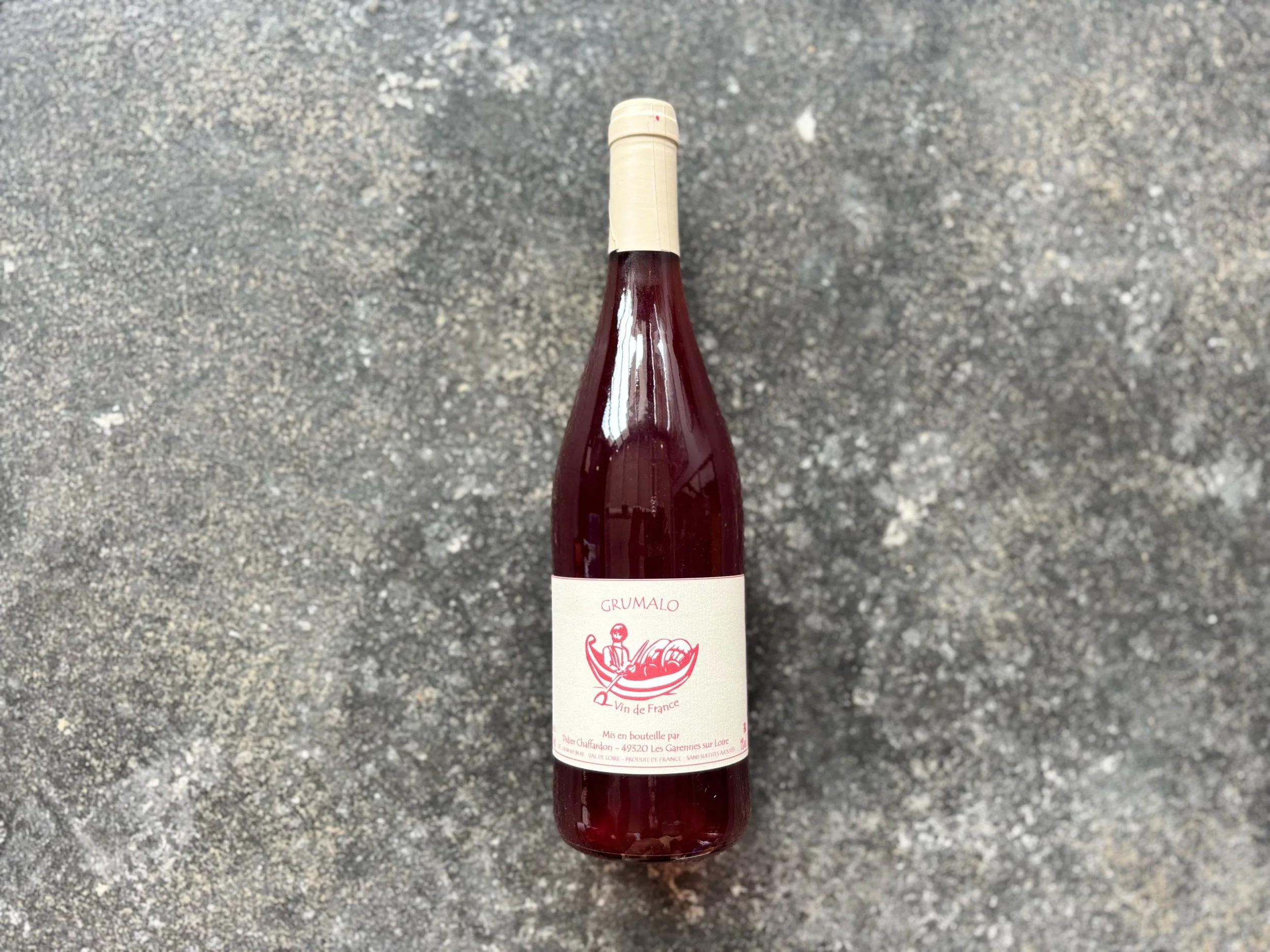
Location: France, Loire, Anjou
Winemaker: Didier Chaffardon
Grapes: Grolleau
Winemaking: Organic farming, hand harvest, 3 days maceration, indigenous yeast fermentation
The Season of Chillables: Orange, Rosé & Lighter Reds
FRIDGE TO TABLE

Location: France, Languedoc-Roussillon
Winemaker: Laura Lees & Arthur Joly
Grapes: Viognier
Soil: Clay and limestone
Winemaking: Organic farming. Hand harvest. Wild yeast fermentation. A part in barrels for the structure, a part in sandstone amphora for minerality, a part in exotic tanks, a part in maceration for the material: an elegant and powerful combo. Aromatic, structured, fresh and elegant! No additions.
From the Producers: The adventure began 6 years ago with the idea of saving a vineyard on two schist hills on the confines of the Corbières. Abandoned for 6 years and exposed to the south, they had suffered a lot.
Given the amount of work, no one wanted to get them back. So we decided to restore this vineyard and learned, on the job, both of us, to prune, clear, bring life back to life and make wine.
Our first goal is to find a coherent and respectful human/nature relationship.
These 8-hectare vineyards have been cleared with a pickaxe! We have organized large collective construction sites and today we can say that 50% of the vines will start again. Our first vintage l'Ecume des schistes took place in 2017. After two years of hard work, we produced 1112 bottles. Suffice it to say that we are talking about nectar... This is how, throughout history, we have become winemakers
Since then we have recovered other vines, for their grape variety, their terroir, the opportunities.. We are now working on about ten hectares scattered over Villeneuve, almost all on slopes (except one), and have largely abandoned the abandoned vineyards from the start for which the efforts made were not enough.
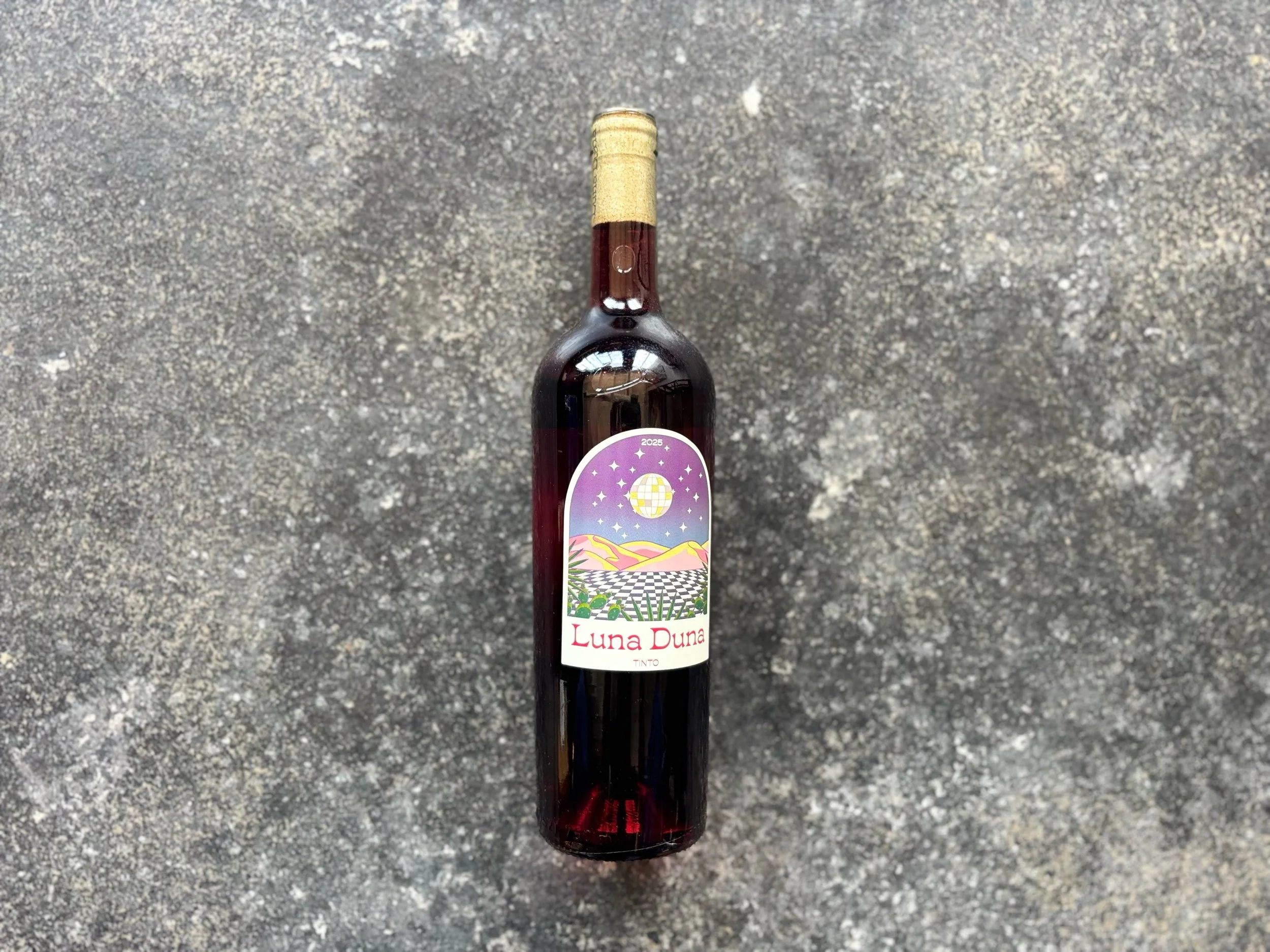
Location: Argentina
Winemaker: Claus Preisinger
Grapes: 90% Criolla Chica, 10% Criolla Grande
Soil: Sandy soils
Winemaking: Organic farming. 100% De-stemmed, native yeast fermentation.
From the Importer Brazos Wine: The Morcos family originally planted their vines in the 1930’s and third generation Matias Morcos makes Luna Duna at the family winery. The vines are located in Eastern Mendoza in the subregion of Alto Verde, San Martin. Some of Mendoza’s oldest vines come from the East, an area that is often overlooked. The vines are farmed with no pesticides and fermentation is natural.
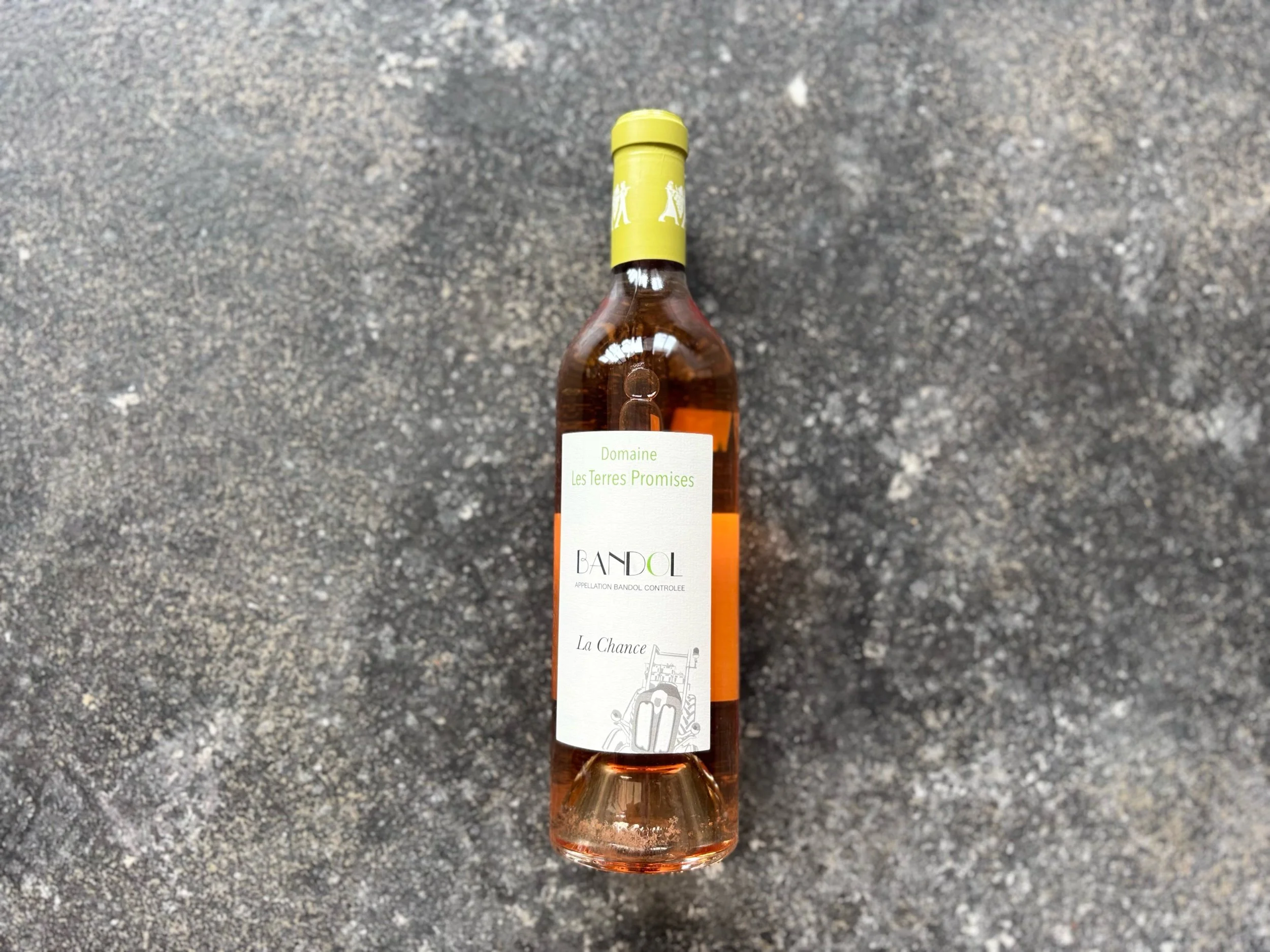
Location: France, Provence
Winemaker: Jean-Christophe Comor
Grapes: 34% Grenache, 33% Mourvèdre, 33% Cinsault
Soil: Clay-limestone
Winemaking: Organic farming. Single parcel located in Castellet. Wine is hand harvested, made with native yeasts, unfined and lightly filtered.
From us at M&L: The location and terrain of Jean-Christophe Comor‘s estate is so perfect to him that he named it Domaine des Terres Promises (the Promised Land!).
Perched 400 meters above and 30km back from the Mediterranean this is a site that, since antiquity, has proven ideal. The whole estate is over clay/limestone and the altitude allows the 20+ indigenous varieties (!) to ripen slowly, while they retain all the freshness of acidity Jean-Christophe (and we) crave. He is so enamored with his terroir that he refers to working here as “a privilege”.
Since his debut vintage in 2004 Jean-Christophe has consistently produced exceptional, polished, totally natural wines that drink with such pleasant texture that we think of them as perfect introductions to the cornucopia of wines from Provence that exist outside of the famous, fabled Bandol with its sun-tan-lotion rosés and cut-with-a-knife reds.
From the Producers: We settled in 2004 in the foothills of Sainte-Baume to create a wine estate which now covers 15 hectares. We decided to work our vines according to the principles of organic farming, to vinify and age our wines in a natural way (without addition or input).
Our task is to accompany the vine so that the wine expresses, in the most beautiful way possible, all the identity of its land. Each plot has its own personality that can be found in each of our cuvées.
At an altitude of 400 meters, on a Jurassic dolomitic limestone terroir more than thirty kilometers from the Mediterranean, our land has benefited, since antiquity, from privileged conditions for working the vines. We cultivate a dozen red and white grape varieties in organic farming on fairly homogeneous clay-limestone soil.
The altitude of the estate allows us to pick our grapes later while preserving the freshness we value. In respect of nature and the grapes, our harvests are done manually.
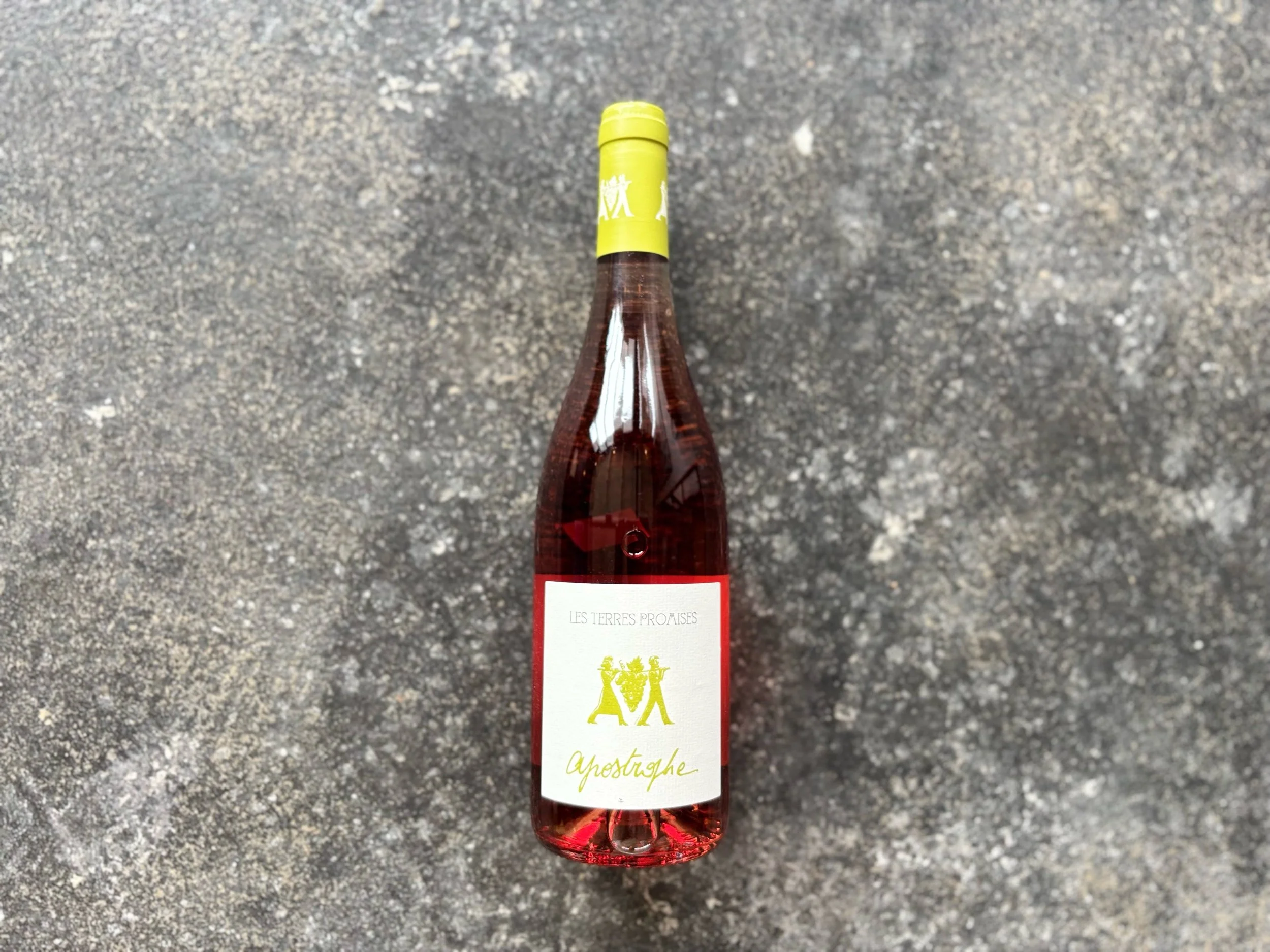
Location: France, Provence
Winemaker: Jean-Christophe Comor
Grapes: 45% Grenache, 30% Carignan, 25% Cinsault
Soil: Clay-limestone
Winemaking: Organic farming. The grapes are hand harvested, gently pressed and vinified with indigenous yeasts. High elevation rosé at 1300 feet above sea level.
From us at M&L: The location and terrain of Jean-Christophe Comor‘s estate is so perfect to him that he named it Domaine les Terres Promises (the Promised Land!).
Perched 400 meters above and 30km back from the Mediterranean this is a site that, since antiquity, has proven ideal. The whole estate is over clay/limestone and the altitude allows the 20+ indigenous varieties (!) to ripen slowly, while they retain all the freshness of acidity Jean-Christophe (and we) crave. He is so enamored with his terroir that he refers to working here as “a privilege”.
Since his debut vintage in 2004 Jean-Christophe has consistently produced exceptional, polished, totally natural wines that drink with such pleasant texture that we think of them as perfect introductions to the cornucopia of wines from Provence that exist outside of the famous, fabled Bandol with its sun-tan-lotion rosés and cut-with-a-knife reds.
From the Producers: We settled in 2004 in the foothills of Sainte-Baume to create a wine estate which now covers 15 hectares. We decided to work our vines according to the principles of organic farming, to vinify and age our wines in a natural way (without addition or input).
Our task is to accompany the vine so that the wine expresses, in the most beautiful way possible, all the identity of its land. Each plot has its own personality that can be found in each of our cuvées.
At an altitude of 400 meters, on a Jurassic dolomitic limestone terroir more than thirty kilometers from the Mediterranean, our land has benefited, since antiquity, from privileged conditions for working the vines. We cultivate a dozen red and white grape varieties in organic farming on fairly homogeneous clay-limestone soil.
The altitude of the estate allows us to pick our grapes later while preserving the freshness we value. In respect of nature and the grapes, our harvests are done manually.

Location: France, South West, Cahors
Winemaker: Fabien Jouves
Grapes: Malbec, Tannat, Merlot
Soil: clay, limestone
Winemaking: saignée method; long maceration, bottled young
‘À Table!!!’: Brash and full of life, this rosé is dreamy and decadent when paired with a banh mi, any charcuterie, and spicy foods. Thirst-quenching and herbacious and fun!
From the importer Zev Rovine Selections: Fabien Jouves is from an old farming family in Causse and became a winemaker in 2006 when he created his first cuvée, “Mas del Périé”, on the highest slopes of Cahors.
Jouves’ estate, 21 hectares in the junction of Quercy and Cahors, was selected to highlight the many expression of Côt. Reinforcing this is Fabien’s commitment to biodynamic viticulture that respects “life, plant, man, and the environment.” Following biodynamic agriculture adds strength to his terroir by supporting the whole environment from the vines to the animals.
The vinification is completely natural without any oenological inputs. His wines are then aged in concrete vats, barrels, or casks, according to its characteristics and personality.
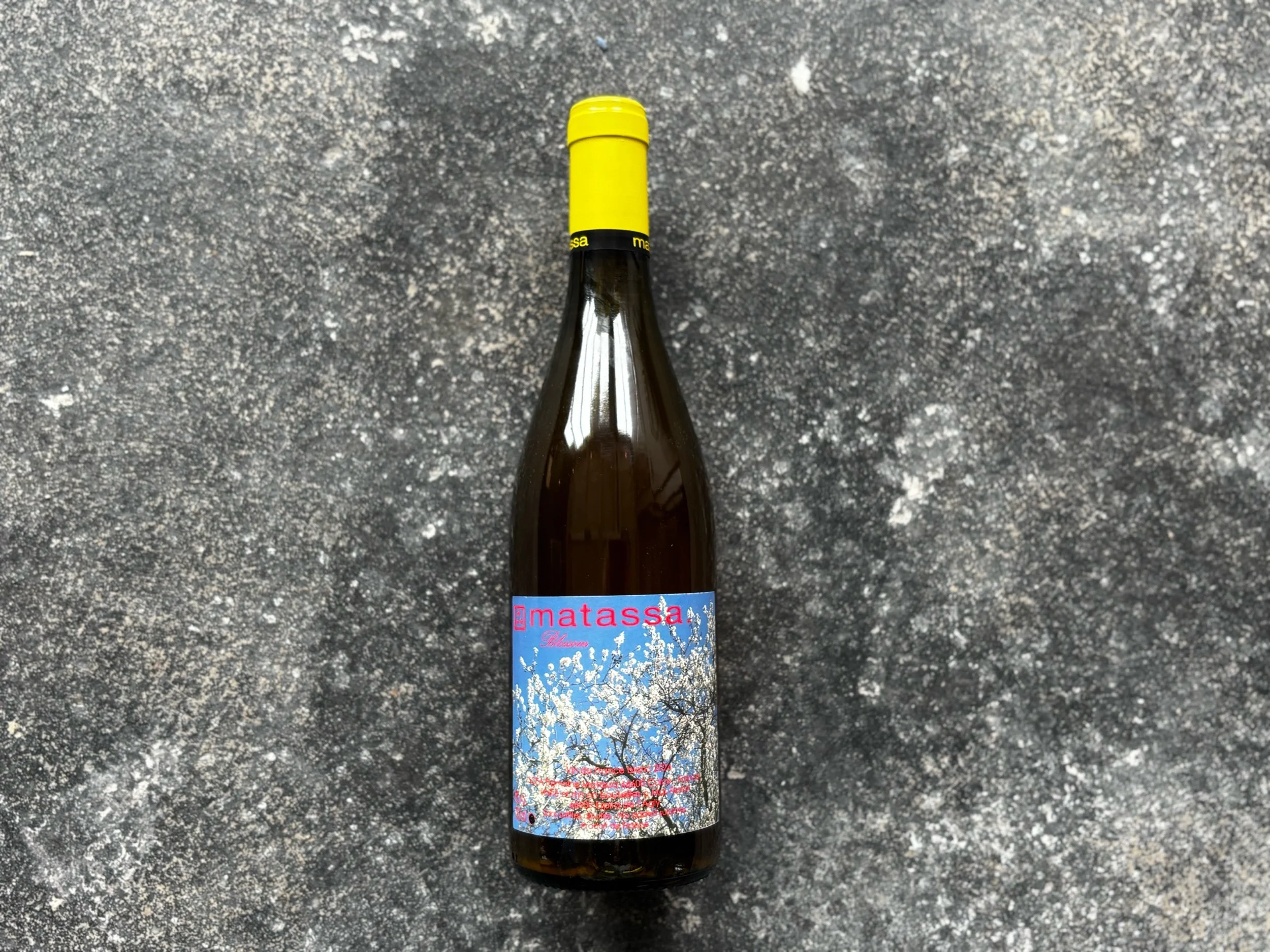
Location: France, Roussillon
Winemaker: Tom Lubbe
Grapes: Muscat Petits Grains
Soil: Schist
Winemaking: Organic farming. The wine comes from a single vineyard composed of red schist soils that has some of Tom's earliest ripened grapes. Whole-cluster, three week maceration. The wine is then pressed and racked into demi-muid or foudre for fermentationand aging.
From the Importer Louis/Dressner Selections: How does a New Zealander who grew up in South Africa end up starting an iconoclastic estate in the Roussillon? This isn't exactly an everyday occurrence, but so it goes for Tom Lubbe of Domaine Matassa. In the late 90's, Tom was working at the only estate in South Africa using indigenous yeasts and lower yields. Interested in working with Mediterranean varietals, Tom managed to score a three month internship at the legendary Domaine Gauby in the village of Calce. Gérard Gauby quickly befriended Tom and asked him to come back for three consecutive vintages as a cellar hand. During that time, Tom met his wife Nathalie, who just so happens to be Gérard's sister.
The birth of their first child made Tom reconsider moving back to South Africa, opting instead to stay in Calce to start his own estate. Matassa was founded in 2003, with the first vintage entirely produced in the recently married couple's living room. Gérard felt so bad about this that he gave Tom the old Gauby cellar in 2004!
Tom works with many of the traditional Catalan varieties: Carignan, Mourvèdre, Grenache (mostly Lladonner Pelut, the ancient Catalan strain of Grenache), Grenache Gris, Muscat d'Alexandrie and Muscat Petits-Grains. These grapes are often co-planted together, particularly in the very old vines. In total, 20 hectares are cultivated on lime, clay, schist, marl, black slate and black marl soils. While Tom still farms some of the very low yielding old vines around the village of Calce, he has vastly expanded to different areas where yields are more generous, typically in the 25/30 hl/ha range (still relatively low for the region). These include the lieu-dit Coume de l'Olla as well as a 2019 acquisition of eight hectares planted above his new farmhouse (read more about this in our 2019 visit).
The vineyards are worked naturally without any chemical aids and Tom is certified organic by Ecocert. And while he does occasionally use biodynamic techniques to activate and nourish his soils, over the years this has become less of a priority. Instead, an adamant dedication to cover crops has completely transformed his soils and in turn the wines. Tom is convinced that the increased insect life within the soils, particularly worms, has changed the flavors of his wines. Another shocking effect: a drastic drop in alcohol. Tom has always harvested much earlier than most, usually starting with the Muscat in early August. In 2005, they would typically reach a potential of 13.5% alcohol. In 2018, they came in around 10.5%.
Much has also changed in the cellar over the years. All the wines have now intentionally been declassified to Vin de France. As mentioned above, the alcohol is much lower, rarely more than 12%. The white wines are all macerated on their skins, a choice that goes back to "Alexandria" 2008, the first Matassa wine of its kind. For the reds, whole-cluster infusions take precedent to maceration and extraction, with white grapes often co-fermented. If oak is used, it is not to bring structure to the wine but rather oxygen. Longer élevages have been abandoned to bottle wines much earlier. Everything is bottled without filtration or fining. Sulfur, which Tom had used judiciously in the past, has not been added to any of the production since the 2015 vintage.
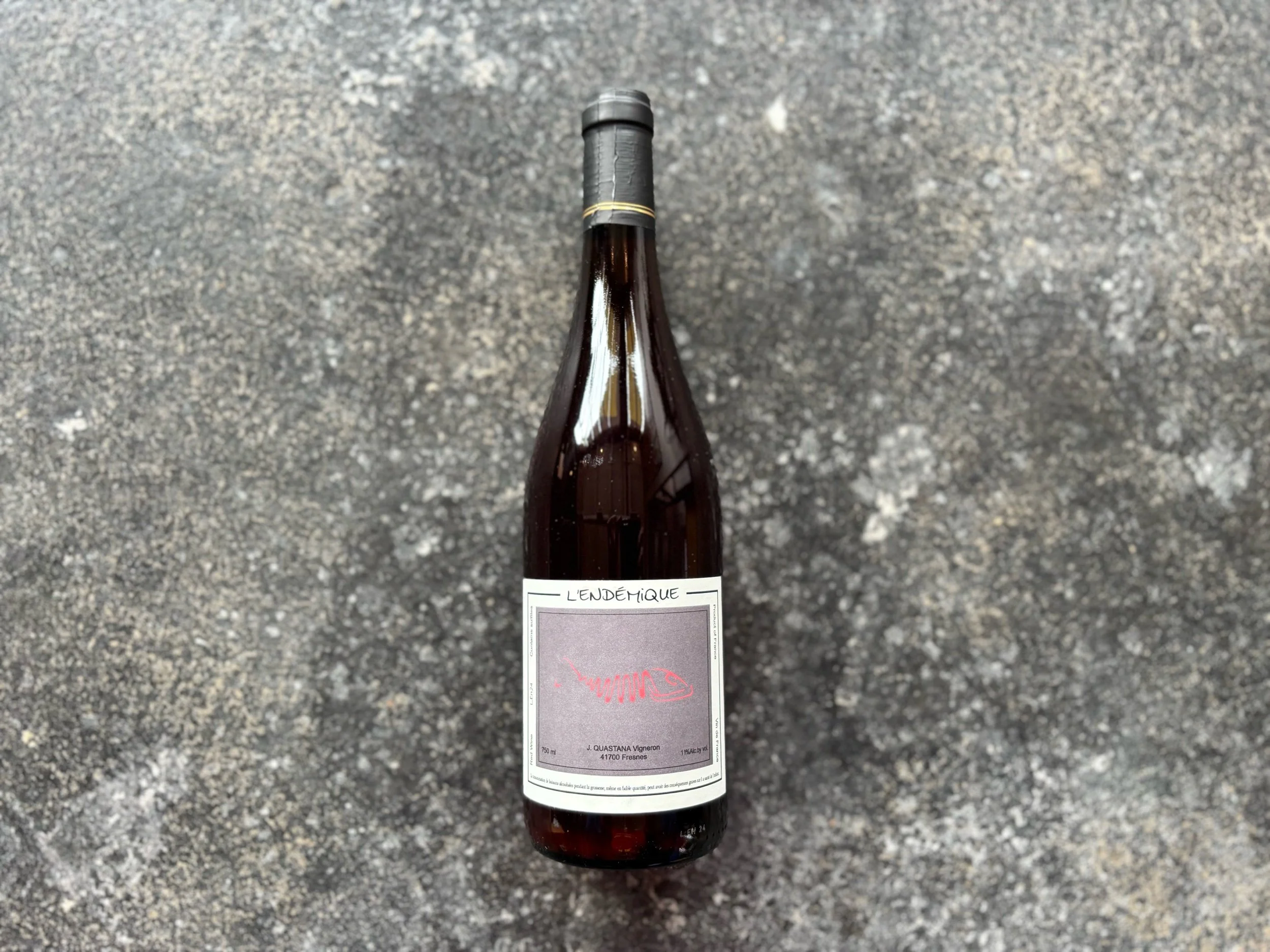
Location: France, Loire, Loir-et-Cher
Winemaker: Jeremy Quastana
Grapes: Pinot Noir, Gamay
Soil: Clay over broken-down limestone
Winemaking: Organic farming. Hand harvest, Semi-carbonic maceration; no SO2
From the Importer Selection Massale: A light-bodied Syrah with that lively fruit and acid seen in all of Jeremy's wines.
We were introduced to Jeremy by our good friend Olivier Lemasson. Jeremy worked with Olivier for a few years and managed to grab a couple hectares of land not far from Olivier's main plot in the Loir et Cher, not far from Cheverny. Before that, Jeremy learned the trade at Marcel Lapierre's winery and did a six-month internship at Clos Ouvert in Chile. In four vintages, he has shown that he can make clean, highly drinkable wines with very little sulphur dioxide.
Jeremy is still a young vigneron and, in our opinion, he gets better every year. The vineyard is one plot composed of young vine Gamay, middle-aged Cot, and old vine Gamay on a gentle slope of clay over Silex.
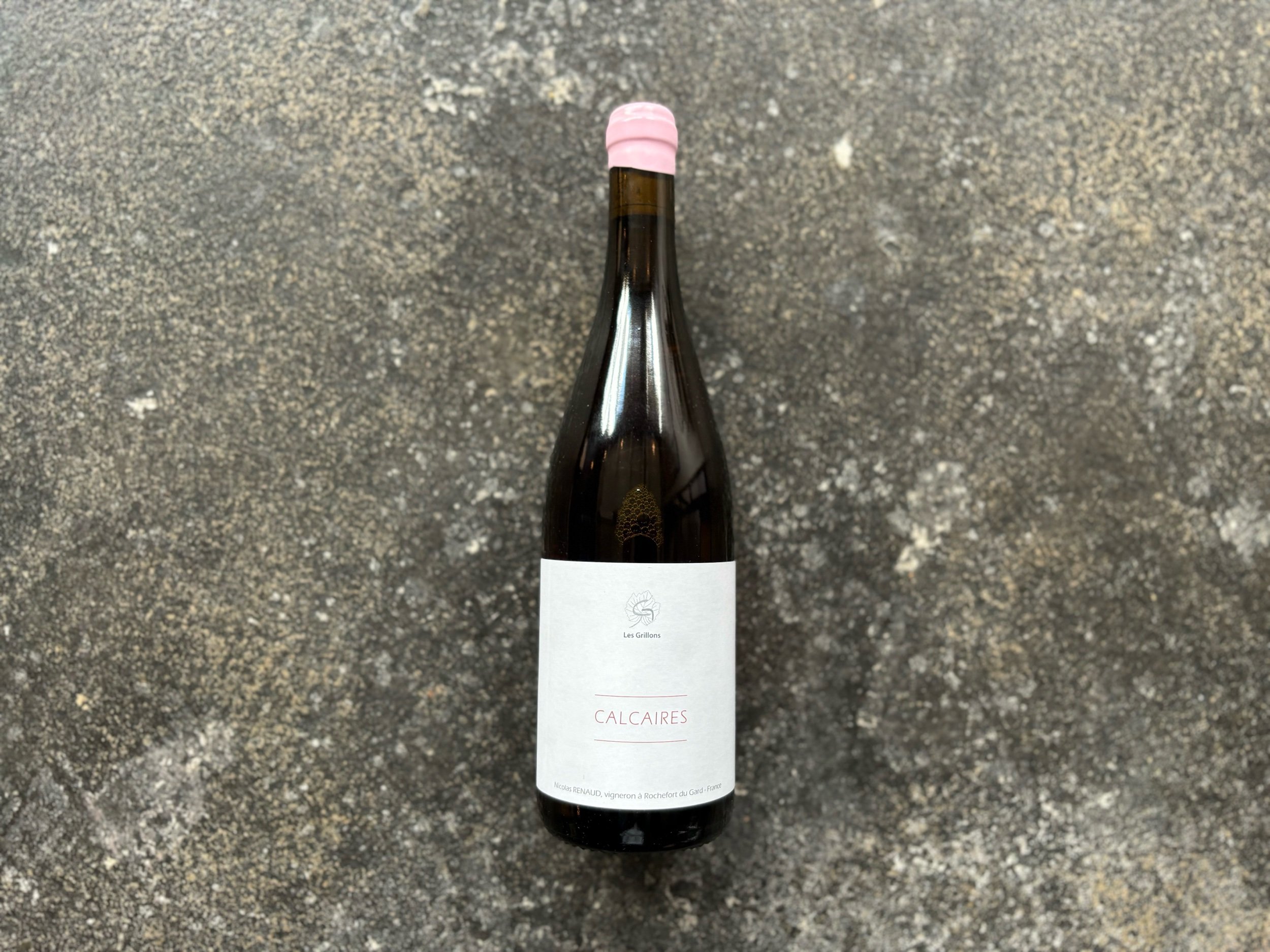
Location: France, Rhône
Winemaker: Nicolas Renaud
Grapes: Grenache Noir
Soil: Limestone
Winemaking: Organic and biodynamic. Hand picked. 50% carbonic maceration (6 days), 50% direct press.
From the Importer Steven Graf: Nicolas Renaud is a geologist born and raised in the Rhône. For many years, he taught the geology at university, tending vines on the side. In 2005, he began renting his own vines, and in the meantime has cultivated a mosaic of parcels – in and around Rochefort du Gard – with unique bedrocks, soils and long forgotten vines. His wines are the perfect physical analog to the breadth of knowledge he brings to the vineyard. Working organically, Nicolas shows what the magnificent terroir of the Rhône has to offer.
It's impossible not to be charmed by Mr. Renaud. There's a comical element at his core that endears you to him and to his project. Nicolas's great gift and great weakness is that he simply cannot help himself. Every year, every visit, there's a story about a new little parcel that charmed him and demanded its own fermentation. He's fascinated. He is madly in love with his work and his terroir. He's a winemaker of such experience and prowess, and yet I think his name falls to the wayside because of the scope and breadth of his endeavor. One year he introduces a wine from pure limestone, then a wine from some purchased Picpoul, then a small but interesting plot of old vine Syrah, all with new names and labels that make the domaine a bit of a puzzle, if a happy one. There's always more to explore, and always new ways to be excited.

Location: France, Rhône
Winemaker: Nicolas Renaud
Grapes: Cinsault
Soil: 3 different plots; white marl, sand and limestone.
Winemaking: Organic and biodynamic. Hand picked. 50% carbonic maceration (8 days), 50% direct press.
From the Importer Steven Graf: Nicolas Renaud is a geologist born and raised in the Rhône. For many years, he taught the geology at university, tending vines on the side. In 2005, he began renting his own vines, and in the meantime has cultivated a mosaic of parcels – in and around Rochefort du Gard – with unique bedrocks, soils and long forgotten vines. His wines are the perfect physical analog to the breadth of knowledge he brings to the vineyard. Working organically, Nicolas shows what the magnificent terroir of the Rhône has to offer.
It's impossible not to be charmed by Mr. Renaud. There's a comical element at his core that endears you to him and to his project. Nicolas's great gift and great weakness is that he simply cannot help himself. Every year, every visit, there's a story about a new little parcel that charmed him and demanded its own fermentation. He's fascinated. He is madly in love with his work and his terroir. He's a winemaker of such experience and prowess, and yet I think his name falls to the wayside because of the scope and breadth of his endeavor. One year he introduces a wine from pure limestone, then a wine from some purchased Picpoul, then a small but interesting plot of old vine Syrah, all with new names and labels that make the domaine a bit of a puzzle, if a happy one. There's always more to explore, and always new ways to be excited.
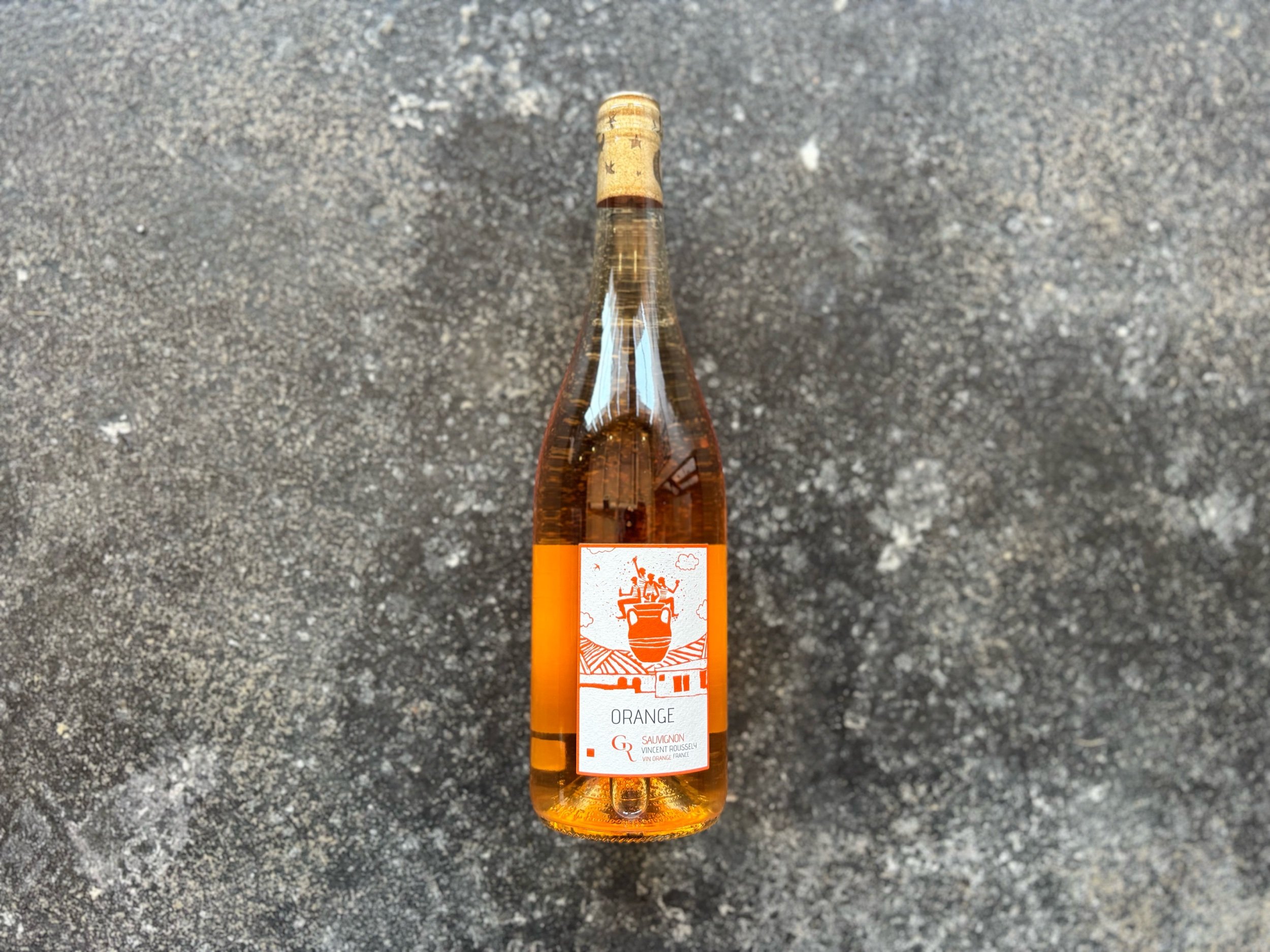
Location: France, Loire, Touraine
Winemaker: Vincent Roussely
Grapes: 60% Sauvignon Blanc, 30% Menu Pineau, 10% Chenin Blanc
Soil: Clay, limestone
Winemaking: Certified organic. Hand harvest. 3-weeks skin maceration in tank. Fermented with indigenous yeast.
From the Importer Stork Wine Company: Back in the 18th century, Clos Roussely was an outbuilding of the enormous castle perched at the center of the village of Angé-sur-Cher. Even today, its meter-and-a-half thick walls do a better job of insulating the ancient winery than most modern constructions, and the 250-year-old, hand-dug caves are stacked floor-to-ceiling with perfectly conditioned barrels. The transition from outbuilding to winery began in 1917, when Anatole Roussely purchased it with the intention of converting it into a winemaking facility. He was the first of four generations to pour his life's work into the Clos, and today his great-grandson, Vincent Roussely, carries on the tradition with the same meticulous attention to detail.
In 1917, Anatole, the great-grandfather, bought the Clos and set up shop as a winegrower and distiller. Marcel, the grandfather, developed the vineyard and in 1947 created a wine trading company. At the beginning of the 1980s, Jean Claude and Nicole, Vincent's father and aunt, devoted themselves to the development of the trading company and left it to a winegrower from the village to take care of the Clos vines. Vincent Roussely decided to take over the operation and buildings of the old trade in 2001. From then on, he continues to bring this place back to life, to develop it to better welcome and share his passion for wine.
The vineyard is located in the heart of the village of Angé and overlooks the shores of the Cher. Located in the Touraine and Touraine-Chenonceaux appellation area. It extends over 8 hectares certified in Organic Agriculture (since 2007). The oldest vines of the domain are 80 years old. The clay-limestone terroir with filled with flint soil, as well as the temperate climate allow a superb expression of Sauvignon Blanc. This grape represents about 80% of the estate. The other grape varieties of the estate are Côt, Pineau d'Aunis, Cabernet Franc and Gamay.
The soil is maintained with respect by plowing and scratching the soil. No herbicides, pesticides or chemicals are ever used in the vineyard. The oldest vines are plowed by horse and many different types of trees and plants have been planted throughout the vineyard to protect the vines and promote biodiversity within the farm. The vineyard is also home to horses, donkeys and sheep. Harvest is done manually.
The vinification takes place in cellars dug into the tufa under the vineyard. These galleries were dug 250 years ago and specially adapted for winemaking and wine aging. They sum up the philosophy of the estate, modern but traditional. Custom shaped stainless steel tanks have been built inside the rock walls itself. Imagine a tank with a wall of 1.20 meters thick!The constant temperature between the seasons allows for slow fermentation and storage of the wine without thermal variations. Some cuvées are aged in 400 liter French oak barrels, cleaned and steamed annually. The wines are made naturally without commercial yeast or fining. This is accomplished by rigorous work in the vineyard and then the cellar. It guarantees authentic wines that respect the place they come from as well as the consumer. Sulfur is used in small amounts.
Time does its work and not chemistry ...
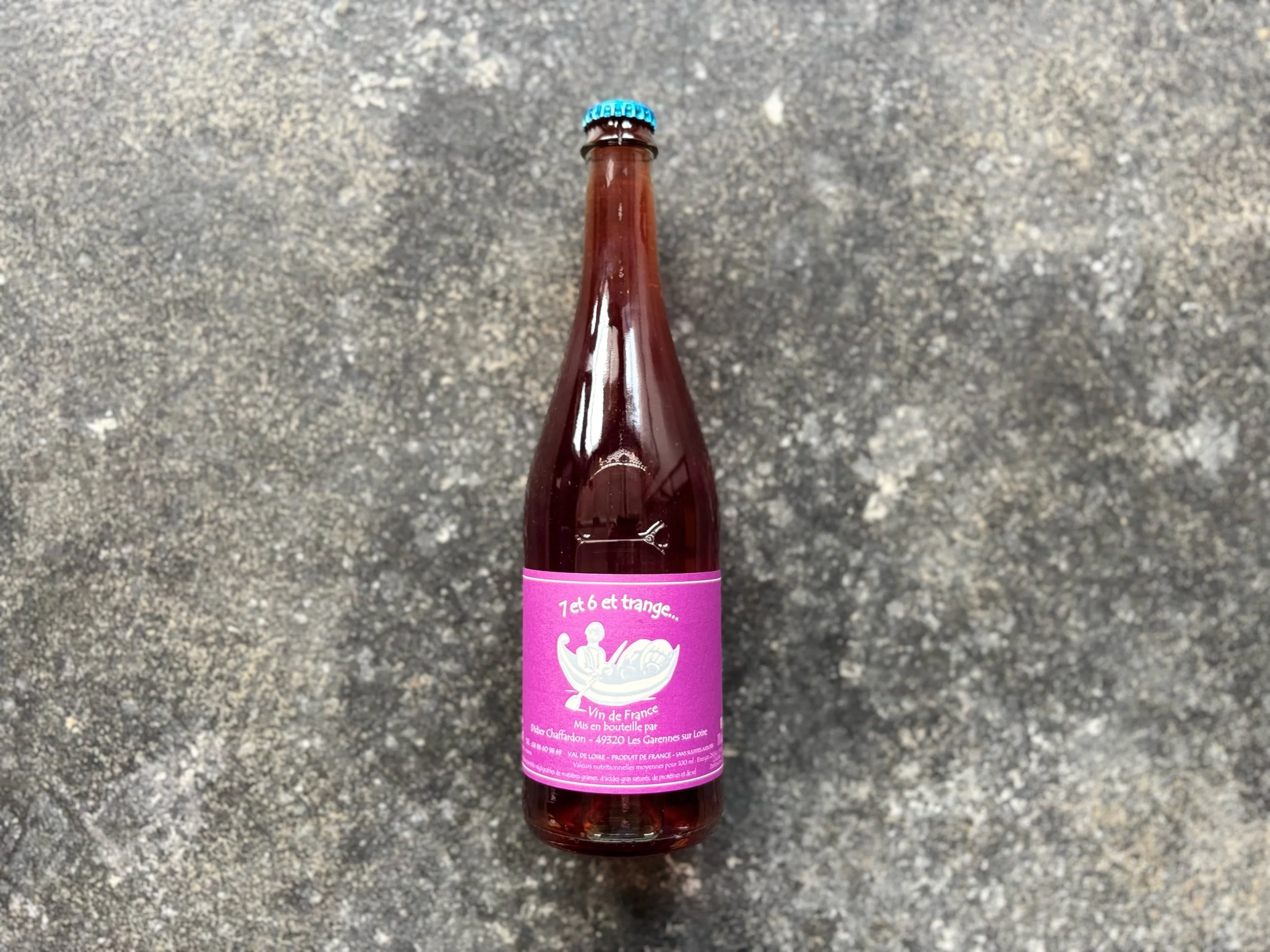
Location: France, Loire, Anjou
Winemaker: Didier Chaffardon
Grapes: 90% Cabernet Franc, 10% Cabernet Sauvignon
Winemaking: Organic farming, hand harvest, 10 days maceration, indigenous yeast fermentation, unfined and unfiltered.
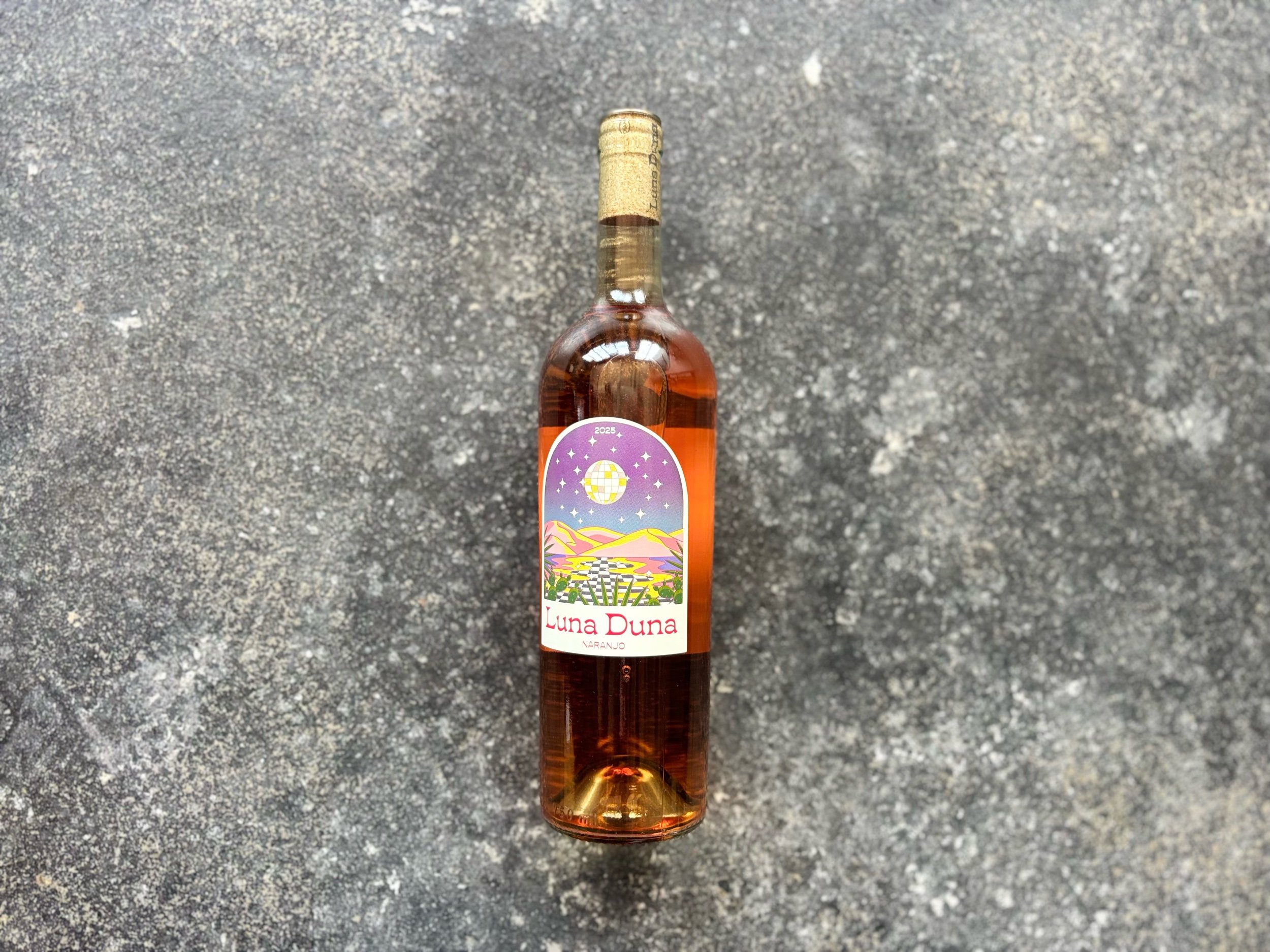
Location: Argentina
Winemaker: Claus Preisinger
Grapes: 90% Moscatel Rosato, 10% Criolla Blanca
Soil: Sandy soils
Winemaking: Organic farming. 100% De-stemmed. 12 day skin contact with native yeast fermentation. Élevage: 8000L Concrete cubes 8 months. Unfiltered.
From the Importer Brazos Wine: The Morcos family originally planted their vines in the 1930’s and third generation Matias Morcos makes Luna Duna at the family winery. The vines are located in Eastern Mendoza in the subregion of Alto Verde, San Martin. Some of Mendoza’s oldest vines come from the East, an area that is often overlooked. The vines are farmed with no pesticides and fermentation is natural.
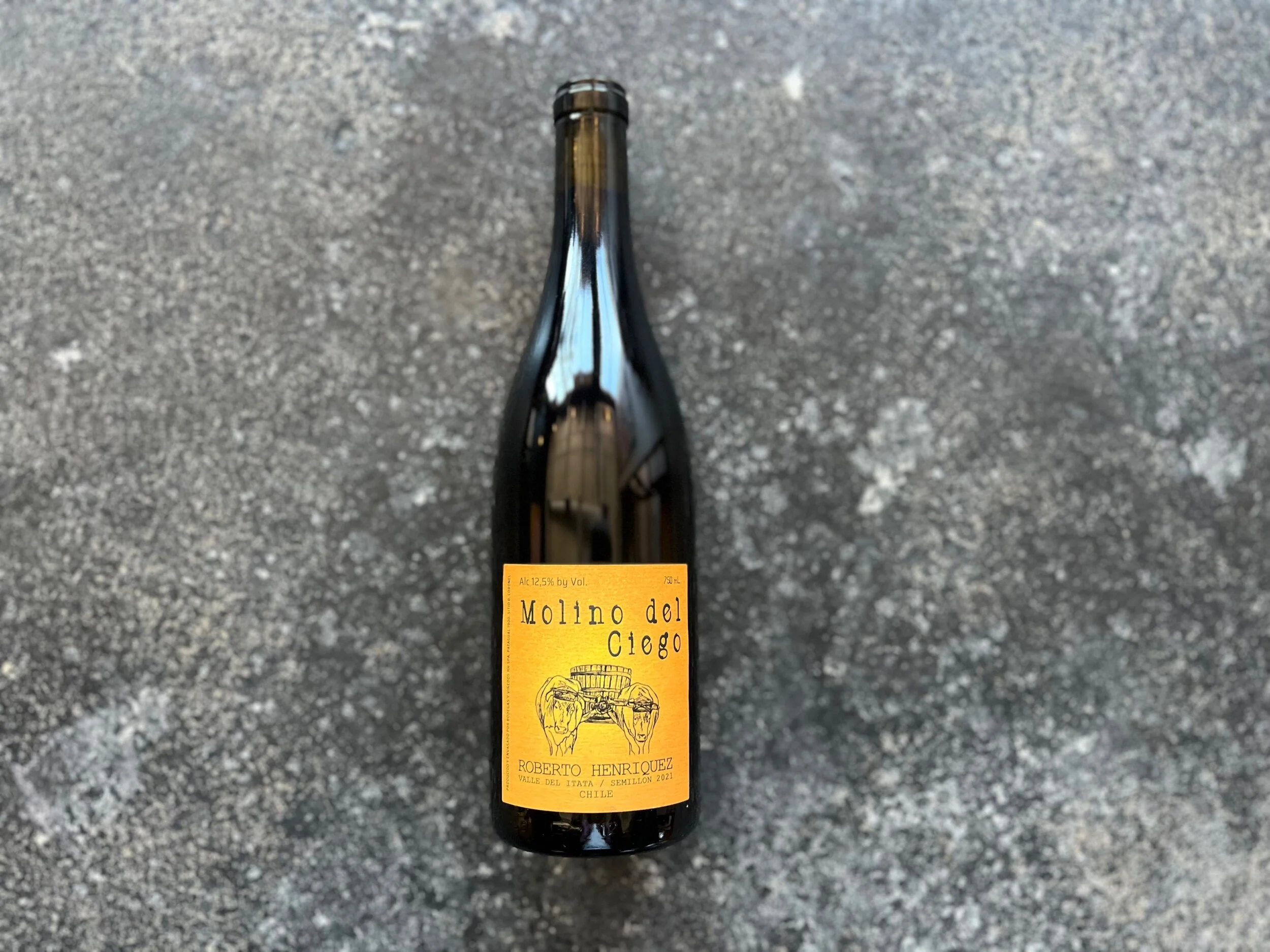
Location: Chile, Itata/Bío Bío
Winemaker: Roberto Henríquez
Grapes: (Skin Contact) Semillón
From us at M&L: 1 single block of vines producing around 3000kg of fruit per vintage. The wine is herbaceous with aromatic notes of apricot, Medjool date and fresh cucumber.
From the Importer T. Edward: Roberto Henríquez studied agronomy and enology at the University of Concepción. From there, he travelled and worked with winemakers in Canada, South Africa and finally in the Loire Valley with Rene Mosse. Rene had a profound effect on Roberto’s perspective on winemaking and his progression into organic and biodynamic farming.
Roberto, originally from Concepción, returned home after his time in abroad to begin making his own wine. Returning to the traditional Pipeño methods of the original winemakers of Chile felt intuitive to the winemaking style he had adopted. The rest of his story to present is pure progression to the pursuit of the most pure wines in a true Chilean context.
His vineyards were personally and carefully selected. Working with long term fermage agreements, he farms all the land himself (with the help of farming animals). To the north, in Itata, he is working with a vineyard of old vine Semillon and blends that with Corinto (aka Chasselas) and Muscat d’Alejandria producing an orange style wine. A little further south, in Bío Bío, he is farming Pais, from which he makes the Pipeño and the Santa Cruz de Coya.
He works with carbonic macerations and ages in old Rauli wood barrels. His wines are light-bodied, translucent, refined, and full of character!
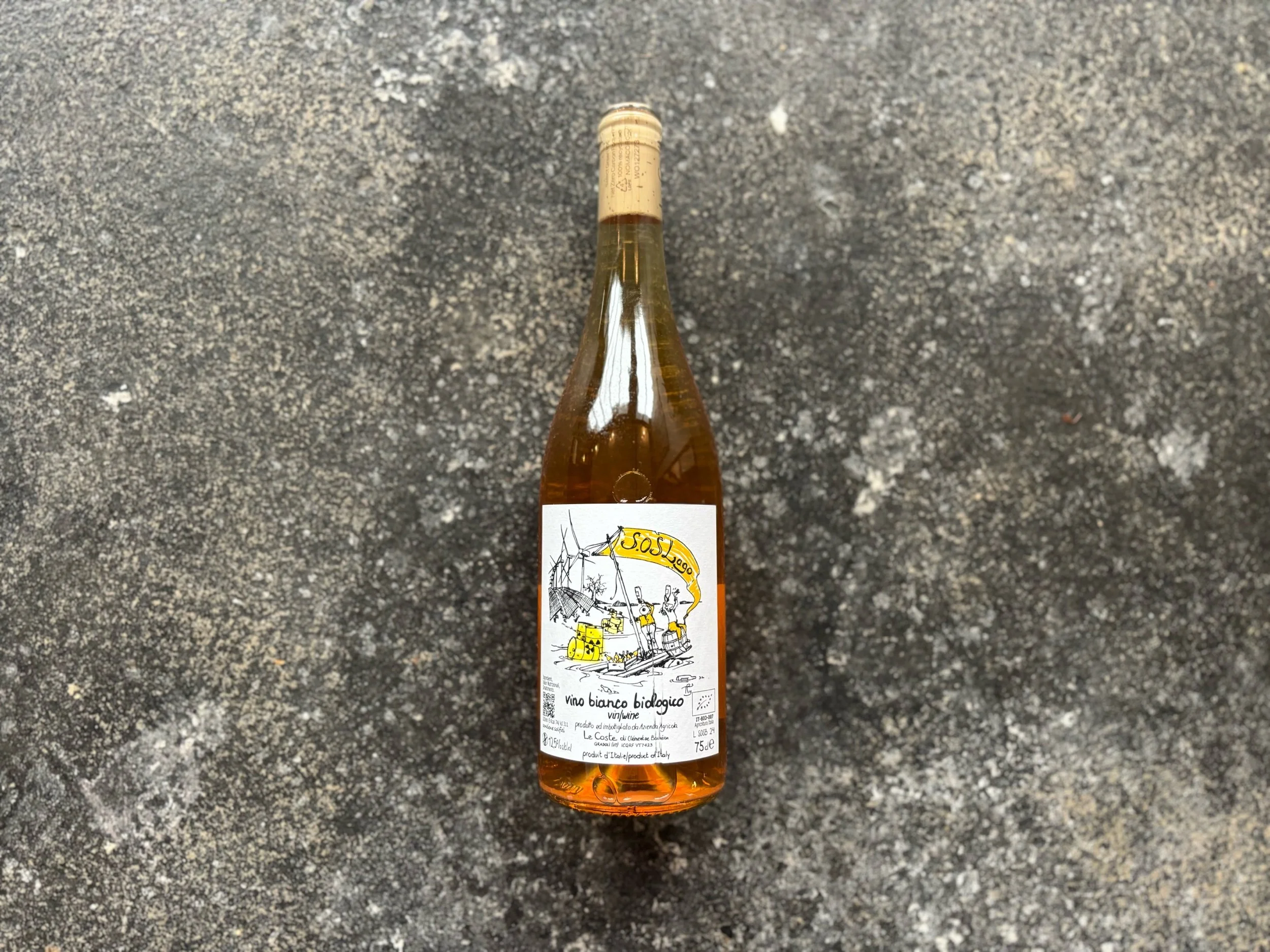
Location: Italy, Lazio
Winemaker: Gianmarco Antonuzzi & Clémentine Bouveron
Grapes: Moscato Giallo
Soil: Volcanic, rich in iron
Winemaking: Organically and biodynamically managed vineyards. The winemaking process involves spontaneous fermentation with native yeasts, fermented on the skins and the wine is aged in a combination of stainless steel and old oak barrels.
This wine is intended to ‘illustrate the beauty of nature and remind us of its fragility if exploited’. It is being sold to raise awareness for and support local farmers and residents that have come together to protest against plans to build an industrial geothermal electricity plant on the banks of Lago di Bolsena.
From us at M&L: Gianmarco Antonuzzi and Clémentine Bouveron tend around 14 hectares of land, with vineyards amongst olive groves, chestnut trees, shrubs and oaks. Sat around Lago di Bolsena near Gianmarco’s childhood town of Gradoli in Lazio’s north, the soils are volcanic, rich in iron and minerals.
Vines are planted at a density of up to 10,000 plants per hectare, from a mix of massale selections and ungrafted vines. Everything is done by hand, with careful attention to the needs of each plant and while biodynamic principles are employed, the approach here goes above and beyond.
Each year they produce a dizzying number of different wines which are vinified in an ancient cellar in the village’s centre where nothing is added at any stage. To taste here is a real treat, Gianmarco is a master of élevage and a real patience in this respect results in some of the purest, most delicious wines we have tried. This is a fascinating project, where the passion and dedication of two people is single handedly putting one of Italy’s lesser known villages firmly on the map.
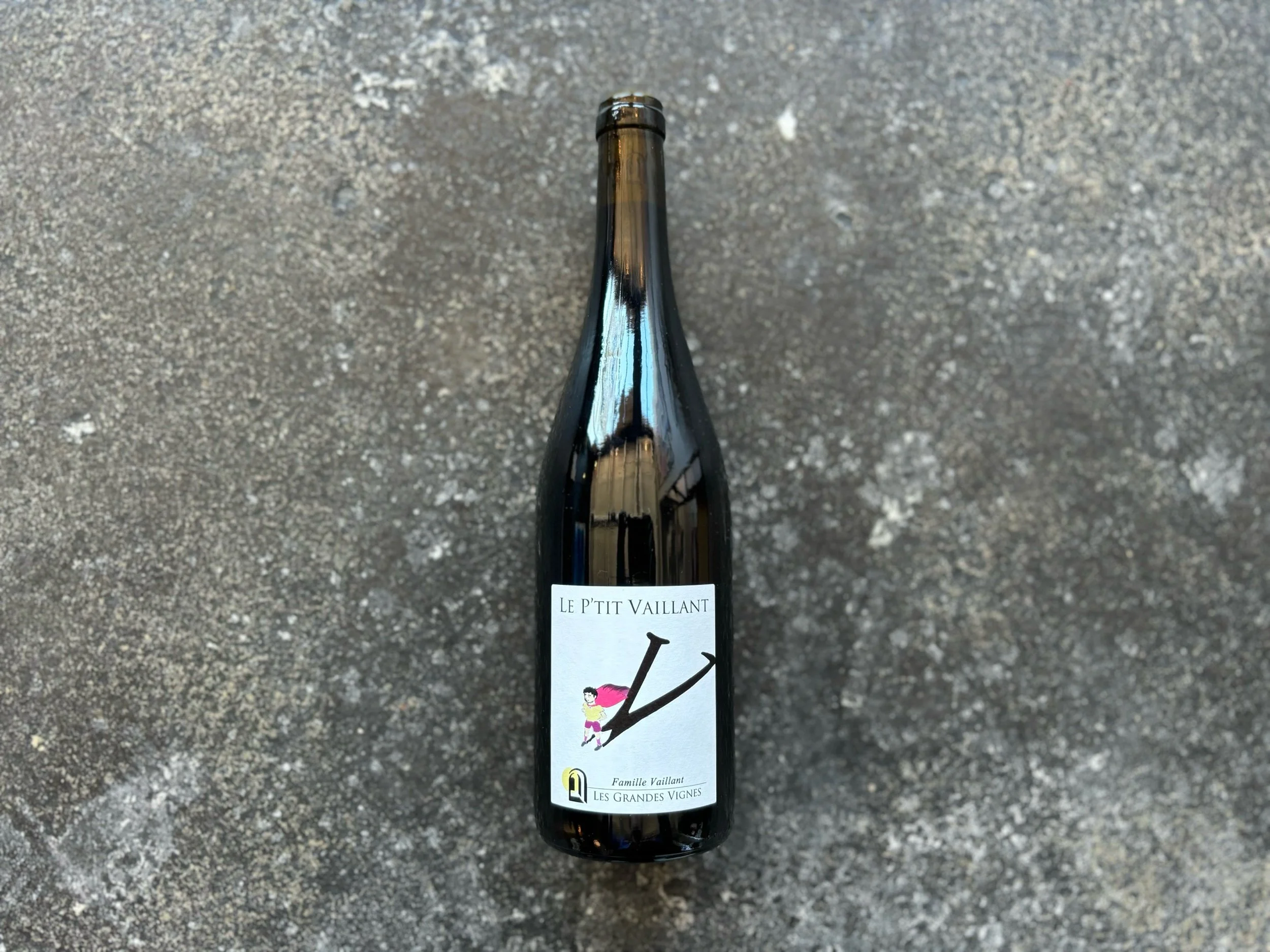
Location: France, Loire, Bellevigne-en-Layon
Winemaker: Jean-François Vaillant
Grapes: Grolleau, Cabernet Franc
Soil: Clay, silt, some shells
Winemaking: De-stemmed with a short maceration and aged in ceramic underground vat. Little/no addition of SO2, no filtering or fining.
From us at M&L: ‘Le P’tit Vaillant’ is a blend of Grolleau and Cabernet Franc, all hand-harvested. Fresh and earthy with a lovely play between the rosehip/petal qualities of Grolleau and the green peppery spice of Cabernet Franc. Can handle a chill.
From the Importer Avant Garde: Since the XVII century, located in the village of Thouarce in Anjou, the Vaillant family has passed on farmland from generations to generations. For the last ten years, sister and brothers have cultivated the estate using the biodynamic principles. The goal is to express the personality of each wines.
55ha of vines of Chenin Blanc, Cabernet Franc, Grolleau and Pineau d’Aunis are planted. The diversity of their cuvees is due to the different type of soils and exposure found: schist sandstone, quartz, gravel, and clay.

Location: France, Provence
Winemaker: Luc, Frederic, & Eve Cartier
Grapes: Grenache, Cabernet Sauvignon, Mourvèdre
From the importer Ideal Wines: Between Avignon and the sea there is a range of rocky hills rising from the Rhone valley, the Alpilles. Dotted with thousand year old fortified villages and pockets of olives and vines, this is the very heart of Provence, Les Baux de Provence, where the garrigue perfumes the air. Here’s where you find Mas de Gourgonnier, a family-run estate that’s been organic as long as anyone can remember. Luc and Frederic Cartier, succeeded their dad Nicolas, cultivating 47 hectares of vines, and 20 hectares of olives. And now Luc’s daughter Eve is gradually taking the reins.
The climate certainly makes organic farming somewhat easier, as the hot, dry, windy conditions naturally control many vine pests and diseases. They follow the Nature & Progress regime, and are certified organic by Ecocert.
Everything is hand-harvested, and vinified traditionally. The red wines are aged in magnificent huge old wooden vats. They also make a lovely rose: pink flowers, grapefruit rind, with delicate jellied rosepetal and touches of meatiness.
From us at M&L: Mas de Gourgonnier wines were some of the very first that I remember enjoying as a young person. There was a liquor store on Manhattan Avenue in Brooklyn that carried them, and I’m pretty sure I initially bought the Provence red because I could afford it and for its unique, squat bottle. Fast forward twenty years, and they are still wines that I look forward to, each vintage. Case in point, their 2021 Rosé just arrived and it’s slapping. The limestone hills of the Alpilles provide backbone, and the southern sun the pithy-melon fruit. If you’re thirsty now, cop it for day drinking, and if you’re looking for something to cellar (for a song), lay any of Gourgonnier’s bottles down.-Peter
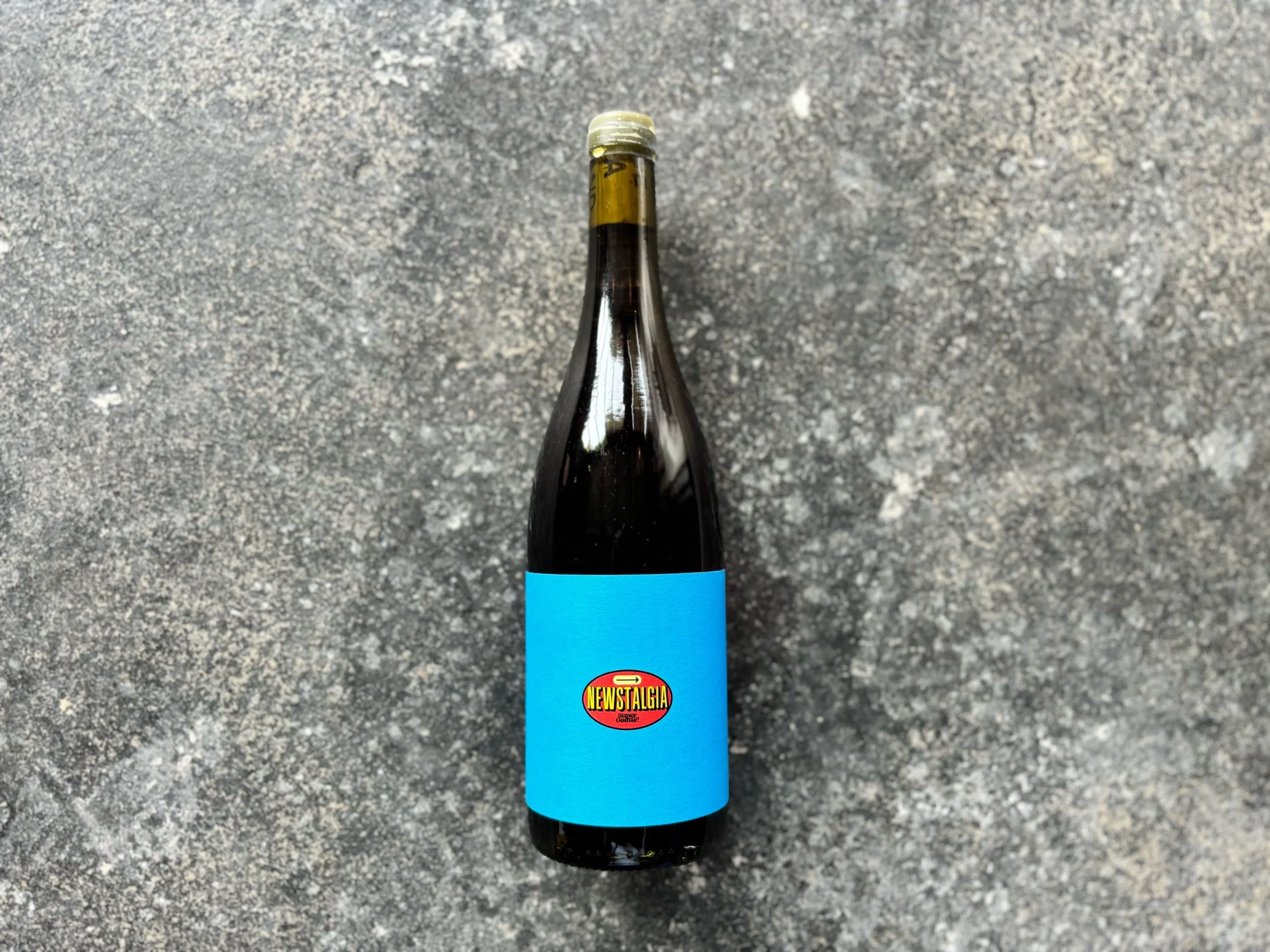
Location: Germany, Franken
Winemaker: Christoph Müller & Emily Campeau
Grapes: Domina, Müller-Thurgau
Winemaking: A “Rotling” is a wine that must be pressed and/or co-fermented together. It’s a term that was around in the mid-century, but then became unsexy and is now being used more and more. This is a rosé-lighter red wine is a blend of Domina and Müller-Thurgau, soaked together for three days before pressing. Elevage in used 500L barrels. Crushed, dark-berry notes, a savory element, but great lightness and ease. This is a super friendly light red/dark rosé for the table.
From the Importer Vom Boden: It’s about time for a love story, involving wine, a rather large vegetable garden and two ex-chefs.
As I begin another producer profile, I feel like I have to apologize for, once again, the rather circuitous route to the wines. Or, correcting my own instinct to apologize for everything, I have to point out, once again, that the people really are the wines.
That’s a clumsy intellectual construction, perhaps, but it’s true in ways that are hard to articulate.
Emily Campeau – one half of Wein Goutte – I met many years ago, not at Racines in New York City where she was the opening sous chef under Frédérick Duca, but years later, after she had moved back to her native Canada to work as the wine director for the inspired Restaurant Candide in Montreal. (She in fact remains the wine director at the inspired Restaurant Candide in Montreal, even though she lives in Franken, Germany, though we’ll get to that.)
She was a German wine dork, I was a German wine dork. She had no problem telling me exactly what she thought of any wine, person (including me), idea, recipe, musician, artist, affect, phrase, etc. And I very much like people with very specific thoughts on everything.
We have been friends ever since and when she told me I should get the hell up to Montreal to check out the wine scene there, I listened. Emily is the reason we trade in some very rare and beautiful wines from around Canada.
Emily left for Austria in 2018 to work a harvest there and met a kind bear of a man (a German in fact) named Christoph Müller who was at the time part of the cellar team at Weninger in Austria’s Burgenland. Christoph is also an ex-chef and they fell in love over wine and food.
There they started their wine project – Wein Goutte – and made a very little bit of wine in 2019. We imported a very little bit of this wine.
Looking to expand, to deepen and to broaden their interaction(s) with the soil, they happened to find a small winery with a large garden in the eastern part of Franken – not all that far from the tiny village of Iphofen with its famous sites and exploding flower boxes that remind one of Alsace. An older couple had farmed both the vegetable gardens and the vineyards organically for well over three decades and, well, they wanted some help.
So Christoph and Emily live something of a fairy tale life there now, though this fairy tale includes perhaps more manure and home-made vermouth than most. They are working the vineyards, tending a rather large vegetable garden producing and selling, among other things, vermouths, ciders and wines, but also schnapps and vegetables, fruit and herbs.
In other words, this is a farm as much as it is a winery.
Now, around two years at their new house, with their new gardens and vineyards, they are just beginning to feel at home. And you can taste it.
As we deal more in wine than vegetables (at least as a business and this is only a matter of bureaucracy), vintage 2021 represents their first vintage in Franken, which, when you really think about it, is truly exciting.
This is watching – tasting – the first lines of a long story being written, in real time.
It’s a concise set of wines for this vintage: a still and sparkling apple cider, two whites, a rosé and one red.
The aesthetic is brisk, vibrant, punchy, with a lightness yet structural severity that is for me, in many ways, the essence of Franconia. While Emily and Christoph are certainly working along many “natural wine” tenants, including longer lees contact, no filtering and lower sulfur usage, the wines are clear and even open for many days, they remain as fresh as, well, a garden.
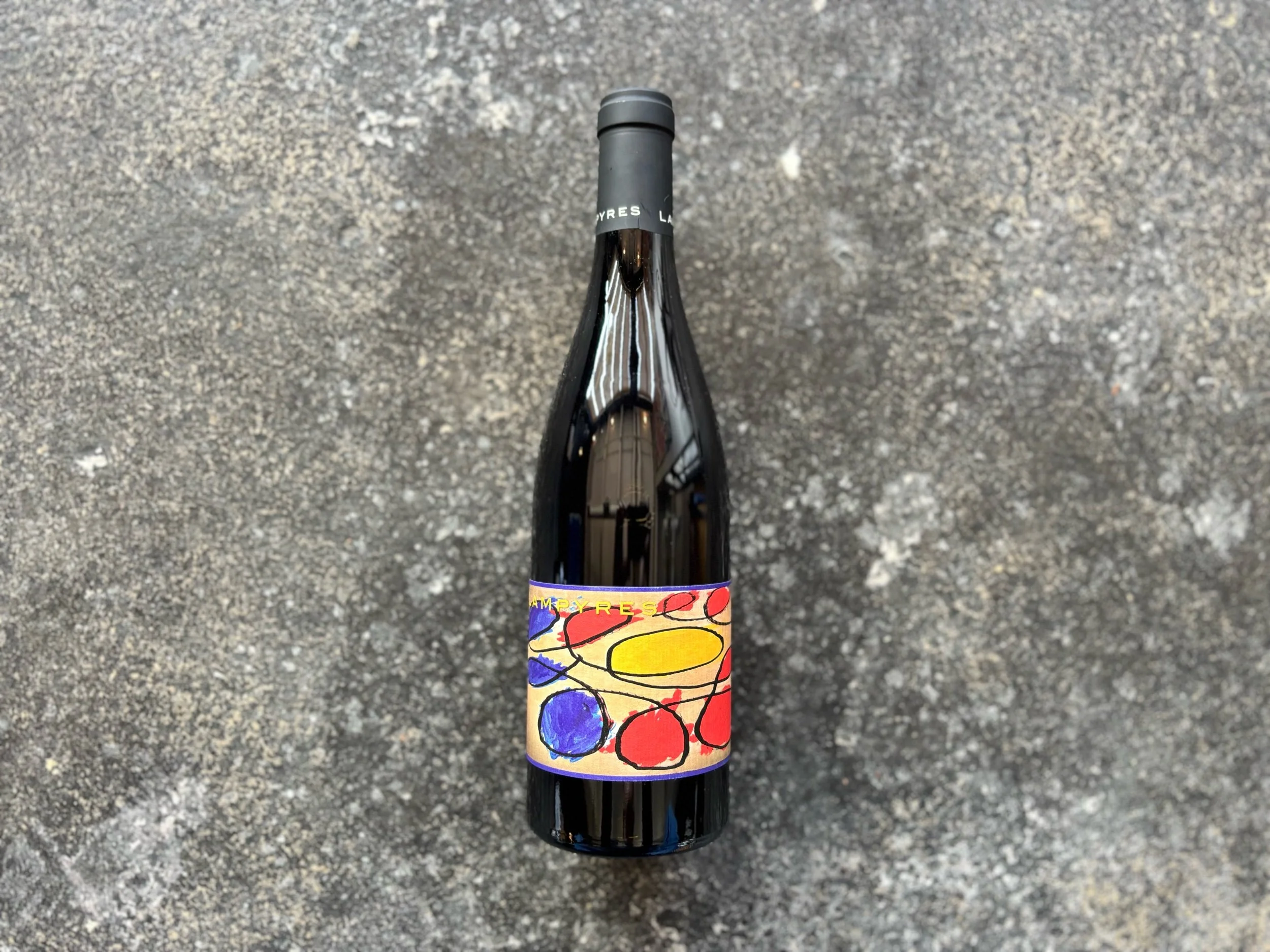
Location: France, Roussillon
Winemakers: François-Xavier Dauré
Grapes: 50% Grenache Noir, 25% Carignan Noir, 25% Mourvèdre
Soil: The Carignan Noir and Mourvèdre are planted on schist soils, and the Grenache Noir is planted on clay-limestone soils
Winemaking: Organic farming. The Carignan Noir and Mourvèdre are directly pressed upon arrival in the cellar and co-fermented in a large stainless-steel tank. The Grenache Noir undergoes a 7-day whole bunch maceration in fiber tanks. On the 8th day the Grenache Noir is pressed and transferred back to fiber tanks to complete fermentation. Only the naturally occurring indigenous yeasts were used for fermentation. The components were blended after the completion of malolactic fermentation.
Maturation: Aged 8 months in stainless-steel tanks. Prior to bottling a low dose of sulfur is added to the wine. The wines are bottled unfined and unfiltered.
From the Importer Terres Blanches: The village of Espira de L’Agly is located at the very eastern end of the Agly Valley, just 20km from the Mediterranean Sea and 3km northwest of Rivesaltes. Rivesaltes, along with the villages of Banyuls and Maury, is famous for the production of sweet Vin Doux Naturel. A once popular aperitif wine, Vin Doux Naturel was in high demand during the first half of the 20th century. For Rivesaltes alone, the annual production during the 1950’s and 1960’s was upwards of 70 million bottles a year. Today, fewer than 3 million bottles are sold each year. With such a dramatic fall in public demand, many farmers in Espira de L’Agly and the surrounding areas ripped out their vines and converted to orchards. Those who did keep their vines became almost completely reliant on négociants and cooperatives to purchase their annual production. The Daurés are one the brave families who held onto their vines. For that we should all be very grateful, as the current generation is making what we consider to be some of the most innovative and focused wines we have tasted from Roussillon.
If you ask François-Xavier Dauré, F.X. for short, he will tell you he was destined to become a vigneron. Indeed, he is the 4th generation of Dauré to grow grapes in and around the village of Espira de L’Agly. Jokingly he claims to have been born on a tractor, and that is not far from the truth. Many of his earliest memories take place on a tractor with his father. From a young age F.X. worked in the vineyards with his family. However, with the entire production being sold to the cooperative, F.X. needed to look elsewhere to gain experience making wine.
Starting in 2008 F.X. began working with different vignerons in the Roussillon. Intrigued by Organic farming and minimal intervention in the cellar, F.X. joined Tom Lubbe at Matassa in 2015. In July of that same year F.X. took over full control of his family’s Domaine and began the conversion to Organic farming. For the next 5 vintages he worked with Tom in the vines and the cellar at Matassa, while also farming 16 hectares of his own vines. F.X. continued to sell the production of the family Domaine to the cooperative. To be full time at Matassa and farm an additional 16 hectares organically, was a monumental task. For over 4 years (5 vintages) F.X. was in the vineyards hours before sunrise using a headlamp to see his work. People would joke that he looked like a lampyre, which is firefly in French. Searching for a name for his new venture, the proverbial light came on! Domaine Lampyres was born.
2016 was the inaugural vintage of Domaine Lampyres with just 600 bottles of cuvée Anima and cuvée Luminescence produced in F.X.’s garage. This was followed by another garage production in 2017 that saw the introduction of his Contre-Attaque bottling. 2018 was a watershed year for the young vigneron. Encouraged by the results in his first two vintages F.X. converted a small barn into a cellar and decreased the amount being sold to the cooperative. Along with the introduction of cuvées Point Triple and Des Sens in 2018, F.X. created a Rosé bottling that he named for his beautiful daughter Margot who arrived earlier in the year. 2019 was F.X.’s last vintage at Matassa, and a difficult year for all of the growers in the eastern half of the Roussillon. At the end of June temperatures skyrocketed to 118°F (48°C) causing sunburn that destroyed over 50% of the potential crop for the vintage. A difficult year yes, but the wines F.X. produced in 2019 are remarkable. When we stumbled upon F.X. in January of 2020 at a tasting in Montpellier, the character, balance, and tension of his 2019’s was undeniable. To say this is a Domaine to watch is an understatement. Now fully focused on Domaine des Lampyres, we are certain that F.X.’s best vintages are ahead of him.
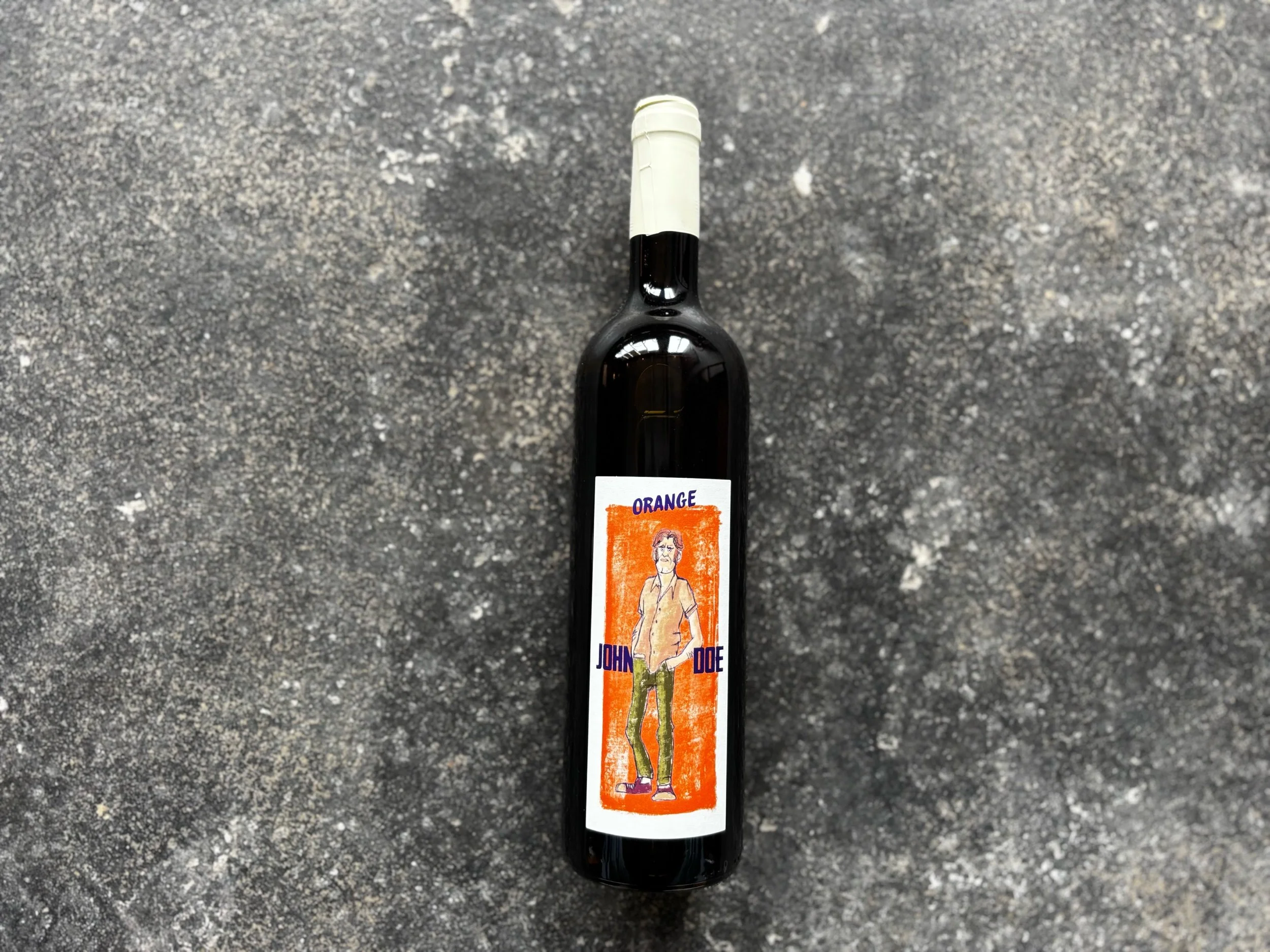
Location: Italy, Emilia-Romagna
Winemaker: Marco Bertoni
Grapes: Malvasia di Candia Aromatica
Winemaking: Organic and biodynamic farming. Hand harvest. 3-weeks skin contact. Native yeast fermentation
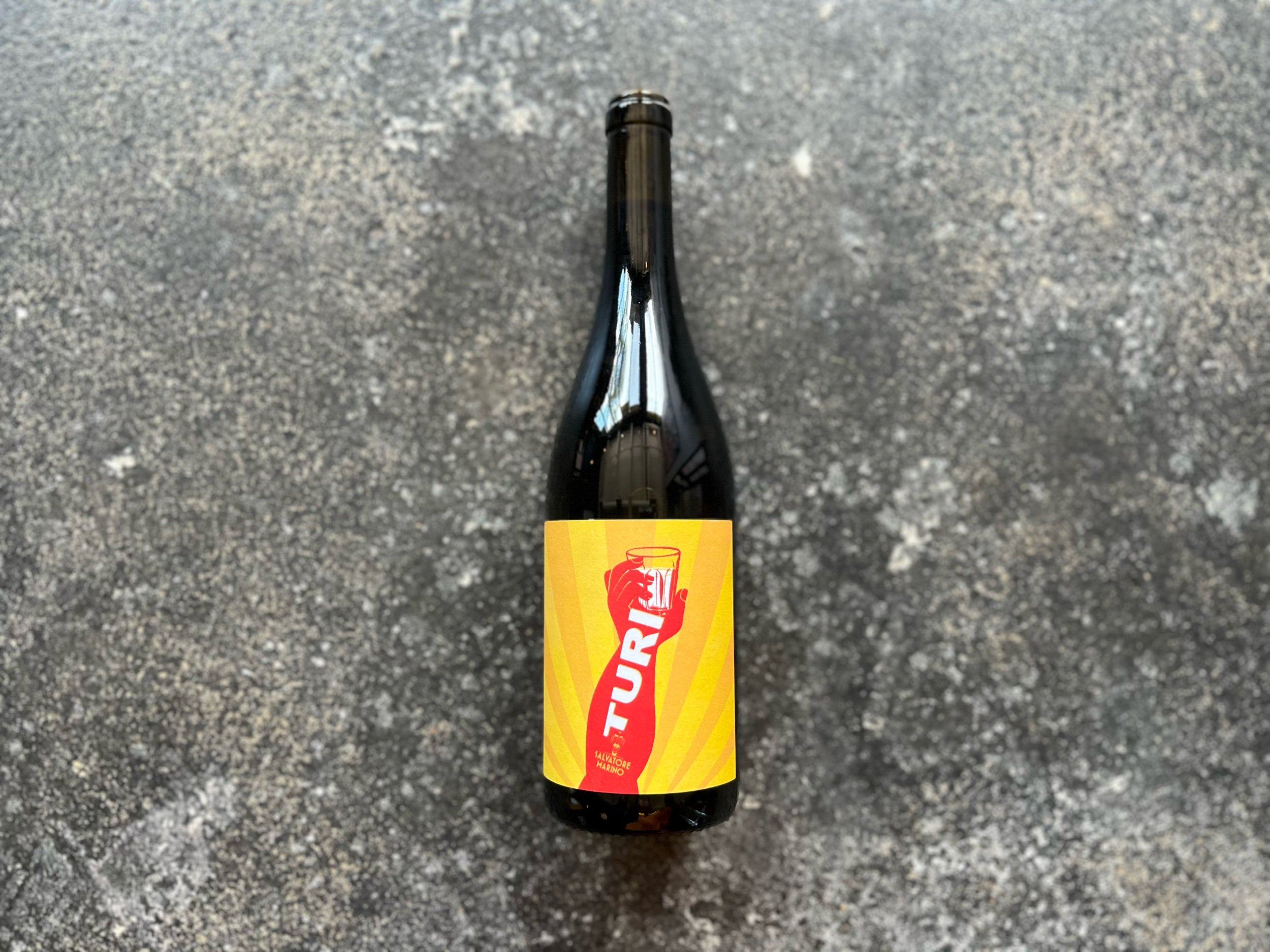
Location: Italy, Sicily
Winemaker: Salvatore Marino
Grapes: Catarratto
Winemaking: Organic farming. Hand harvest. The grapes are destemmed, macerated for five days then fermentwith indigenous yeasts in stainless steel tanks. After malolactic fermentation, the wine is decanted and racked off its gross lees. It then ages in concreteuntil its bottled the spring following harvest.
From the Importer Louis/Dressner: Wine has been made in Salvatore Marino’s family for generations; growing up, his grandfather and father produced bulk wine in a large facility within the town of Pachino. Always a bon vivant, Marino’s love for good food begat a passion for seeking delicious bottles from Sicily and beyond. It also made him dream of starting a project of his own. No stranger to viticulture, Salvatore knew he could start farming vines from his wife Stefania’s family. But before branching out on his own, he felt the need to learn how to properly run a cellar.
Marino had learned how to make wine with his father, but found those bulk products riddled with defects, namely brett. So for many years, Salvatore cut his teeth working at huge wineries in California, Puglia and Sicily to further his knowledge of enology.
“I never liked the wines I made at those places. But you can can learn so much, so fast in those environments. The large scale gives you perspective.”
With a decade of big winery experience behind him, Salvatore launched his eponymous estate in 2017. Today he works 15 hectares of land divided into five sectors, all close to each other and the town of Pachino. A firm believer in polyculture, seven of the 15 hectaresare planted in vines, with the rest planted in fruit trees, wheat, other cereals, table grapes and much more. Some of the land is from Stefania’s family, some is rented and some Marino has purchased. The soils consist of medium to heavy claywith limestone, planted in bush-trainedvines wrapped up on pickets to avoid damage from the region’s constant winds. Salvatore and Stefania do everything themselves, save for some seasonal help around pruning and harvest seasons.
Though he still has access to the family winery, Salvatore does not feel comfortable making his wines there because he finds it too big and would rather be closer to the vines. In 2021, he purchased a four hectare property in the countryside where he is in the early stages of building a new winery, including a cellar, stocking room, tasting room and guest rooms. The cantina is surrounded by limestone rich coteaux: Salvatore has planted grafts of Nero d’Avola and Pignatello and plans to plant Grecanicoin the near future.
Three wines are currently produced. The bianco is 100% Catarratto, and comes from a 0.5 hectare vineyard planted by Salvatore in 2016 along with a 10 year old parcel of rented vines. It maceratesfive days before fermenting in stainless steel, then ages in concretetanks before bottling. Catarratto is actually a bit of a rarity in Pachino, as Grillo has gained traction throughout Sicily; most of Marino’s contemporaries are exclusively replanting Marsala’s native white grape. In fact, only four producers currently cultivate Catarrattoand Salvatore is the only one focusing on new plantations.
“I like Grillo, but I do not feel it is optimal for the terroirs of Pachino. My grandfather told me when I was young that Catarratto was the white grape for this area. I always remembered that.”
The rosato is 100% Syrah and a direct press, fermented and aged in stainless steel.
Finally, the rosso is 95% Nero d’Avola,5% Pignatello. It macerates only six days, ferments in stainless steel then ages in concrete. Salvatore’s ultimate goal with this wine is to be versatile with a meal (we can confirm it’s very good with fish) but also something you’d want to keep drinking after you’re done eating or even on its own.
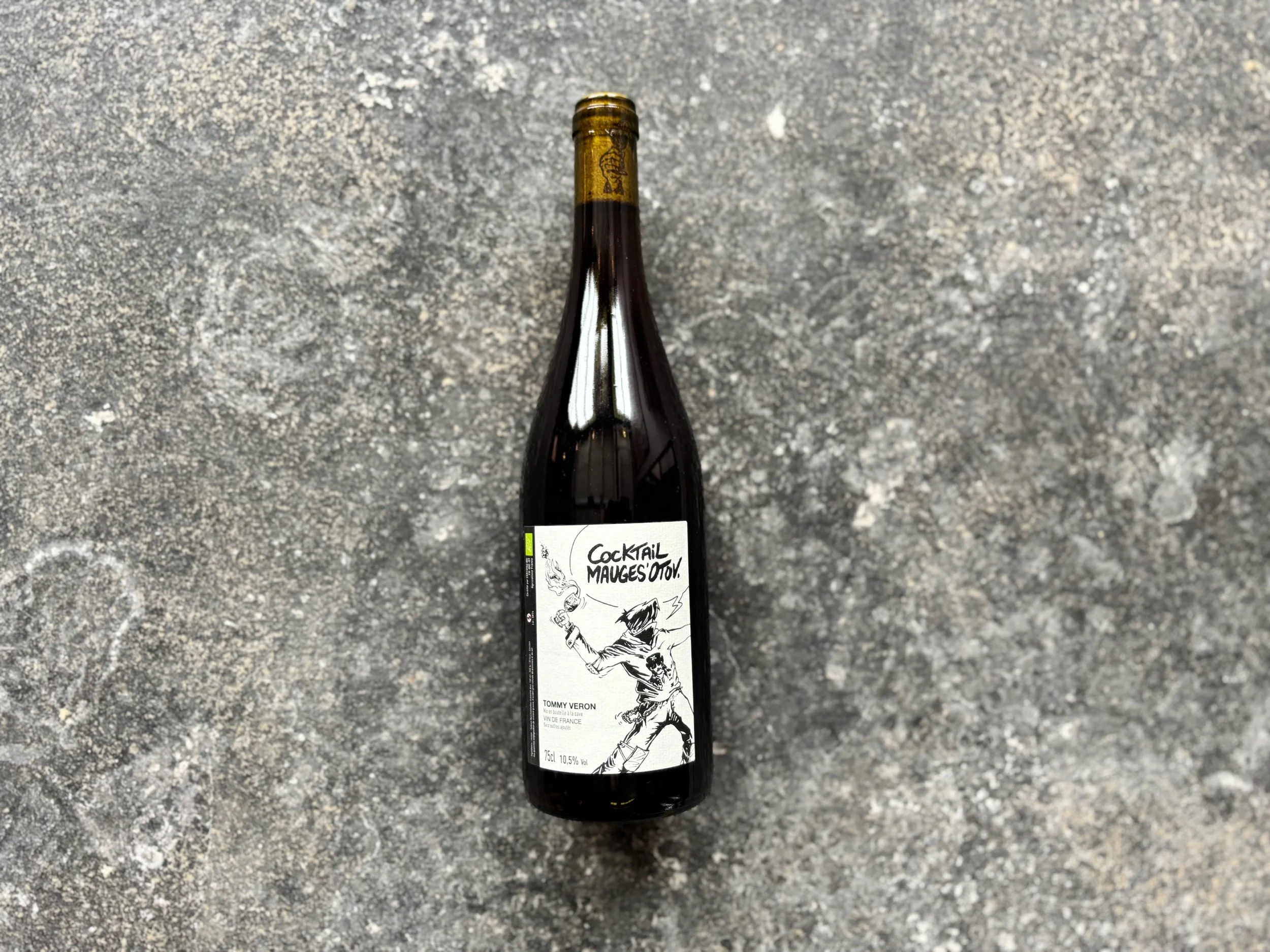
Location: France, Anjou
Winemakers: Tommy Vernon
Grapes: Grolleau
Winemaking: Organic farming. Hand harvest. 1.5 weeks maceration whole cluster. Native yeast fermentation. Unfined, unfiltered and no added sulfites
From us at M&L: We love reds that put pep in our step. Light and crunchy, this Grolleau has a lot of energy, but it also shows a welcome, salt-and-peppery savoriness. We recently drank it (slightly chilled) alongside Flageolet beans with leeks and seared hake and it was perfect.

Location: France, Loire, Bourgeuil
Winemaker: Xavier Courant
Grapes: Cabernet Franc
Soil: Sand, Gravel, Limestone
Winemaking: Hand harvest. Direct-press, fermentation and agingin fiberglass tanks for six months.
From the Importer Louis/Dressner: The grapes for ‘Le Bruit des Glaçons’ come from purchased organic fruit from the Puy de Dôme area.
All the wines are named after films by French director Bertrand Blier. Bruit des Glaçons or "The Sound of the Ice Cubes", is a simple mention of the wine being enjoyed cold at any point in the day.
Xavier Courant, a former Parisian caviste, decided to get closer to the source by founding Domaine de L'Oubliée in 2009. After studying viticulture/oenology and working with famed vigneron Romain Guiberteau for a year, Xavier managed to purchase three plots of Cabernet Franc and a small parcel of Chenin Blanc to form a 7.14 hectare estate in the commune of Saint-Patrice.
Each of the sectors features a unique terroir; in such Xavier vinifies three red wines to highlight their inherent differences. "Merci la Vie", his entry level cuvée, comes from vines planted in 80% sand and gravel and 20% and limestone. "Notre Histoire" is grown on calcareous clay and tuffeau limestoneand "Tenue de Soirée" is grown on clay and limestone. Xavier also tends to a small parcel of Chenin Blanc, a complete anomaly in Bourgeuil. Appropriately, the wine is called "Existe en Blanc" (Exists in White). White wines are not permitted in the Bourgueil appellation, so this wine is sold as Vin de France. Each cuvée is named after a film or novel from Bertand Blier, the famed French director whom Xavier happens to be obsessed with.
After many years of conversion, the estate is now certified organic. In the cellar, native yeasts have always been used, the wines are never fined or filtered and sulfites are only added in very low doses at bottling.
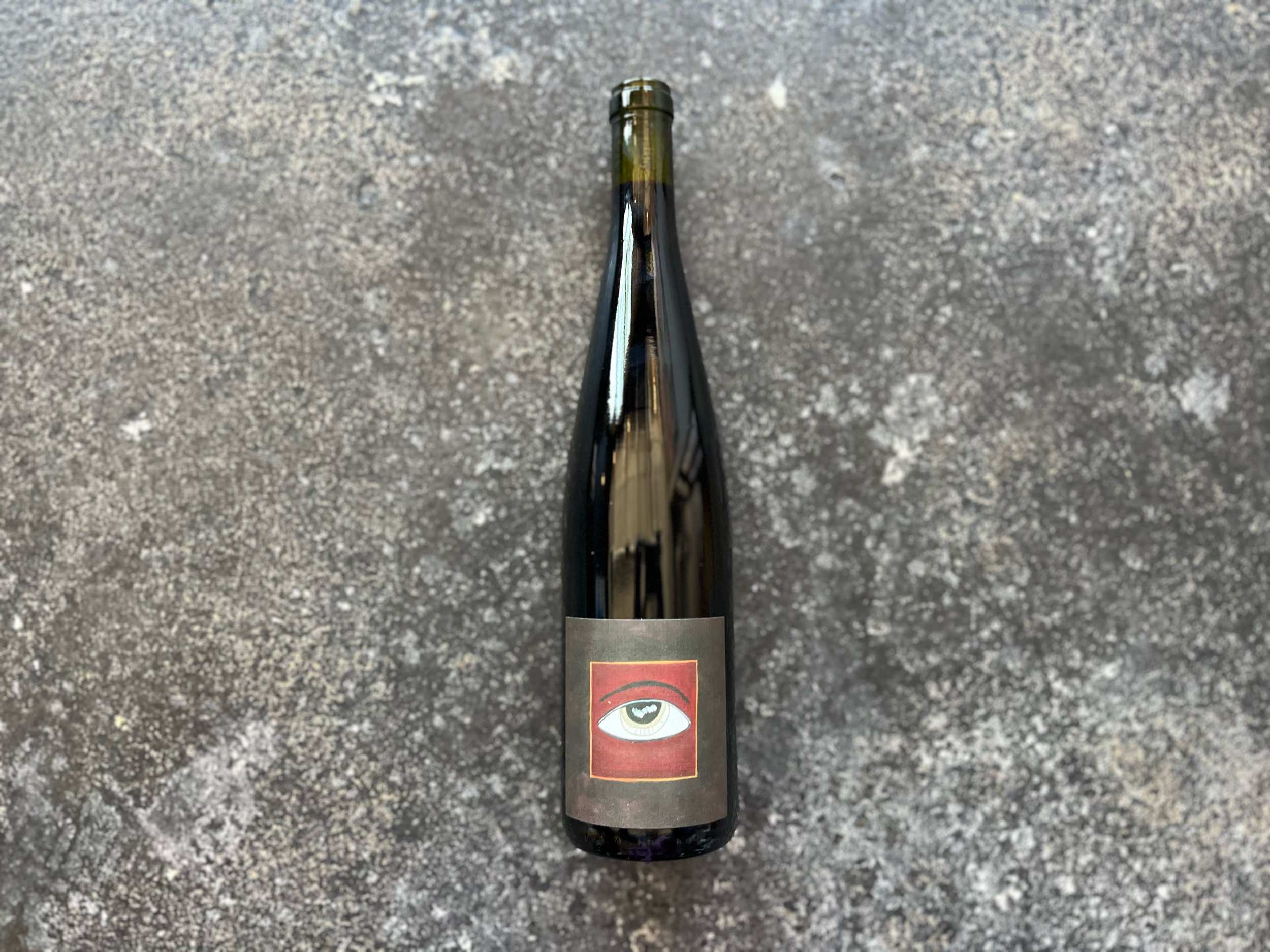
Location: France, Alsace
Winemaker: Jean-Pierre Rietsch
Grapes: Pinot Noir
Winemaking: Organic farming, hand harvest, 20 year old vines planted by Jean-Pierre. Unfined and lightly filtered, no addition of sulfites.
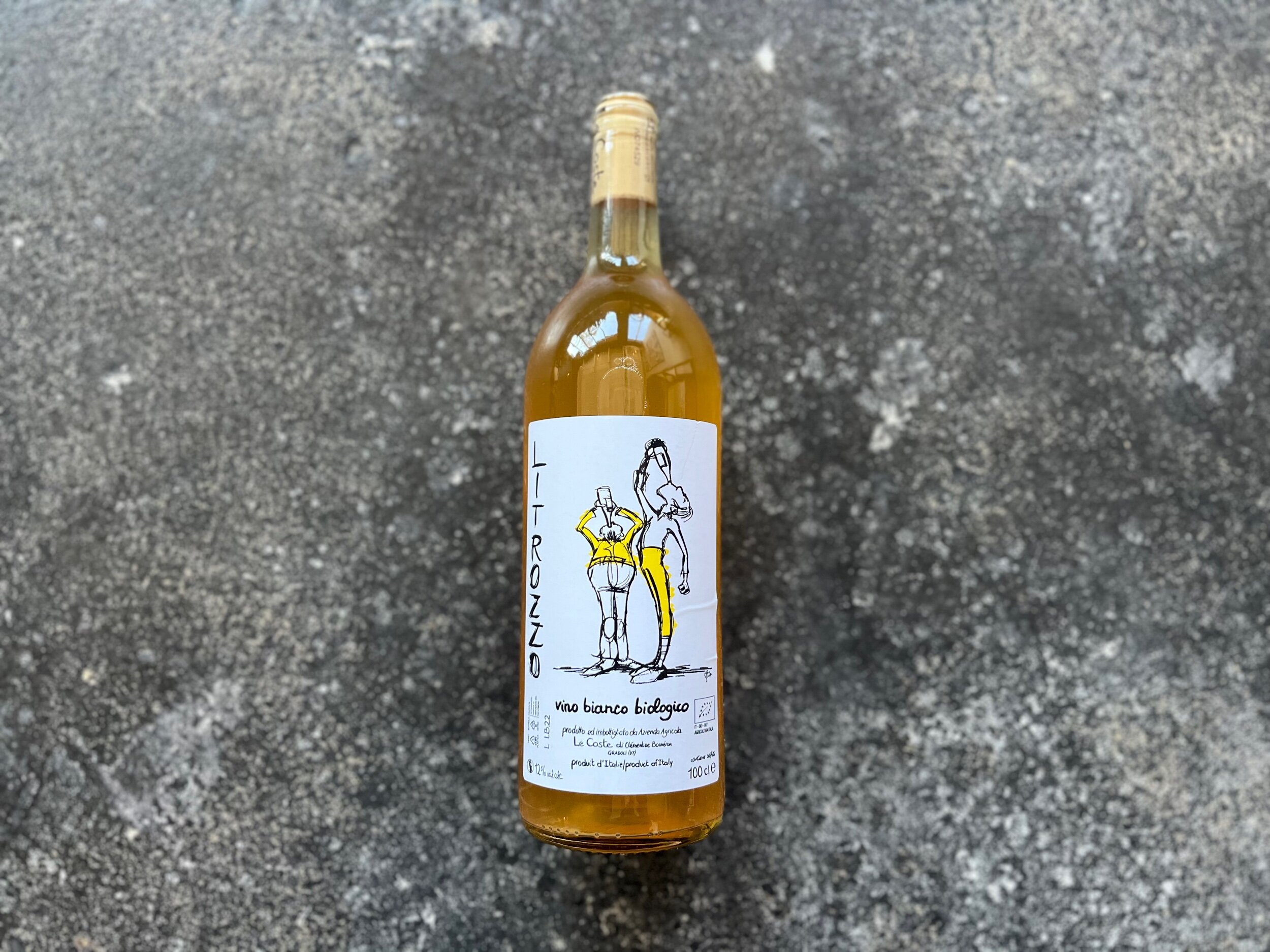
Location: Italy, Lazio
Winemaker: Gianmarco Antonuzzi & Clémentine Bouveron
Grapes: Procanico, Malvasia, Roscetto, Romanesco and Petino
Soil: Volcanic, rich in iron
From us at M&L: Gianmarco Antonuzzi and Clémentine Bouveron tend around 14 hectares of land, with vineyards amongst olive groves, chestnut trees, shrubs and oaks. Sat around Lago di Bolsena near Gianmarco’s childhood town of Gradoli in Lazio’s north, the soils are volcanic, rich in iron and minerals.
Vines are planted at a density of up to 10,000 plants per hectare, from a mix of massale selections and ungrafted vines. Everything is done by hand, with careful attention to the needs of each plant and while biodynamic principles are employed, the approach here goes above and beyond.
Each year they produce a dizzying number of different wines which are vinified in an ancient cellar in the village’s centre where nothing is added at any stage. To taste here is a real treat, Gianmarco is a master of élevage and a real patience in this respect results in some of the purest, most delicious wines we have tried. This is a fascinating project, where the passion and dedication of two people is single handedly putting one of Italy’s lesser known villages firmly on the map.
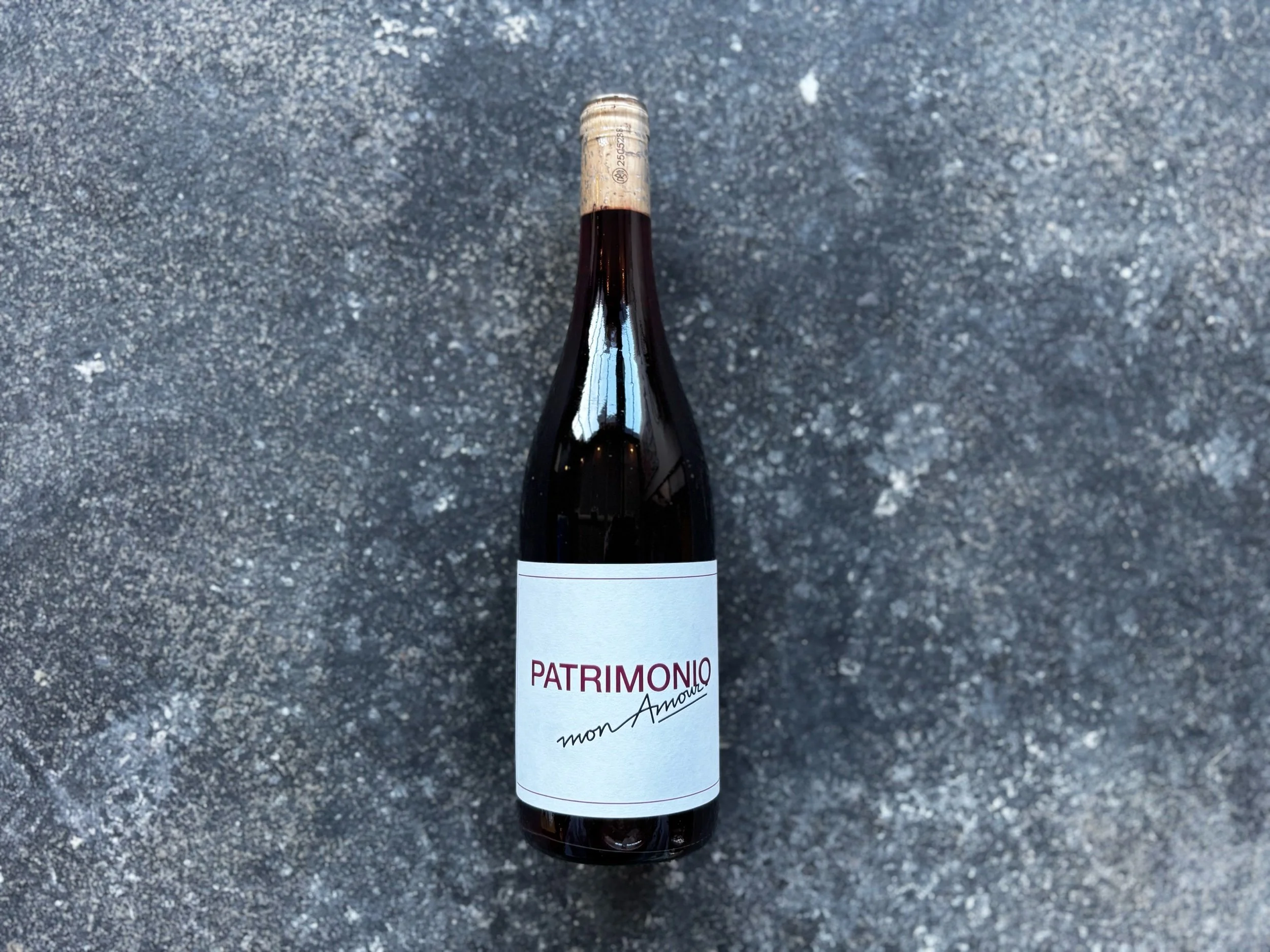
Location: France, Corsica
Winemaker: Julie & Mathieu Marfisi
Grapes: Niellucciu
Soil: Silt, Clay on limestone
From us at M&L: A keen sense of place - its history and its landscape - and a clever, intrepid touch in the cellar make the wines of Corsica’s Clos Marfisi something we always look forward to.
Mathieu and Julie, brother and sister team, are fifth generation growers in Patrimonio. Wine is grown in different sites across the island, but Patrimonio is special: an amphitheater of limestone jutting right out of the sea. In some cases there is virtually no topsoil, just bald beautiful stones. This gift makes for appetizingly fresh wines that can also be quite long lived.
Here, Julie and Mathieu only work with native varieties (one way that they stay connected to the area’s venerable history), and they focus on three remarkable vineyards, Grotta di Sole, Gritole, and Ravagnola.
Today we are celebrating the arrival of three gorgeous wines, all from the stunning Ravagnola site. Silt and clay barely cover the west-facing limestone hills here, and the site is planted to a special array of local grapes: Niellucciu, Minustellu, and Carcaghjolu Neru.
Each wine is an ingenious look at how to treat a single parcel. There is a classic Patrimonio of Niellucciu offering deep aromas and deep poise, a field blend showcasing the balance of shrubby herbs and fresh coastal fruits, and an inspired blanc de noir of gravity-pulled free run Niellucciu owing to the fact that there was no white wine made in ‘22.
From the Importer Selection Massale: If you aren’t familiar with Corsica, the main event is Patrimonio. This AOC covers 400ha with half of them being owned by the two largest producers, and the other half split up amongst 30 smaller growers. If you haven’t already guessed, Clos Marfisi is part of the latter. Brother and sister, Mathieu and Julie are fifth generation at the helm of this estate, having taken over from their father, Touissant, when Julie returned in 2001, and her brother in 2012, from having careers elsewhere in France (including the venerable Chateau Pibarnon in Provence).
Now, we thought that we had seen it all in terms of limestone, but Corsica takes the cake. Clos Marfisi’s vineyards (which Touissant planted about 40-50 years ago) rise up from the Mediterranean with southern and western exposures on steep slopes that are practically white with large chunks of broken up limestone. Seriously impressive. Equally impressive is the fact that they never gave into outside pressure and the entirety of the estate is planted to local varieties, so you won’t find any Grenache here. Their father is still very active in the vineyards, and is the main reason that this estate has never been touched by pesticides or herbicides, which were shunned for one reason or another by previous generations of vignerons on the island. This commitment to organics continues and the estate will be certified Bio by the 2018 vintage. Vestiges of the old guard remain in the cellar as well where native yeasts have always been used for fermentations, and sulfur levels are kept to a minimum.
As president of the Patrimonio AOC, Mathieu has a clear vision for where the estate is headed, and we like what we are seeing. Their commitment to honoring the past while shaping their own future is incredibly exciting to us.
In 2020 Mathieu injured his back and couldn't get on a tractor for months, so all his friends — Thomas Santamaria, Nicolas Mariotti Bindi, and Jean-Baptiste Arena took care of working the vineyards for him, so he decided to make a wine called ‘Patrimonio Mon Amour’ as a thank you. It’s a friendly glou glou with very little extraction and no SO2 added during vinification. Four days maceration whole cluster with first-harvest Niellucciu from the Grotta di Sole and Ravagnola parcels. Fresh, not overly complex, and highly drinkable.

Location: France, South West, Cahors
Winemaker: Fabien Jouves
Grapes: Chenin Blanc
Soil: Kimmeridgien limestone
Winemaking: Hand harvest. Native yeast fermentation. Grapes fermented on the skins. Apricot, pineapple, bergamot tea, fine filigreed tannins.
From the Importer Zev Rovine Selections: Fabien Jouves is from an old farming family in Causse and became a winemaker in 2006 when he created his first cuvée, “Mas del Périé”, on the highest slopes of Cahors.
Jouves’ estate, 21 hectares in the junction of Quercy and Cahors, was selected to highlight the many expression of Côt. Reinforcing this is Fabien’s commitment to biodynamic viticulture that respects “life, plant, man, and the environment.” Following biodynamic agriculture adds strength to his terroir by supporting the whole environment from the vines to the animals.
The vinification is completely natural without any oenological inputs. His wines are then aged in concrete vats, barrels, or casks, according to its characteristics and personality.
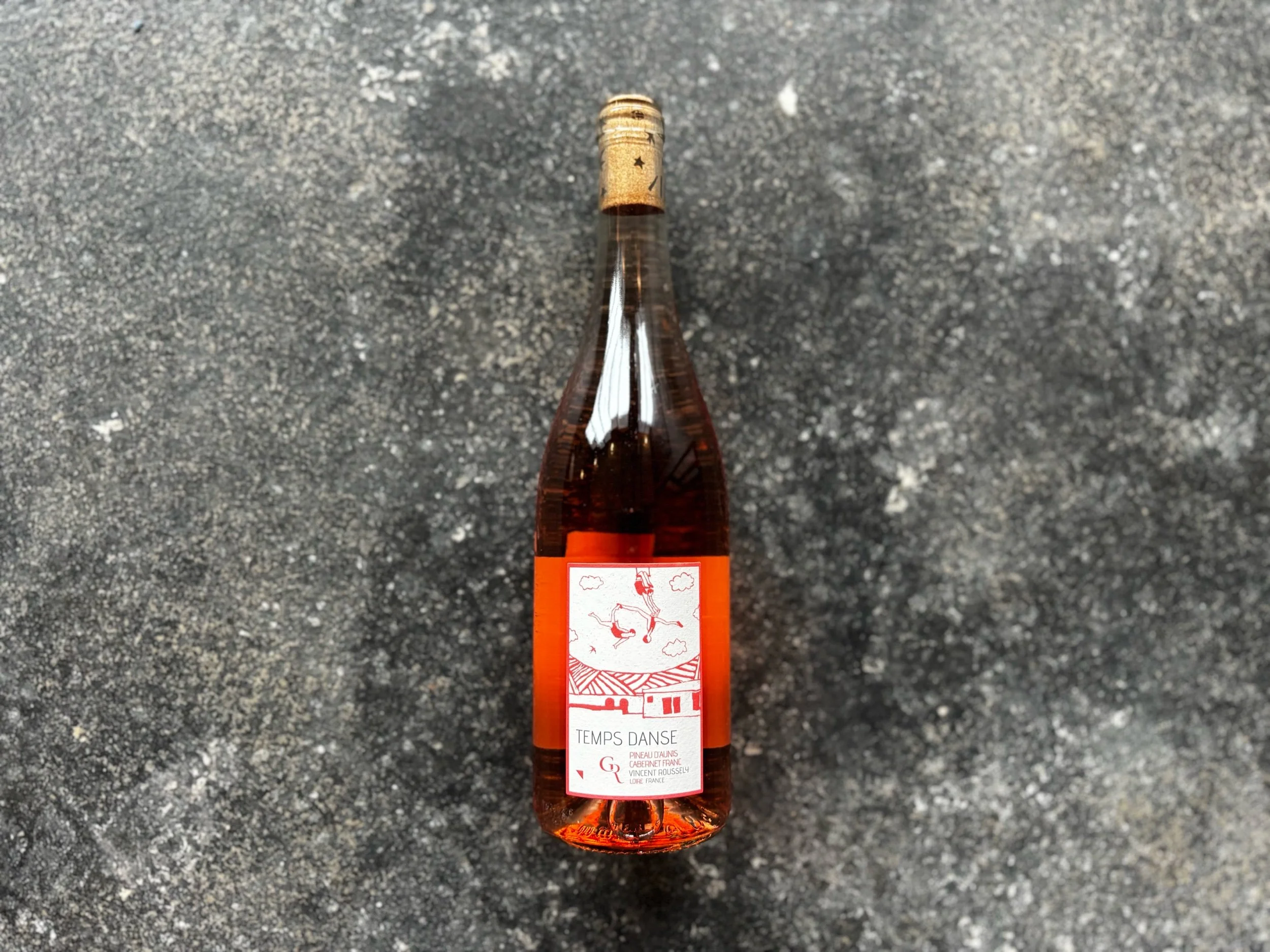
Location: France, Loire, Touraine
Winemaker: Vincent Roussely
Grapes: Pineau d’Aunis, Cabernet Franc
Soul: Clay, limestone
Winemaking: Certified organic. Hand harvest. Stainless steel ferment with indigenous yeast.
From the Importer Stork Wine Company: Back in the 18th century, Clos Roussely was an outbuilding of the enormous castle perched at the center of the village of Angé-sur-Cher. Even today, its meter-and-a-half thick walls do a better job of insulating the ancient winery than most modern constructions, and the 250-year-old, hand-dug caves are stacked floor-to-ceiling with perfectly conditioned barrels. The transition from outbuilding to winery began in 1917, when Anatole Roussely purchased it with the intention of converting it into a winemaking facility. He was the first of four generations to pour his life's work into the Clos, and today his great-grandson, Vincent Roussely, carries on the tradition with the same meticulous attention to detail.
In 1917, Anatole, the great-grandfather, bought the Clos and set up shop as a winegrower and distiller. Marcel, the grandfather, developed the vineyard and in 1947 created a wine trading company. At the beginning of the 1980s, Jean Claude and Nicole, Vincent's father and aunt, devoted themselves to the development of the trading company and left it to a winegrower from the village to take care of the Clos vines. Vincent Roussely decided to take over the operation and buildings of the old trade in 2001. From then on, he continues to bring this place back to life, to develop it to better welcome and share his passion for wine.
The vineyard is located in the heart of the village of Angé and overlooks the shores of the Cher. Located in the Touraine and Touraine-Chenonceaux appellation area. It extends over 8 hectares certified in Organic Agriculture (since 2007). The oldest vines of the domain are 80 years old. The clay-limestone terroir with filled with flint soil, as well as the temperate climate allow a superb expression of Sauvignon Blanc. This grape represents about 80% of the estate. The other grape varieties of the estate are Côt, Pineau d'Aunis, Cabernet Franc and Gamay.
The soil is maintained with respect by plowing and scratching the soil. No herbicides, pesticides or chemicals are ever used in the vineyard. The oldest vines are plowed by horse and many different types of trees and plants have been planted throughout the vineyard to protect the vines and promote biodiversity within the farm. The vineyard is also home to horses, donkeys and sheep. Harvest is done manually.
The vinification takes place in cellars dug into the tufa under the vineyard. These galleries were dug 250 years ago and specially adapted for winemaking and wine aging. They sum up the philosophy of the estate, modern but traditional. Custom shaped stainless steel tanks have been built inside the rock walls itself. Imagine a tank with a wall of 1.20 meters thick!The constant temperature between the seasons allows for slow fermentation and storage of the wine without thermal variations. Some cuvées are aged in 400 liter French oak barrels, cleaned and steamed annually. The wines are made naturally without commercial yeast or fining. This is accomplished by rigorous work in the vineyard and then the cellar. It guarantees authentic wines that respect the place they come from as well as the consumer. Sulfur is used in small amounts.
Time does its work and not chemistry ...
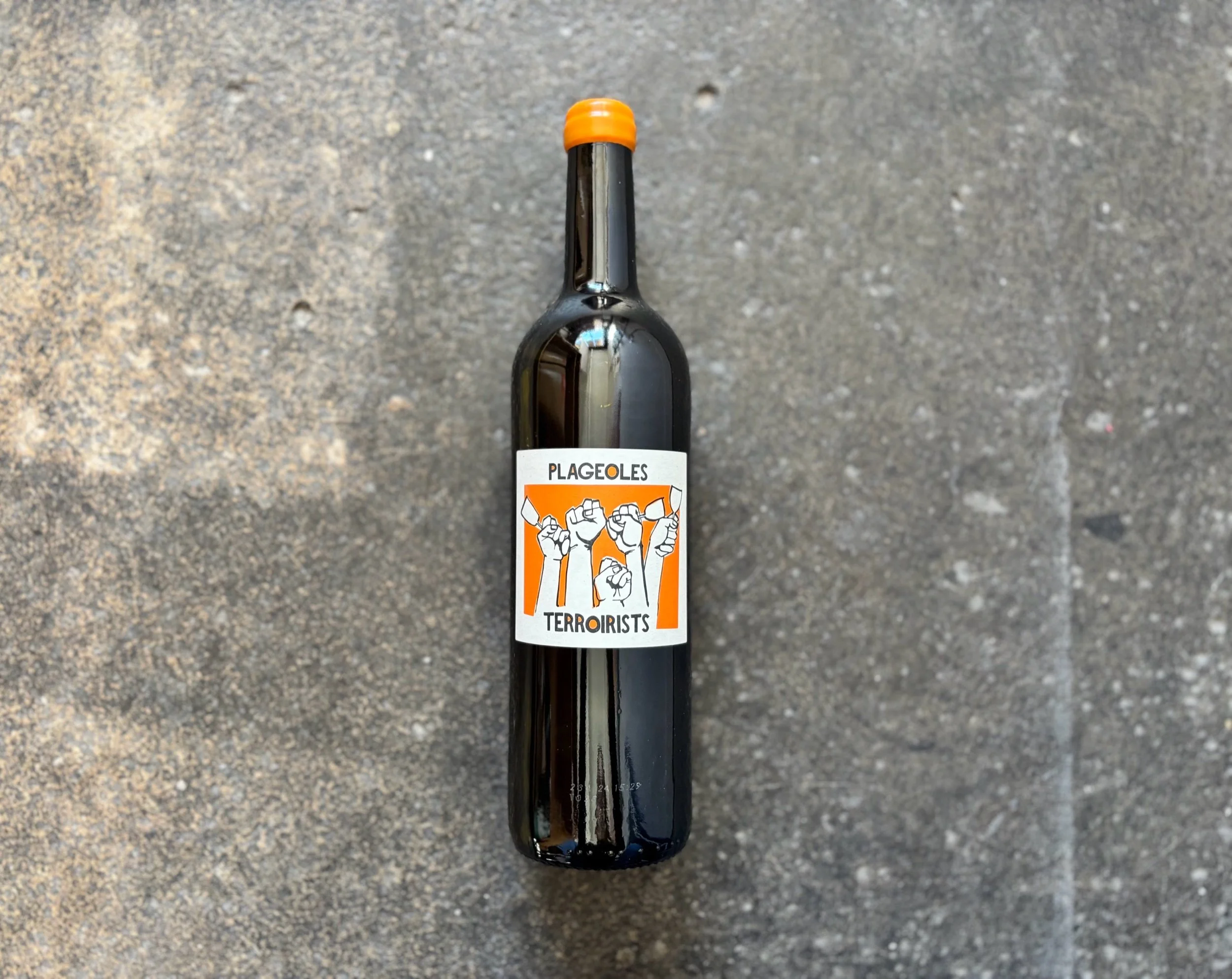
Location: France, South West, Gaillac
Winemaker: Plageoles family — Florent and Romain
Grapes: 40% Muscadelle, 40% Ondenc, 5% Mauzac, 5% Verdanel, 5% Loin de l’œil, 5% Sauvignon Blanc
Soil: Bush vines on clay-limestone
Winemaking: Estate-owned, certified organic, farmed by the Plageoles family themselves. Hand harvest. The Muscadelle is whole-bunch macerated for 11 days, pressed and then aged in demi-muids for 9 months, the remaining varieties are direct-pressed and aged in tanks. Both spontaneous and ML fermentation happen spontaneously. The two parts are blended at the end of elevage. Bottled unfined, unfiltered, with a tiny bit of sulfur (20ppm total).
The Terroirists wines come from the Plageoles family’s own impressive bush vines; unlike their other wines that are single-varietal, this range is based on blends (or field-blends) of multiple indigenous varieties.
From the Importer Jenny & Francois: The wines of Gaillac as a whole are on the map today as wines of quality due to the hard work and adventurous spirit of the Plageoles family. It all started with Robert Plageoles, who took great pride in bringing back the lost indigenous varieties of the area. He researched and replanted over a dozen varieties (7 in the Mauzac family alone) indigenous to Gaillac that had all but vanished. Robert did painstaking work, often going in to the forest to find wild vines growing, and going to seed banks to resurrect these grapes. Robert’s son Bernard continued this work, and now his sons Florent and Romain have taken up the cause of natural wines in Gaillac.
The terroir in Gaillac is made up of clay, limestone, sand and silex soils. Gaillac receives more sunshine than Bordeaux and is graced by a cool maritime climate. Between the historic family vineyard of Très Cantous and the Roucou-Cantemerle vineyard totaling 20-hectares, they farm Mauzac Vert, Mauzac Noir, Ondenc, Duras, Muscadelle, and Prunelart. To drink the wines from Plageoles is to experience the fruit and terroir of living history.
The Plageoles are one of the oldest winemaking families in the AOC, and they are thoroughly invested in retaining the traditions and quality for the AOC that had been often overlooked, that however, have now been receiving well-deserved praise.
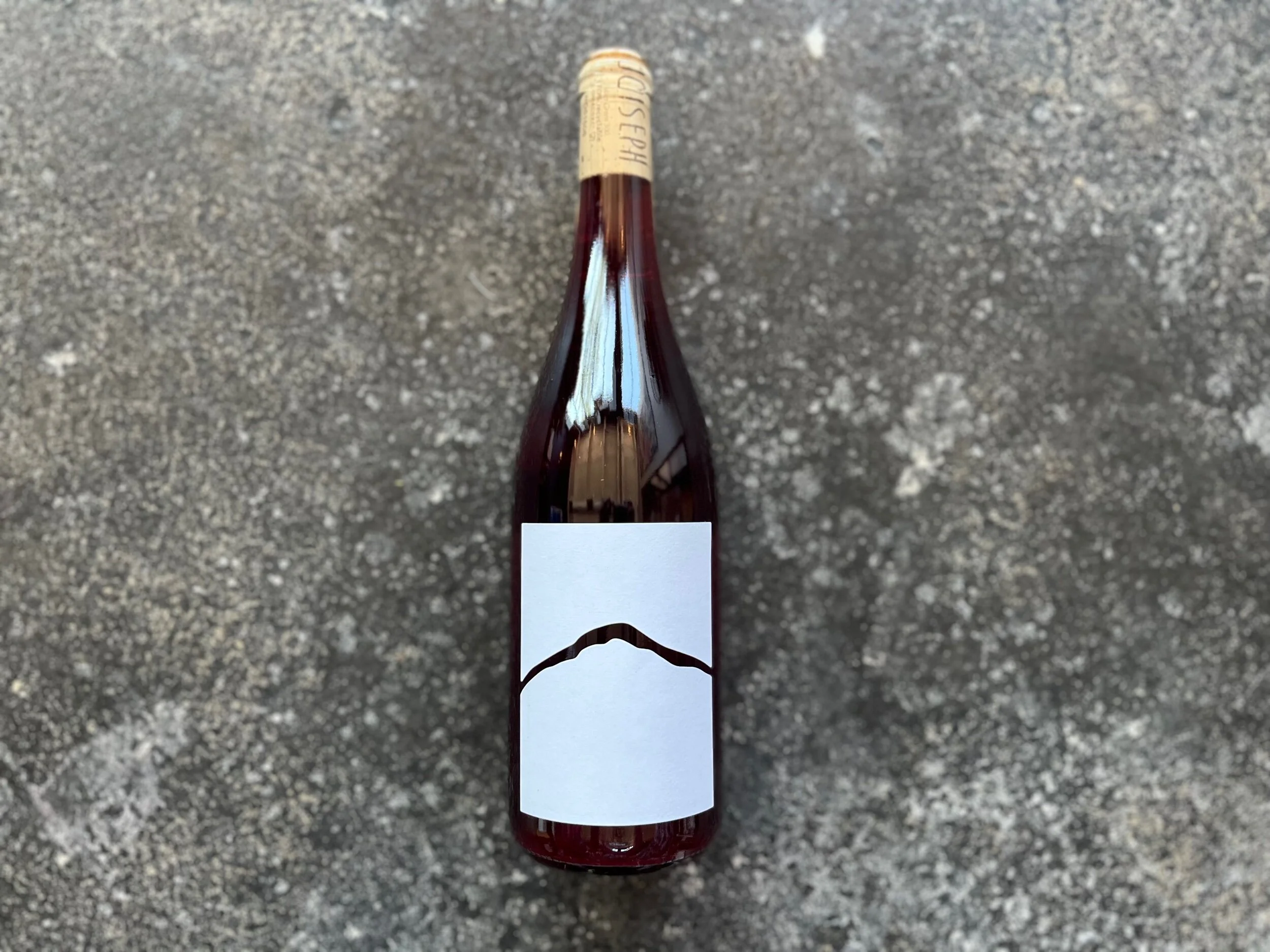
Location: Austria, Burgenland
Winemaker: Luka Zeichmann, Richard Artner & Xandl Kagl
Grapes: Zweigelt, Spätburgunder, Blaufränkisch
Soil: sandy loam
From the Importer Vom Boden: : Harvested normally a bit early, ‘Piroska’ is a joyous, delicate red flaunting a finely wound structure, herbal with a bright strawberry treble and deep cassis bass note, all supported by a rocky minerality. It’s a blend: normally Zweigelt and Pinot Noir with the remainder being just a “gemistcher satz” that is mostly Blaufränkisch. This is “chilled red” perfection.
If you know one thing about Austria’s Burgenland, it’s probably Lake Neusiedl and how it’s so damn big and so damn shallow, yadda, yadda, yadda…
In fact, as you’ve maybe been told, it’s so shallow that you can walk across the whole thing, all 120 square miles, and never get your chin wet – max depth is about five feet and most of the time it’s between two and three feet deep.
Frankly, it seems like the big story here throughout a lot of modern wine-time was the fog and the mist because of this shallow lake, and the resulting botrytis and sweet wines. Some real famous and real expensive sweet wines came from here, though for a lot of people, this is where the coherent narrative ends.
And that’s fair enough, because since then, well, Burgenland has laid claim to just about everything.
First came Heidi Schröck showing that you could make dry aromatic wines of clarity and balance in this place. There were the Velich brothers showing you could make dry, rich wines; then Roland went out on his own and dropped the mic with Blaufränkisch of unparalleled classicism and depth. Then, as the wine world went natty, Austria became almost overnight the eastern front for the movement; the Loire of the Austro-Hungarian empire.
Austria – and I write this with a deep sense of love and affection, my father was Austrian and my family, his family, still lives there – is quick to digest the Zeitgeist and turn it into something polished and profitable. So while they have been quick to master, well, everything… often times the most meaningful journeys are the longer ones.
And so we come to Joiseph; a new-ish estate founded in 2015 by three friends (Luka Zeichmann, Richard Artner and Xandl Kagl). It started with a tiny vineyard in the village of Jois (thus the name, a playful personification of the village). Joiseph has grown quietly, slowly, and it has quietly become the talk of Burgenland. They produced only miniscule amounts of wine in 2015 (with only about a hectare under vine); it was mostly drank by other Austrian winemakers and people started talking. Here is an estate with elements of nearly everything the Burgenland has offered: aromatic complexity, stature and polish, clarity, as well as a buoyant energy, a certain soil-focus. And while the wines seem to have a card from every deck, they also have an ace: lightness. The wines are, hands down, the most ethereal, delicate wines I’ve ever had from the Burgenland. They are ravishing.
In the past few vintages they have become one of the most famous unknown estates; the most coveted winery in Austria that very few people have heard of. This is an estate that could probably sell everything it makes just to other winemakers in Burgenland.
There is nothing terribly hip about the winery, no cutting-edge design or marketing gimmicks. Just heart-wrenchingly beautiful, delicious wines.
Then again, that’s more than enough.
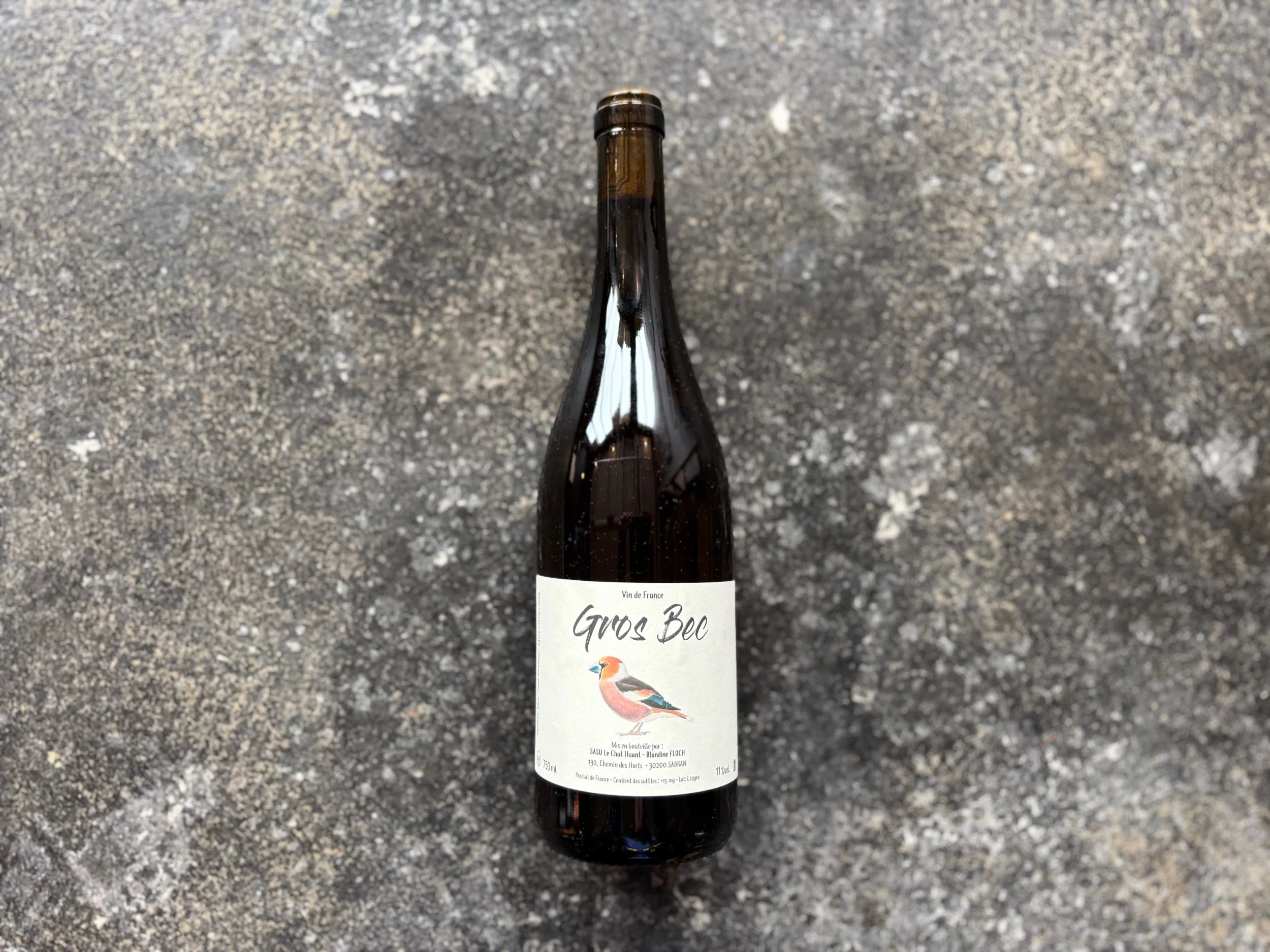
Location: France, Loire
Winemaker: Blandine Floch
Grapes: Cinsault
From the Importer Terrestrial: Blandine Floch is a young and passionate winemaker based near the town of Blois in Touraine. She got her start in 2011 by helping in the vines and cellar of the legendary Olivier Lemasson, quickly falling in love with this new way of life. She eventually went on to train under the likes of Thierry Puzelat, Remi Dufaitre, Domaine du Scarabée, as well as natural pioneers Pheasant’s Tears and Artanuli Gvino in Georgia. These experiences equipped her with the skills she needed to return to the Loire Valley to start her own project, fueled by a love for pure farming and minimalist winemaking.
She currently farms 2.35 ha of rented vines from an assortment of parcels on the plateau above Monthou-sur-Bièvre, and supplements this with some purchased organic grapes. In 2021, due to historically low yields in the Loire Valley, Blandine, along with several other local vignerons, sourced some organic Grenache from the Gard region. In the cellar, she executes all vinifications via natural processes, with respect for the fruit, environment and final consumer. Fruit is meticulously harvested to ensure that only the healthiest and ripest grapes make the cut. All fermentations are done spontaneously with native yeasts, followed by aging in neutral wood, which allows the wines to breathe naturally. Only small amounts of sulfur are used at bottling, allowing the true terroir of the region and vintage to shine through in each cuvée produced.
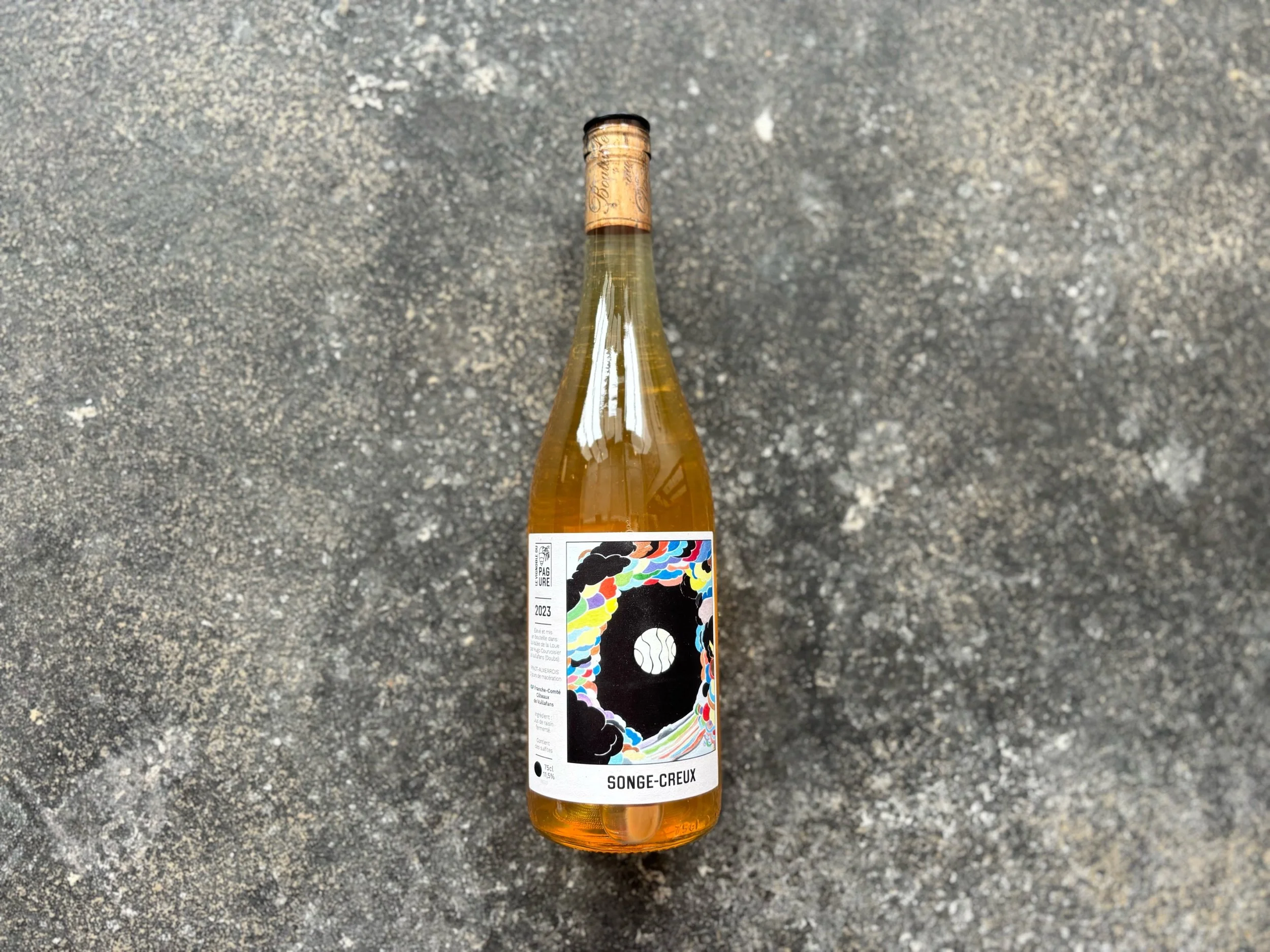
Location: France, Franche-Comté
Winemaker: Hugo Courvoisier
Grapes: Pinot Auxerrois
Soil: From a south exposed 2.8 ha parcel with a 35% slope and soils of limestone scree
Winemaking: Organic farming. Hand harvest. Fermentation began spontaneously using only the naturally occurring indigenous yeasts. 2day skin maceration. No sulfur additions were made during the vinification of this wine.
From the Importer Terres Blanches:
An hour northwest of Arbois, the village of Vuillafans sits tucked into the heart of the Vallée de la Loue, where steep, limestone slopes rise dramatically above the Loue river. Here, Hugo Courvoisier farms just over 3 hectares of Chardonnay, Auxerrois, Pinot Noir, and Gamay, crafting crystalline, terroir-driven wines from this isolated Jura satellite.
Hugo grew up in northern Jura, a place where the raising of cattle for Comté production is more common than vineyards. Both of his grandfathers farmed cattle for cheesemaking—one also distilled spirits, while the other tended a small parcel of vines in the lower Jura and made a little wine. Some of his earliest childhood memories are of harvesting grapes and tending cattle. However, his early path seemed far removed from wine—he initially studied computer science—yet the pull of the land and the region’s agricultural traditions kept calling him back. Determined to change course, he enrolled in viticulture and enology school in Burgundy, where he immersed himself in both the technical foundations of winemaking and the philosophy of terroir expression. Reflecting on his abrupt career shift, Hugo explains: “I have always loved wine and the agricultural world—free, independent—a job where you start with cultivating the vines and follow through to creating the wine. Superb.”
At the completion of his studies, Hugo apprenticed in the Côtes de Nuits before returning to the Jura to work with Stéphane TISSOT to learn the intricacies of biodynamic farming. He then moved to Beaujolais to work with Clément David-Beaupère in the village of Julienas. At each stop Hugo learned the importance of good farming, meticulous cellar work, and the patience required to craft low-intervention wines of place. In 2017 Hugo moved to the “other side” of the business and took up a position with a wine merchant and wholesaler in Lyon, before returning home to become an agent for Jura vignerons. It was during this time that Hugo discovered the picturesque Vallée de la Loue, eventually purchasing a home in the village of Vuillafans.
Still longing to farm and produce his own wines, in 2021 Hugo jumped at the opportunity to purchase a small vineyard just outside of Vuillifans. Planted in 1990, the steep 2.8-hectare vineyard is exposed full south on soils of limestone scree overlooking the Loue river. The long rows of 100m increase in altitude from 1,150 to 1,475 feet (350-450m) as you go up the 35% slope. In 2022 Hugo added small parcels of Pinot Noir (.3ha) and Gamay (.1ha). From the outset, Hugo converted the vineyards to organic farming (certification expected in 2025) and began working with low-input, regenerative methods.
Setting up a cellar in the heart of Vuillafans, which he shares with Les Vignes à FanFan, Hugo produced his first vintage in 2022 . His winemaking is uncompromisingly natural: spontaneous fermentations with native yeasts, no fining or filtration, and no additions. To date Hugo has not used sulfur in the vinification process, but he is not opposed to it if he thinks it necessary. The wines are bright and pure, marked by tension and minerality, with a precision that belies the domaine’s youth. His inaugural 2022s immediately impressed us for their clarity, energy, and depth—a thrilling debut from a producer poised to shine the spotlight on what is possible in this emerging viticultural region.
Location: Portugal, Minho
Winemaker: Miguel Viseu
Grapes: Loureiro
Soil: Granite
Winemaking: 36 hours of maceration of de-stemmed bunches before fermentation, pressed in vertical manual press, stainless steel fermentation with no temperature control, indigenous yeast. Aged 50% in stainless steel, 25% in oak (chestnut barrels), 25% tinaja. Bottled unfiltered with one gram of S02 per hectoliter at bottling.
From the Importer Louis/Dressner: "Saravá is an afro-brazilian word used as a mantra to invoke the force that moves nature, but is also remains a greeting similar to "Hail!" - Like a wish of good luck. We want SARAVÁ wine to show what nature is giving to its grapes. We have chosen this word also to bring our history to the wine. I´ve worked in a lot of different places and met my wife in Brazil while I was a winemaker there. We moved around together and before coming to Portugal and starting Saravá we lived for three years in Mozambique."
Give us some information about your background. I was born and raised in the Douro and I’m the fourth generation working in wine. My father has 20 hectares and produces Port along with some dry Douro and red and white table wines. I can’t tell you the first time I held a hose or stomped on grapes: managing the harvest and the cellar was part of living at my house.
I studied agricultural engineering at university, because I wanted to have another option if for whatever reason wine was not what I wanted to pursue. And also because I’ve always preferred being out in the land than in a winery. I’ve always felt the vines were the most important. I felt that in winemaking, you can always find a solution. But the vines are more complicated and you need to know how they work. I studied in Refoios, the village where Aphros is located (ed note: Miguel currently works as head winemaker at the Aphros winery) and where I currently live, though I’d never imagined returning here.
In 2008, I decided it was time to leave my father’s house; my oldest brother was managing the the family property and I decided to go do some work abroad. I worked in Napa with Paul Hobbs, then Burgundy for two years at Domaine de la Pousse d’Or. Then I worked in Brazil, Tuscany, Cahors. After these experiences, I felt confident in my ability to make wine, and it had always been a dream to experience Africa.
I’ve always felt that the winemaker is something of an artist; they often have good ideas but are bad at selling their wines and managing the business and administrative side of things. While in Africa, I worked for an international group in management and sales. While there I was able to help a large supermarket that carried Portuguese brands to create a new warehouse and a new branch to sell goods from. It was a great experience for professional perspective, a great life lesson. Leli was working in a educational NGO and that also exposed us both more to that reality.
How long did you live in Africa? Three years in Mozambique. It was a very important time in my life because it made me realize I wanted to go back to Portugal to make wine. Sometimes when something is in your life, you love it but you get used to it. Though it was an incredible experience, not having wine made me miss it more and more.
You are working with your wife Leli. At what point did you meet? We met when I was living in Brazil in 2012. I worked two years there as a winemaker and would actually fly back to Europe to do the harvest there as well. This was before Africa.
I was working in a new region for making wine. I took the job because it felt like a big challenge to work in a different country in a place where vine growing was new. In the end, it often felt like we were fighting against nature trying to make it work. I was satisfied enough with the wines but did not feel a connection to the vines like I do here in Portugal.
When you decided to come back to Portugal, did you have any kind of plan in mind? To be honest, sometimes I feel life is very mystical and esoteric. It feels like the universe brought me here. At that point Leli and I wanted to have a child, I wanted to make wine, we agreed it was time to go back to Portugal. Before even quitting my job, I was having conversation in the Douro Superior with a big, mainstream company. My plan was to work for them and make my own wines on the side. I was excited because it’s an area with a lot of old vines.
But that fell through, so for a few months I created a gameplan to start my own project by taking over an abandoned winery. Five days before I was set to return to Portugal, I was informed that Aphros was looking for a head winemaker. I interviewed with the owner Vasco and we immediately got along. He offered me the job and I accepted. It was crazy because it was so last minute: the harvest was about to start and we had nowhere to live. We stayed out of hotels for a while.
How did the contact with Aphros happen? It’s hard to believe, but I actually studied agricultural engineering in the village where Aphros is located. I’d left university in 2006 and Aphros was founded in 2004. I then started working in other countries and never had the chance to meet Vasco, but I knew the wines and what the project was. It was a friend of the winemaker who had a brief stint at Aphros that contacted me about it. I’d told everyone I knew I was moving back to Portugal and to give me any leads if they had any.
Everybody knew I was more into organics, biodynamics and natural winemaking. There are not that many people thinking that way in Portugal. When he heard the position had freed up at Aphros, my friend said “this looks like you Miguel”. I emailed Vasco, who had interviewed maybe ten people before me. We knew in the first minute it was going to be a good fit.
How long have you been working at Aphros at this point? I came back in 2017, so this will be my fourth vintage.
So what’s happening over at Aphros? I’m the head winemaker and Tiago Sampaio from Folias de Baco is the head consultant. We started around the same time; I hadn’t met Tiago yet but knew about his work. And I think it was a moment for Vasco to find people more aligned with his vision, to get the wines closer to what he wanted them to be. You could say he’s the architect of the wines and we create what he has in mind.
We get along very well, we understand what we want and we are very experimental. You can feel a great energy in the project.
Let’s talk about the Galactic Wines project and how that came to be. I was a little bit resistant at first; I’m from the Douro and I’d always imagined my first wine would come from there. But I became very interested with the Minho area. We are doing so many experimental things at Aphros but I wanted to try some of my own, namely working with the local varieties of the area.
I also wanted to do something independently with my family. Our first son was born in 2018 and that also felt symbolic for starting our own project. I’d also been seeing how some winemakers were making wines from different regions, and it made me realize that it actually wasn’t that hard to just start a small project.
I have a childhood friend who lives in the area, and he began talking to me about making wine for him. But this was right when I’d gotten back: first kid, new job, new area… After we settled in a bit, it felt the time was right to help him. So at the end of the 2018 harvest, we started to prepare the garage in our house, which has a facility where the family who used to live there made wine for personal consumption. This was to make wine for him, not for us. But we had the cellar set up so it felt like the time to make our own wines as well.
It’s also important to note that we started Galactic for fun. It’s why there are only 700 to a 1000 bottles of each cuvée. With Galactic I don’t have the pressure of the business side of things, it’s more relaxed and with my family, we can make the decisions for ourselves. I think it’s something everybody wants. I have a lot of ideas, it’s good to have an outlet for them.
What is the scale of Galactic Wines at this point? In 2018, we bottled two wines and everything was made in our house. We had stainless steel, some 125l tinajas and a few chestnut barrels. That same year I’d been approached by a nearby place that makes wine for for personal consumption. They hired me to consult and make the wines. As soon as I saw the winery, I told them I’d make their wine for free if they let me use their cellar for my project. So now we have a beautiful underground winery, a little bit more equipment and we’ve moved our vessels over there.
As far as the wines, we’re focused on a few things. For the Loureiro, we had to do it because it’s an amazing variety and the most-planted in the Vinho Verde area. To me this region makes the best expression of it. The vines are 25km from the ocean, so we wanted to make a wine that could be both incredibly fresh and rich. That’s why we macerated the wines a bit at fermentation.
For the Trajadura, it was an attempt to do the opposite of what everyone else does. It’s a common variety in the area, but everyone uses it to give volume and alcohol to their wines. The other grapes in Vinho Verde produce low alcohol, and most producers are still trapped in the mentality that high alcohol equals quality. So what I tried to do was make a low ABV% version of this grape. I picked grapes planted under a chestnut tree and close to a wall and picked the less ripe because Trajadura can get to 13,14, 15% if you let it go all the way. It was a risk to try and understand this variety in a different way.
We actually had no more room for it so it macerated in a huge plastic vat. The long maceration is simply because every time I tasted the wine, it was better. I kept delaying the press. Once it had gone all the way through the spring, I felt it was too risky to continue in the summer. So we pressed and loved the result.
Where do you see things going?
I’m from the border of the Douro, very close to a great region called Távora-Varosa. It’s a region dominated by sparkling wine and there are very nice old vines there. Where we are, there are not that many old vines. I do honestly believe that the project will probably go there someway/somehow, or whererver old vines could be between here and my home village.
So do you envision Galactic to be a multi-region type of winery?
We want to live where we are now. It’s a very nice quality of life. I don’t want the project to become a multi-region thing and have no intention to become a roaming winemaker. My goal is to follow the vines and see what happens. I’m 90 minutes from where I was born right now and that’s as far as I’m willing to go.
But again, we love the region we are in. There are still many interesting varieties here from old vines, so we hope to work with them more closely and to keep the tradition of these grapes alive. We’re also involved in a cider project that keeps us tied to the area.
Tell us about the name Galactic Wines.
When I was a kid, I didn’t have an imaginary friend, I had an imaginary family (laughs).I always called them my galactic family. So the name symbolizes creating wines from my imagination. With imagination things can be interpreted differently; you can have fun with the wines. I think having this ability is what helps keep tradition alive but also creates new ones. And of course there is the respect of the environment: the work in the vines, the wines that we drink, the people we admire. We also both love astronomy, nights staring at the sky, looking to the stars and the moon.
We don’t plan to be big producers. We plan to create a lifestyle around the farming and the wine. We’ll touch each bottle, wax them by hand. We don’t want this to be about the money and the stress of running a business. I was born in this and it can get to a level where all the fun gets sucked out of it.
What about in the cellar?
In our area, we have natural high acidity and high PH. Working naturally is easier. We know most people add yeasts, enzymes and sulfur to their wines; by doing the opposite we hope to truly express our terroir. We don’t want to disguise the wine. We only add a tiny bit of S02 at bottling to ensure that the wines can travel and age. We made one wine without S02 in 2018, but it was for friends.
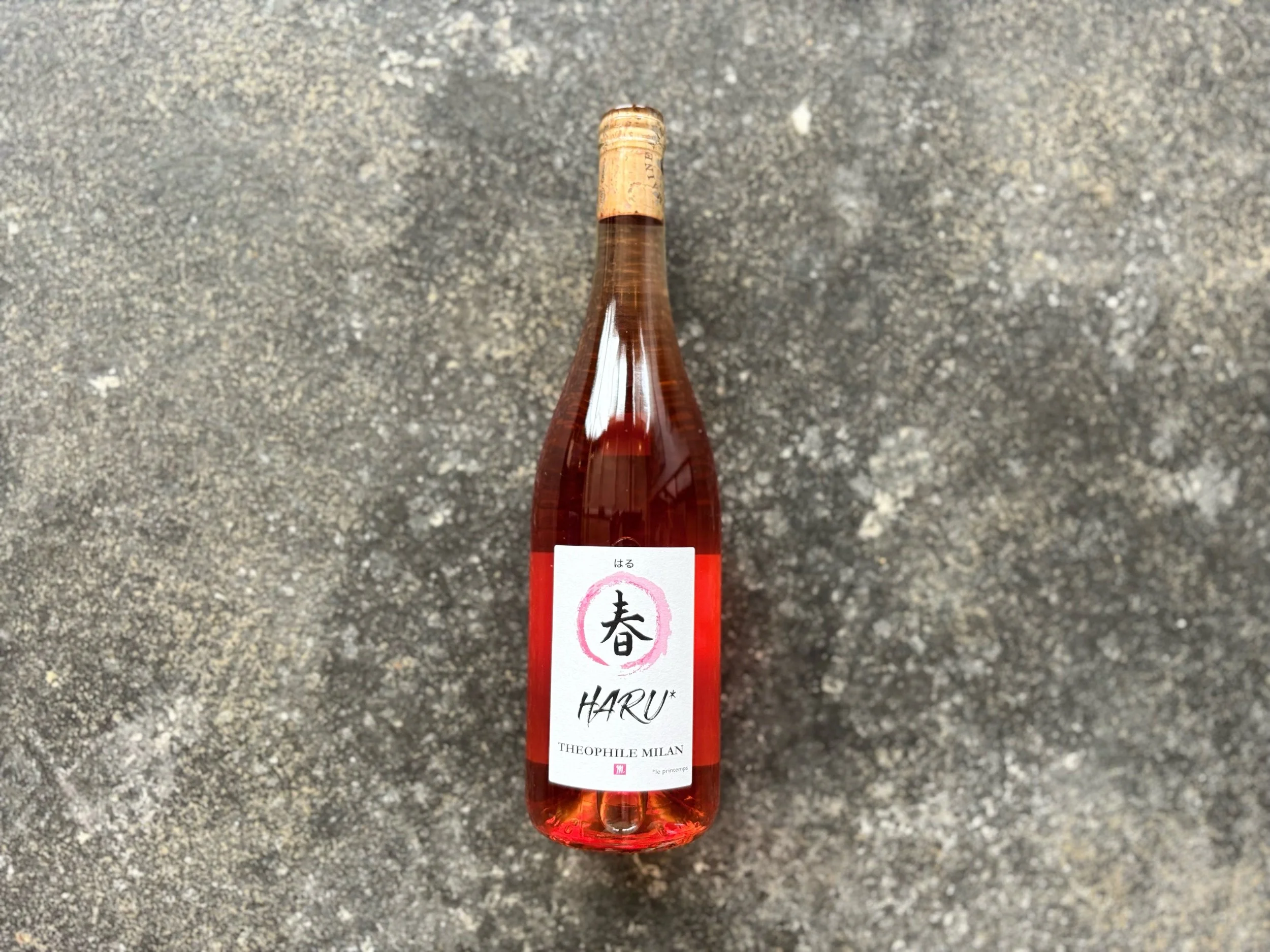
Location: France, Provence
Winemaker: Théophile Milan
Grapes: Grenache, Syrah, Cinsault
From the Importer Avant Garde: Nestled at the foothills of Les Alpilles the story of Domaine Milan started in 1955. In 1986, Henri Milan took over with the ambition of making the best possible wine with respect to the environment. The Domain includes 10 ha planted with Grenache, Syrah, Mourvedre, Cinsault, Grenache Blanc, Chardonnay, Roussanne, Rolle, Muscat.
In the mid 90’s his encounter with Claude Bourguignon (famous microbiologist) and Claude Courtois (Domaine Les Cailloux du Paradis) helped and convinced him to further enhance the identity of his great terroir and ameliorate his winemaking.
Since 2000, Henri has made wine based on their origins blue marl on limestone and yellow sandstone. The reds such Le Papillon or Le CLOS have gained in elegance and freshness thanks to shorter macerations with whole clusters and natural vinification. The famous cuvee Grand Blanc, his blend of all his white grapes, shows more tension and salinity.
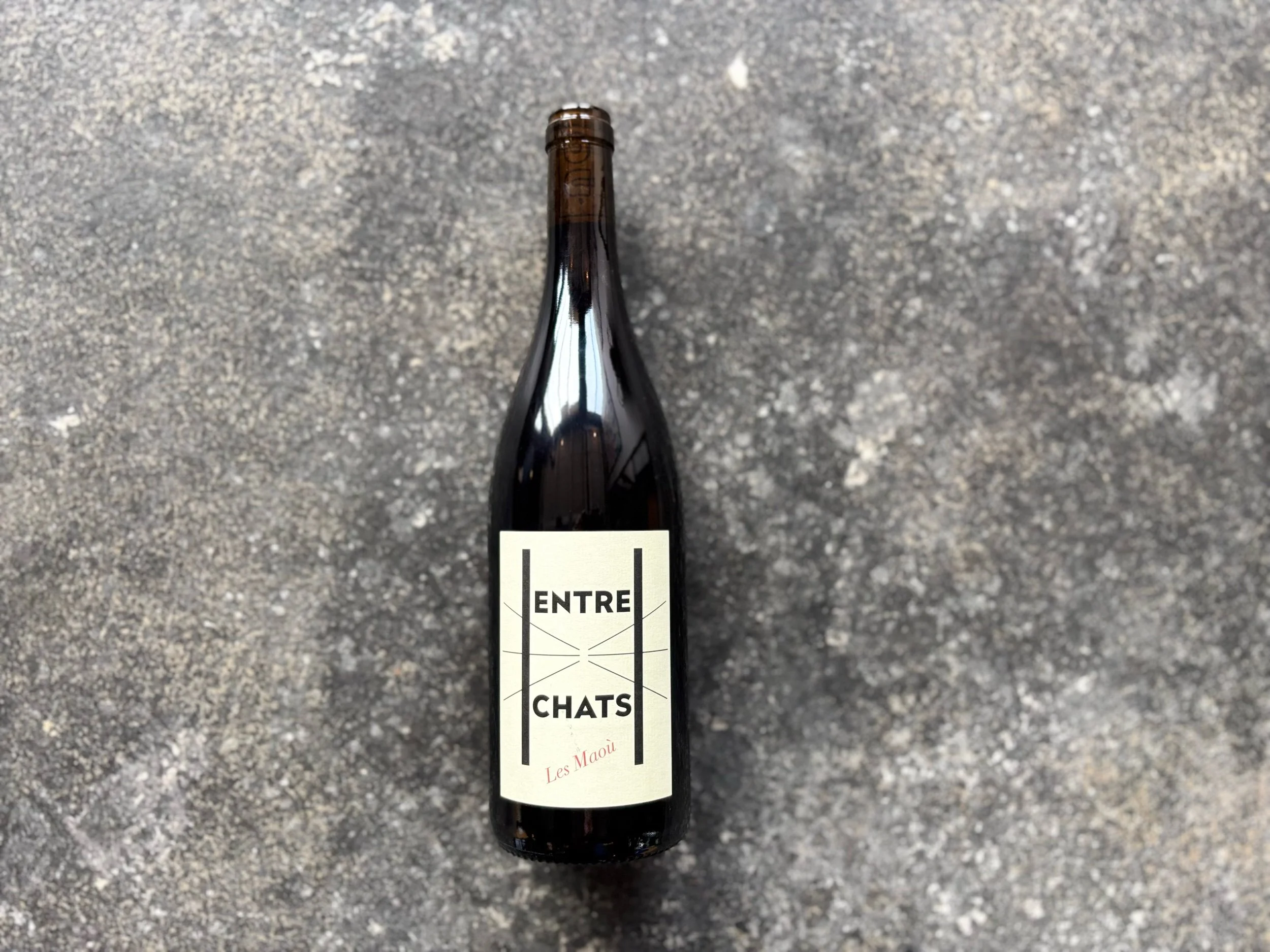
Location: France, Rhône
Winemaker: Vincent & Aurélie Garreta
Grapes: Grenache, Syrah, Carignan Noir, Clairette
Soil: mixed alluvial
Winemaking: Organic farming. Hand harvest. Indigenous yeast. Grenache and Syrah undergo semi-carbonic maceration in direct-pressed Carignan and Clairette juice. Aged for 2-3 months in stainless steel or resin tanks.
From the importer Super Glou: ‘Entre Chats’ This blend of light & bright Grenache, Syrah, Carignan Noir, Clairette is what Vincent calls “the little cuvée.” He blends a little bit of tannin and extraction with a little bit of crunch and spice, resulting in a demure bombshell of strawberry & dusty cherry notes. A blend of semi-carbonic maceration and direct-pressing of grapes. The name of the cuvée translates to an interweaving of distinct elements into something seamless and unified, in this case the assemblage of white and red grapes that change from vintage to vintage. Similarly, the classic ballet jump entrechat refers to the sensational crossing of the legs back and forth in rapid succession, a movement that evokes the way our hearts fluttered the first time we tasted this wine. Fittingly for a team of cat lovers, Entre Chats continues to make us purr.
In the heart of Gordes, an area better known for breezy vacationers than for soulful wines, Vincent and Aurélie Garreta are producing some of the most earnest, balanced, super glou glou we’ve ever tasted.
The couple is a true team whose warmth and radiance translates directly to the grapes they farm—Grenache, Clairette, Carignan, Cabernet Sauvignon, Aubun (a local variety on the verge of extinction), Cinsaut (spelled the ancient way, taking the lead of renowned ampélographe Pierre Galet)—and the people who help them. Come harvest, they employ eleven workers (eight women, three men) from 8am to 4pm for a period of 10-15 days, depending on the year.
The workers break for a pause at 10am (café and pâté, wine on “special days”) and then lunch in the vines a few hours later (“real local proper food + tasting wine”). After they’re done in the vines, they take turns accompanying Vincent to the chai in groups of 3-4. In the chai, they add grapes to the tanks and footstomp before they wash the boxes, relax with a cold beer around 7pm, and return to their campsite on a nearby farm (paid for by the Garretas). Vincent finishes the day by cleaning the chai and is usually home to Aurélie by 9pm.
Much of the juice undergoes semi-carbonic maceration and ferments in cement, at which point it is left to age until blended and bottled in the spring. The results are jewels of varying degrees of ruby-red: from the light and bright “Entre Chats” + “Au P’tit Bonheur” to the fresh and lively “Vaste Programme” + “L’un Dans L’autre” to the deeper, darker “Entre Les Gouttes” + “Hauts Les Coeurs !” — all sure to deliver un coup de foudre.
Location: France, Rhône
Winemaker: Martin Texier
Grapes: 75% Cinsault, 25% Grenache
Soil: Granite
Winemaking: The grapes are pressed and fermented separately in concrete tanks and blended before bottling.
‘Le Preyna’ is the name of an old parcel planted with 75% Cinsault and 25% Grenache in deep granitic soils. This is a typical, light-bodied, everyday wine local to the region.
From the importer Selection Massale: Martin Texier (you may have heard of his father, Eric, the now famous northern Rhône natural wine producer) began making wine in 2014 after a previous life studying economics. After leaving university, he ventured into music (he is an accomplished DJ) and also spent time in New York City learning about the wine trade here (he held internships at both Uva Wines in Brooklyn and Flatiron Wines in Manhattan, as well as the greatest record store in the world, A1 Records). It was after this that he realized that his calling was to follow in his father’s footsteps and return to the vines.
He now has five hectares in and around St.-Julien-en-St.-Alban, planted to classic Rhône varieties, both red and white. There are many different soil types here: clay, limestone, gneiss, schist and granite, making for a wide range of different styles of wine to be made. Martin’s passion is to revive the local traditions of working the natural way, both in the vines and in the cellar (native yeast fermentations, no sulfur). The results he has been getting this early in his career are a clear testament to his skills.